43-Year-Old Sergeant Major Defies Odds, Crushes Grueling Army Sapper Course
Posted By
Common Defense
On
In
National Security,News |
No Comments
At 43, most soldiers with more than two decades under their belt would be forgiven for avoiding a 28-day boot-camp-style gauntlet meant to push the youngest and toughest to the edge. Not Sgt. Maj. Russell Hull.
The seasoned warrior decided that comfort was overrated and pain was the price of purpose — and he walked straight into one of the Army’s most notorious crucibles: the Sapper Leader Course.
Face down in the Missouri mud, with his hands behind his back, Hull’s only company was the dirt beneath him and the voice in his head asking if he’d lost it. “That was miserable,” Hull recalled.
“There were a few minutes where I wanted to quit, because I was just like, ‘What am I doing? I’m 43 years old. I’ve been in the Army over 20 years. Why am I POW crawling up this hill right now?’”
The Sapper Course at Fort Leonard Wood isn’t for the faint of heart. It’s one of the Army’s toughest tests of mind and muscle, typically reserved for soldiers trying to advance their careers through high-performance schools.
When Hull graduated on March 20, he became the first sergeant major in over 15 years to earn the coveted Sapper tab — a distinction that underscores just how rare it is for someone his age and seniority to even attempt it.
The program is infamously brutal. Soldiers are jolted awake at 4 a.m. for grueling physical challenges, technical engineering drills, and tactical missions that barely allow time to breathe, much less sleep.
Image Credit: DoW
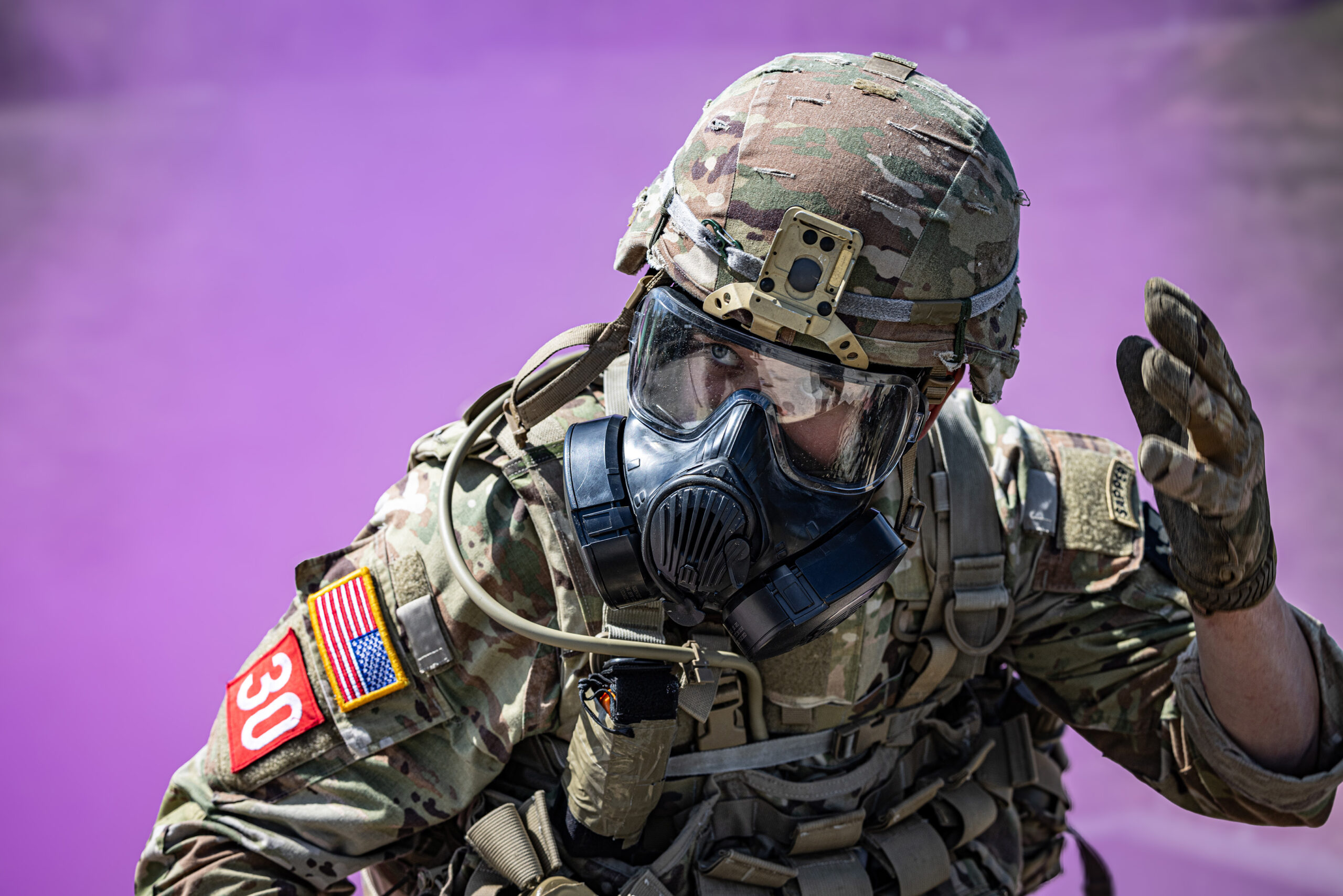
U.S. Army Soldier dawns his protective mask before engaging targets with an M2A1 machine gun, as part of a stress shoot on day 3 of the 2024 Best Sapper Competition, at Ft. Leonard Wood, Mo, April 21st 2024. Sappers are the most elite of the Combat Engineers, and this competition brings the best from across the Army to test their skills and physical endurance over a grueling three days of continuous events. (U.S. Army Photo by Lekendrick Stallworth)
Their rucksacks and gear weigh as much as small people, packed with weapons, breaching tools, armor, water, and rations. It’s no surprise that of the 60 soldiers who started in Hull’s class, only 13 made it to the finish line.
Hull’s military résumé already reads like a lifetime achievement award — five years in the Reserve and 18 on active duty, now serving as the senior enlisted leader for the 9th Engineer Battalion, 2nd Armor Brigade, 3rd Infantry Division.
But even with 23 years of experience, he quickly realized the Sapper Course didn’t care about rank or service ribbons. “You get in your head,” he admitted.
“Why am I here doing this? Why am I beating myself up?”
He could have chosen easier routes earlier in his career but missed the chance due to medical disqualification or shifting priorities. This time, when a fellow soldier joked that he ought to give it a shot, Hull took it seriously. After all, a real soldier doesn’t back down from a challenge.
“I said if I can get medically cleared, I’ll go for it,” Hull recalled.
“And that’s kind of where it started.” It took a rank waiver and a clean bill of health, but once approved, he filled an empty slot and prepared himself for the storm.
And what a storm it was. Hull described one day that seemed to last forever — a brutal march that lasted about six hours across Missouri’s unpredictable terrain. Rain turned to snow, sleet whipped through the air, and subzero wind made misery complete.
“We got all four seasons in that 18-hour period,” he said.
The final phase of the course forced soldiers to prove every skill they’d crammed into their exhausted minds.
Image Credit: DoW
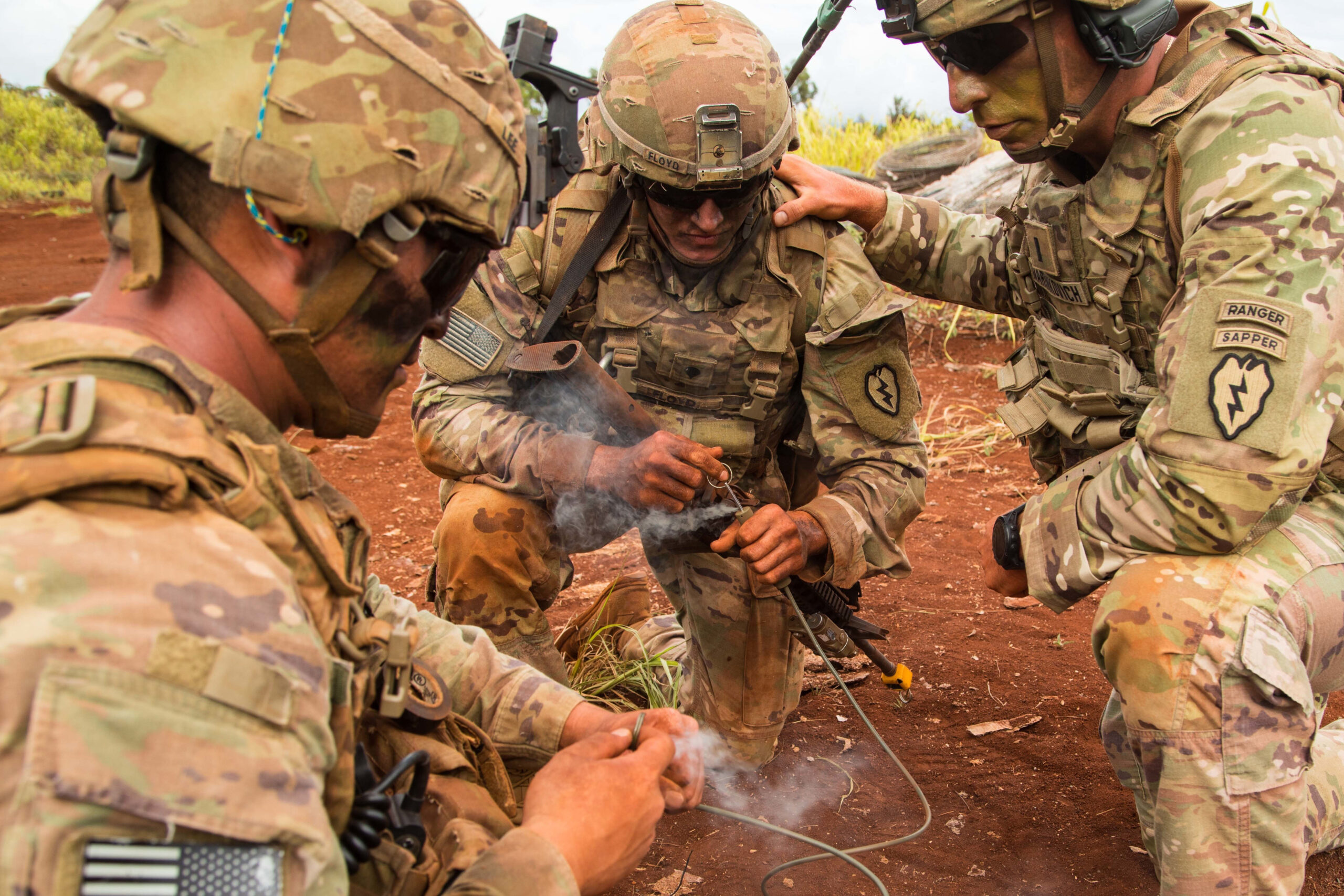
Soldiers with 65th Brigade Engineer Battalion, 2nd Infantry Brigade Combat Team, 25th Infantry Division, ignite detcord during a Bangalore wire breach range August 30, 2019 at Schofield Barracks, Hawaii. The breach range was held as part of a full-scale unit demolitions range, which included concrete and rebar charges, bangalore breaches, and nighttime urban door breaches. This practical familiarization and realistic training enhances the Army’s total combat efficiency and lethality.
Dropped into the woods, they operated under field conditions with minimal rest, executing missions under extreme pressure. To make matters even tougher, Hull’s class was the first to face simulated drone threats from above.
“While we were doing dismounted movements they would go overhead, we had to react to those,” he explained. “Then, some of the objective was getting to where some drones were stored.”
During one exercise, Hull led a platoon raid through a mock village, hunting enemy drones and their operators.
They breached tunnels, cut through wired barriers with saws, and burned through gates with torches — a test of both combat engineering and leadership under stress.
As part of the Sapper tradition, every student leaves rank at the gate. Even Hull, a sergeant major, was just “Sapper Hull.”
Still, the cadre occasionally leaned on his experience to help younger soldiers struggling to keep up. He didn’t mind — he’s the kind of leader who believes you lead by doing, not by talking.
Completing the course wasn’t just about physical strength for Hull. It was a message to every battle-hardened veteran who thinks their days of pushing limits are behind them.
“We have lots of aches and pains, but the mental strength that a lot of us have from doing this for so long — if you want something, you can do it,” he said. “It’s just a matter of taking the time to commit.”
For Hull, the Sapper tab wasn’t a trophy. It was proof that age doesn’t define grit, and that commitment outlasts fatigue. His achievement is a reminder that the warrior spirit doesn’t fade — it sharpens with time.
And as the Army recruits face a generation more focused on social media than service, Hull’s example is a clear message: the American soldier still lives, bleeds, and wins through perseverance.
That’s the kind of fight the War Department needs — men who won’t quit, no matter what hill they’re clawing up.