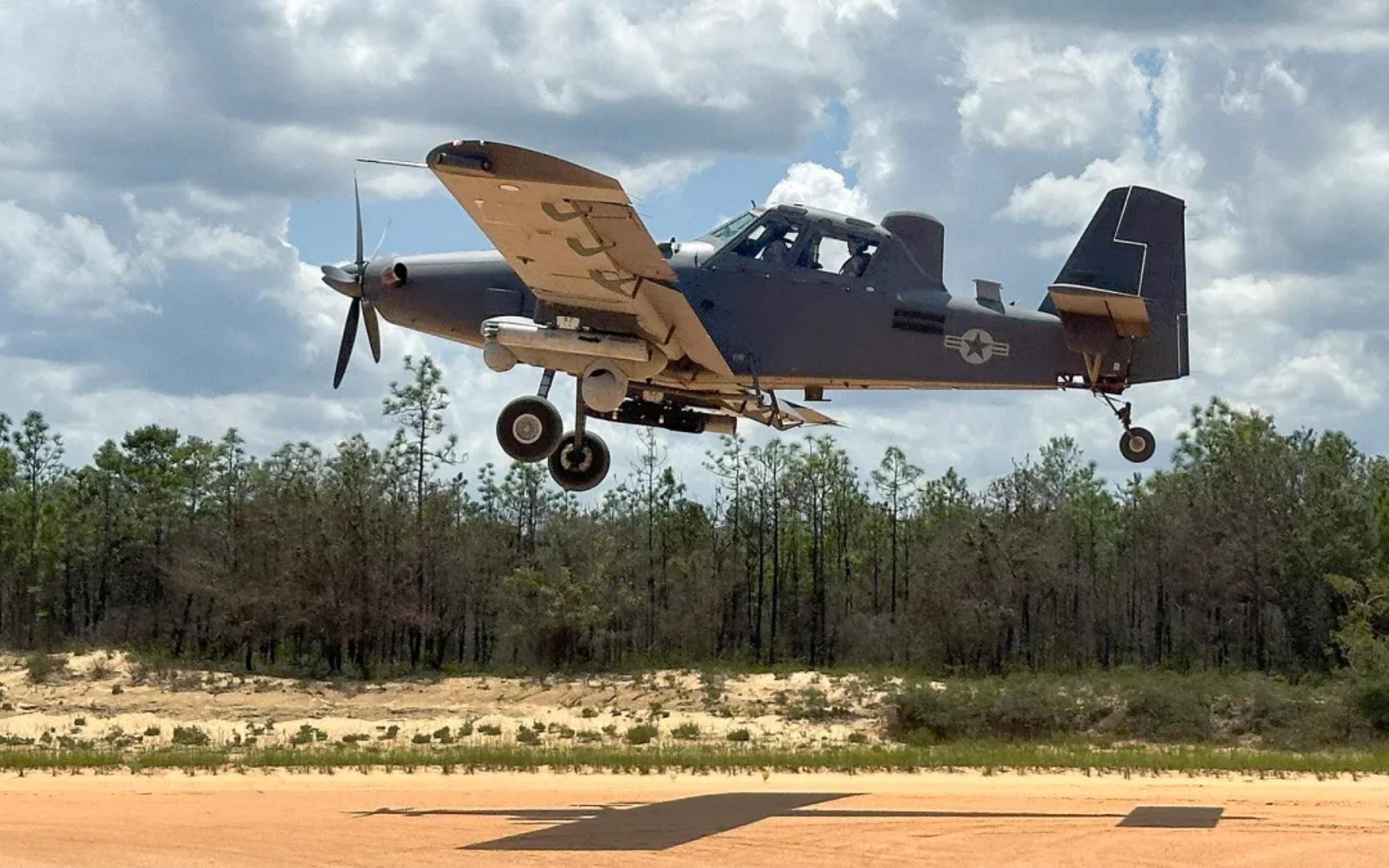
An Air Force special operations Skyraider II prop plane ended up wrecked in a rural Oklahoma field when a student pilot accidentally shut off its fuel supply mid-flight, forcing a harrowing emergency landing and leaving a $17 million aircraft totaled.
The October 2025 accident investigation reveals a simple but costly error — a pilot trying to manage cockpit controls mistakenly turned the fuel valve the wrong way, starving the engine at 2,300 feet. The mishap report points to pilot error, communication breakdowns, and a rushed emergency response as the main culprits.
The incident happened during what was supposed to be a routine familiarization flight for the Air Force Special Operations Command’s cutting-edge single-engine OA-1K Skyraider II — a new turboprop that the War Department touts as a “Swiss Army Knife” for future smaller, precise strike and reconnaissance missions.
According to the report, the pilot took off from Will Rogers Air National Guard Base under the callsign Zorro 75 around 2:30 p.m. The flight was smooth and clear of any mechanical or weather challenges. But the peace didn’t last long.

As the Skyraider climbed to a comfortable cruising altitude of 2,300 feet, the inexperienced trainee pilot tried to adjust his helmet’s intercom volume.
During the process, he accidentally pulled a fuel shutoff lever clockwise, cutting off the engine’s fuel supply. Within seconds, the aircraft’s engine lost power, forcing a textbook demonstration of Murphy’s Law at altitude.
Fortunately, the instructor pilot riding in the back seat managed to take control as the plane stalled. He guided it toward an emergency road landing — a gutsy move that ultimately saved two lives.
The aircraft skidded to a stop in a nearby empty field outside Oklahoma City, gouging the earth and collecting an unlucky souvenir: a stop sign lodged in its wing.
Neither pilot was injured in the ordeal, a blessing considering the circumstances. The aircraft, however, wasn’t as lucky.
The once-proud $17 million Skyraider II was declared a complete loss — a bitter blow to a program still trying to prove itself as a reliable platform for special operations.
Colonel Joshua W. Petry, who led the accident investigation board, laid out the sequence of errors in clear terms.
“The unintended activation of the fuel shutoff valve caused the mishap, which isolated the fuel supply from the aircraft firewall, starving the engine of fuel in flight,” his final report stated.
Petry cited three key contributing factors: task saturation in the cockpit, lack of clear communication between the pilots, and poor prioritization by the instructor during the emergency. Essentially, human error stacked up like dominoes until gravity handled the rest.