The U.S. Army is giving its long-range artillery a serious boost, awarding General Atomics Electromagnetic Systems a contract to move forward with a maneuvering 155mm round capable of striking targets well beyond the limits of current munitions.
This deal marks another major step in the Army’s ongoing Extended Range Artillery Projectile Program, better known as ERAP—a key initiative aiming to restore America’s overmatch advantage on the battlefield.
Under the contract, General Atomics will validate and refine a next-generation version of an extended-range projectile that can maintain precision even when GPS signals are jammed or denied.
The Army’s target is to bring the system to initial operational capability by fiscal year 2030, giving our warfighters a cutting-edge option in long-range strike operations.
The weapon has already proven its potential during tests at Yuma Proving Ground in Arizona. From a standard M777 howitzer, the Projectiles were successfully fired at distances beyond 74 miles—an impressive feat for 155mm artillery.
That kind of range brings a whole new dimension to ground fires, allowing U.S. forces to engage high-value targets well outside enemy artillery and air defense umbrellas.
Unlike traditional shells that follow a fixed ballistic path, these maneuvering rounds can alter their flight paths midair. That not only improves precision against moving or GPS-denied targets but also makes it harder for adversaries to predict or intercept. In other words, it’s smarter, faster, and hits harder.
Mike Rucker, Vice President of GA-EMS Weapons Programs, said in a company release that the latest projectile represents “a leap in capability without requiring rocket assist” and remains fully compatible with existing Army artillery systems.
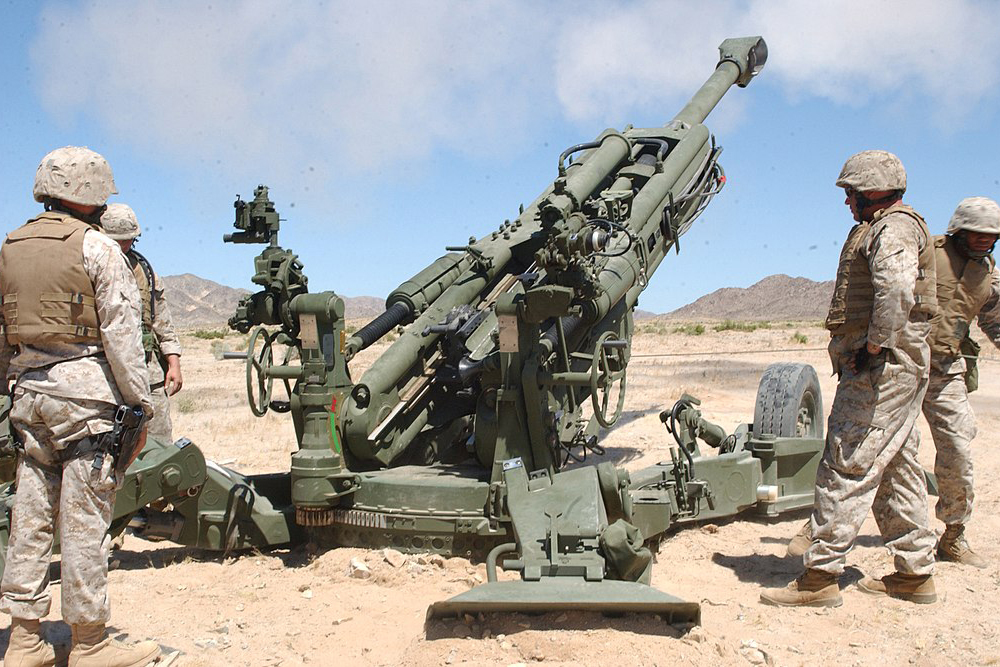
“Our projectile is engineered to provide extended range without rocket assist and remains compatible with legacy cannons and loaders,” he noted. “Its features include deployable wings and advanced redundant guidance systems.”
That flexibility is critical. Instead of building entirely new cannon systems, the Army can field these rounds through already operational howitzers, cutting costs while accelerating deployment timelines.
It also enhances mission versatility—from land-based precision strikes to deeper integration with intelligence, surveillance, and reconnaissance missions.
The U.S. Navy has taken notice, too. In late 2024, it selected General Atomics to continue adapting the same projectile for maritime use, signaling the Pentagon’s growing interest in multi-domain, extended-range firepower. A future where both Army and Navy artillery share smart, precision-guided, maneuverable ammunition is no longer theoretical—it’s on the horizon.
The Army’s 2024 solicitation gives a clear picture of just how ambitious this effort is. The goal is not just extra range—it’s dominance over enemy armor, artillery, and air defenses. A
ccording to the service, these new rounds must have the power to defeat infantry fighting vehicles, multiple rocket launchers, main battle tanks, and even maritime targets. That’s a tall order, but one the Army believes General Atomics can fulfill.
Another key requirement: the ability to operate in a non-GPS environment. In any high-end conflict, from Europe to the Indo-Pacific, GPS denial will be among the first tactics employed by adversaries like China or Russia.