F-35 Boss Admits Jet Fleet Has Outrun Its Own Support System as Readiness Tanks to Record Lows
Posted By
Common Defense
On
In
National Security,News |
No Comments
The man running America’s most expensive fighter jet program just admitted what warfighters already know: the F-35 fleet has grown faster than Washington’s ability to maintain it.
Marine Corps Lt. Gen. Gregory Masiello, who heads the F-35 Joint Program Office, told senators this week that the world’s most advanced stealth jet has “outgrown” the system designed to support it.
That confession comes on the heels of a stinging Government Accountability Office (GAO) report showing the jet’s readiness has sunk to an all-time low.
Appearing before the Senate Airland Subcommittee, Masiello defended a massive $13 billion budget request for fiscal year 2027 — including 85 new jets and full funding for upgrades and modernization.
But while the Pentagon continues to pour billions into expanding the F-35 fleet, about three-quarters of the aircraft can’t perform all of their assigned missions.
According to GAO, only one in four jets are fully mission capable. Even Masiello, while disputing the methodology, admitted that roughly half the fleet can only fly limited sorties.
That’s a staggering statistic when considering the F-35 was sold as the ultimate answer to American air dominance. Back in 2016, the U.S. had 170 aircraft. Now there are over 1,300 operational jets across the world.
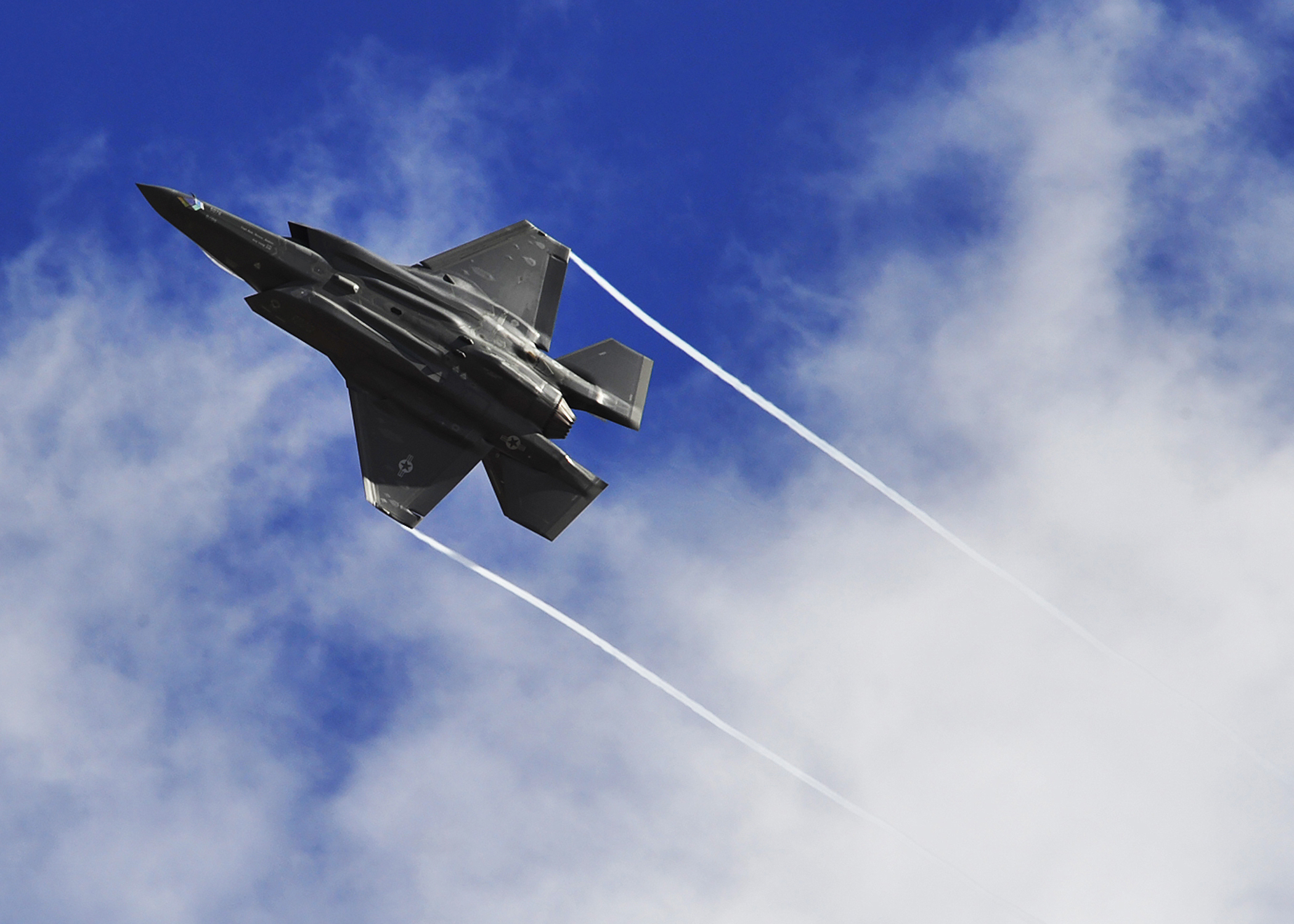
Image Credit: DoW
An F-35 Lightning II performs a maneuver Sept. 12, 2016 at Luke Air Force Base, Ariz. This sortie marks the 10,000th hour for the F-35 at Luke. (U.S. Air Force photo by Senior Airman Devante Williams)
But the supply chain, maintenance capability, and parts inventory have lagged far behind that explosive growth — a classic example of bureaucratic planning failing to keep pace with reality.
The general was candid about the shortfall. “If I have over 1,300 operational aircraft out there, I believe we have set and enabled a sustainment system for about 7 to 800,” Masiello told lawmakers.
That means America’s fifth-generation fleet is flying almost twice as many aircraft as the system was designed to handle. No wonder more jets are grounded than ready.
As readiness rates continue to crash, even the Marine Corps has been forced to accept incomplete aircraft.
Masiello confirmed that six F-35Bs were delivered without radars, with hopes of retrofitting new APG-85 units later. When pressed on whether a radar-less aircraft could be considered fully mission capable, he conceded it could not.
In other words, the Marines are taking jets that can’t fight and claiming progress. That may work in a PowerPoint presentation, but not in a real war.
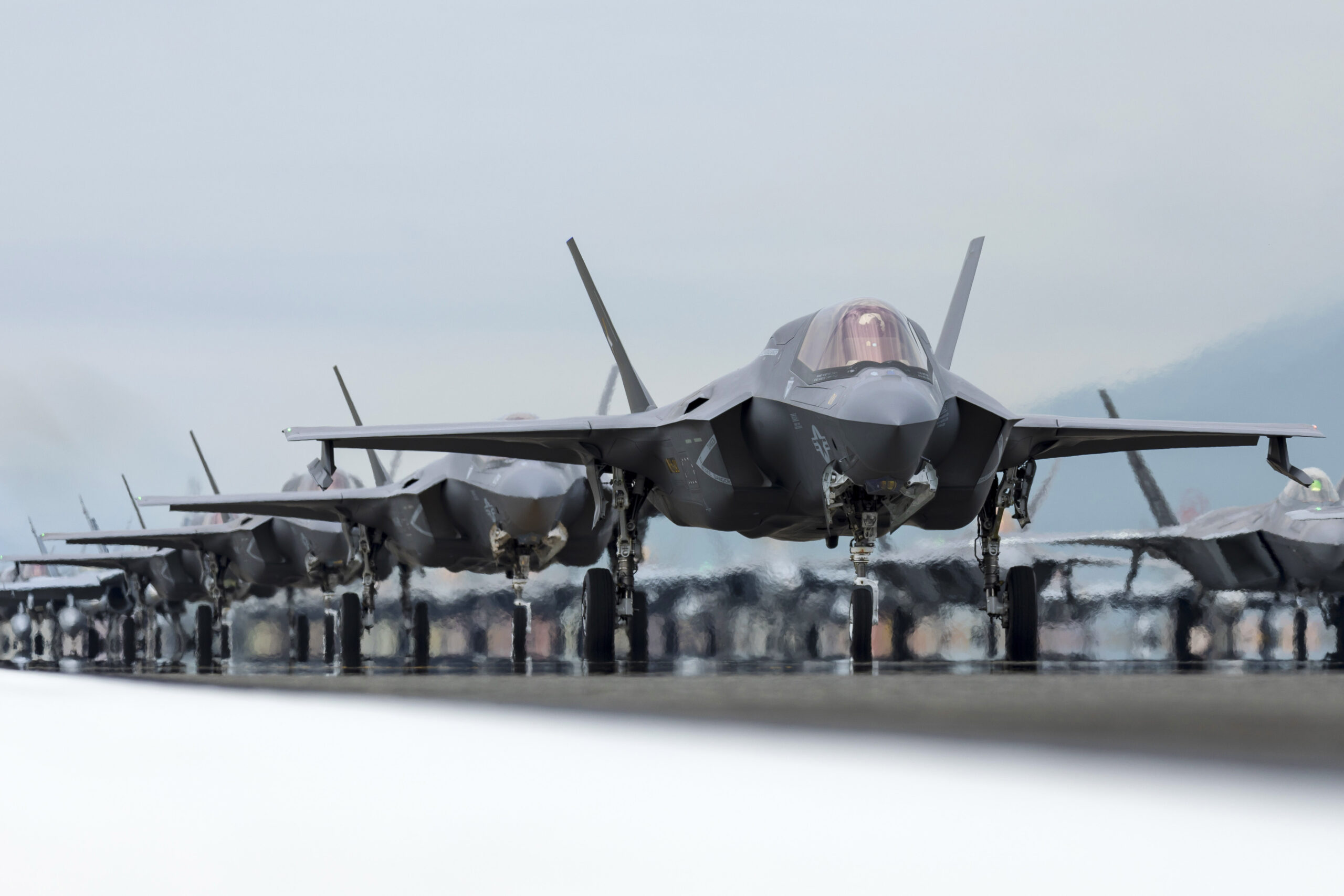
Image Credit: DoW
The U.S. Air Force 354th Air Expeditionary Wing and Marine Aircraft Group 12 performed a capabilities demonstration during a pre-planned readiness exercise at Marine Corps Air Station Iwakuni, Japan, July 7, 2022. The demonstration included U.S. Marine Corps F/A-18 Hornets, F-35B Lighting IIs, KC-130J Super Hercules aircraft, and U.S. Air Force F-22 Raptors and F-35A Lighting II aircraft, showcasing a high level of readiness and joint service capability in support of a free and open Indo-Pacific. (U.S. Marine Corps photo by Sgt. Jackson Ricker)
Masiello minimized the problem as a matter of supply rather than a broken system. The program, he claimed, simply underbought spare parts during years of rapid growth.
To counter that, he touted a new “Global Support Solution Reset” — a $13.7 billion sustainment push aimed at restoring basic readiness through 2031. But critics note that’s yet another billion-dollar fix-it plan following years of avoidable neglect.
Software glitches, canopy durability and the aging maintenance system are also major drags on the fleet’s performance. Each jet’s stealthy skin and intricate electronics demand high upkeep, but depot capacity and engineering support have lagged.
Masiello admitted that the jets’ unique canopies have a short lifespan, which is a particularly acute issue on stealth fighters where surface integrity determines survival.
The Pentagon’s modernization effort isn’t faring much better. The Block 4 update — a critical technology package meant to upgrade sensors, radar, and electronic warfare systems — is years behind schedule. Only 22 of 55 planned enhancements have been delivered.
Power and cooling shortfalls have delayed integration of new systems, and the engine upgrade needed to handle that load won’t arrive until 2031.
The longer these delays drag on, the harder it becomes to keep the F-35 ahead of emerging Chinese and Russian air threats.
GAO has been waving red flags for a decade, issuing 46 sustainment-related recommendations since 2014 and repeating calls for performance accountability in F-35 contracts.
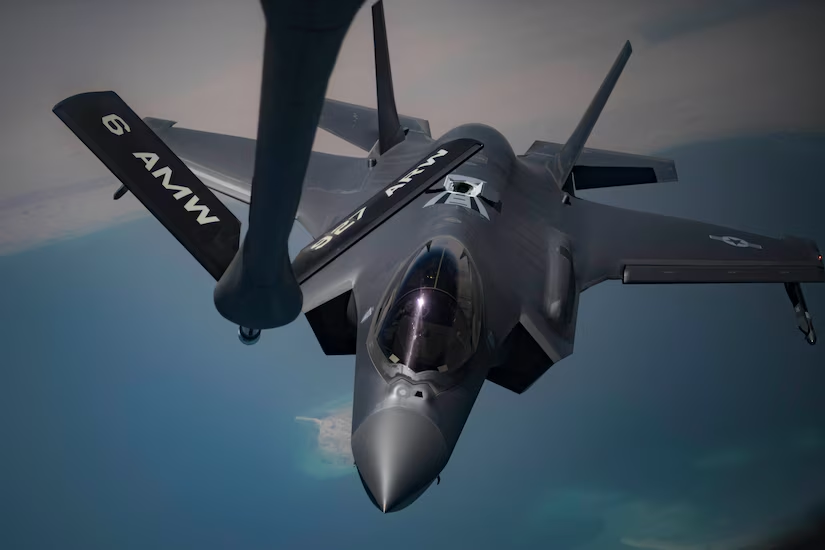
Image Credit: DoW
Yet only 14 of those have been implemented. Lawmakers pressed Masiello on why so many fixes remain “in process.” He ducked the question, offering no specific tally of completed reforms. Washington has become skilled at promising transformations that never seem to materialize once the cameras are off.
Even as the oversight watchdogs sound alarms, members of Congress across party lines still praise the F-35’s unmatched stealth and combat capability. Former Navy pilot Sen. Mark Kelly, the Arizona Democrat, said after flying against an F-35 in an F-16, he “could not see it on radar even when I’m looking right at it.” That raw capability keeps the jet indispensable to U.S. air power — even if it’s too often sitting in maintenance bays instead of on the flight line.
The global dimension only complicates matters further. U.S. allies in Europe and the Pacific are buying F-35s faster than the logistics network can handle, pulling from the same strained spares pool.
Masiello disclosed that Poland plans to double its current 32-jet buy. That’s good news for deterrence against Vladimir Putin, but bad news for the parts pipeline already stretched to the breaking point.
Despite its problems, the F-35 remains the cornerstone of allied airpower and the most lethal strike platform in the sky. Masiello reminded senators that in recent combat operations against Iranian targets, the jet was “the only aircraft that can hit some of the targets” and “act as a quarterback of the joint force.”
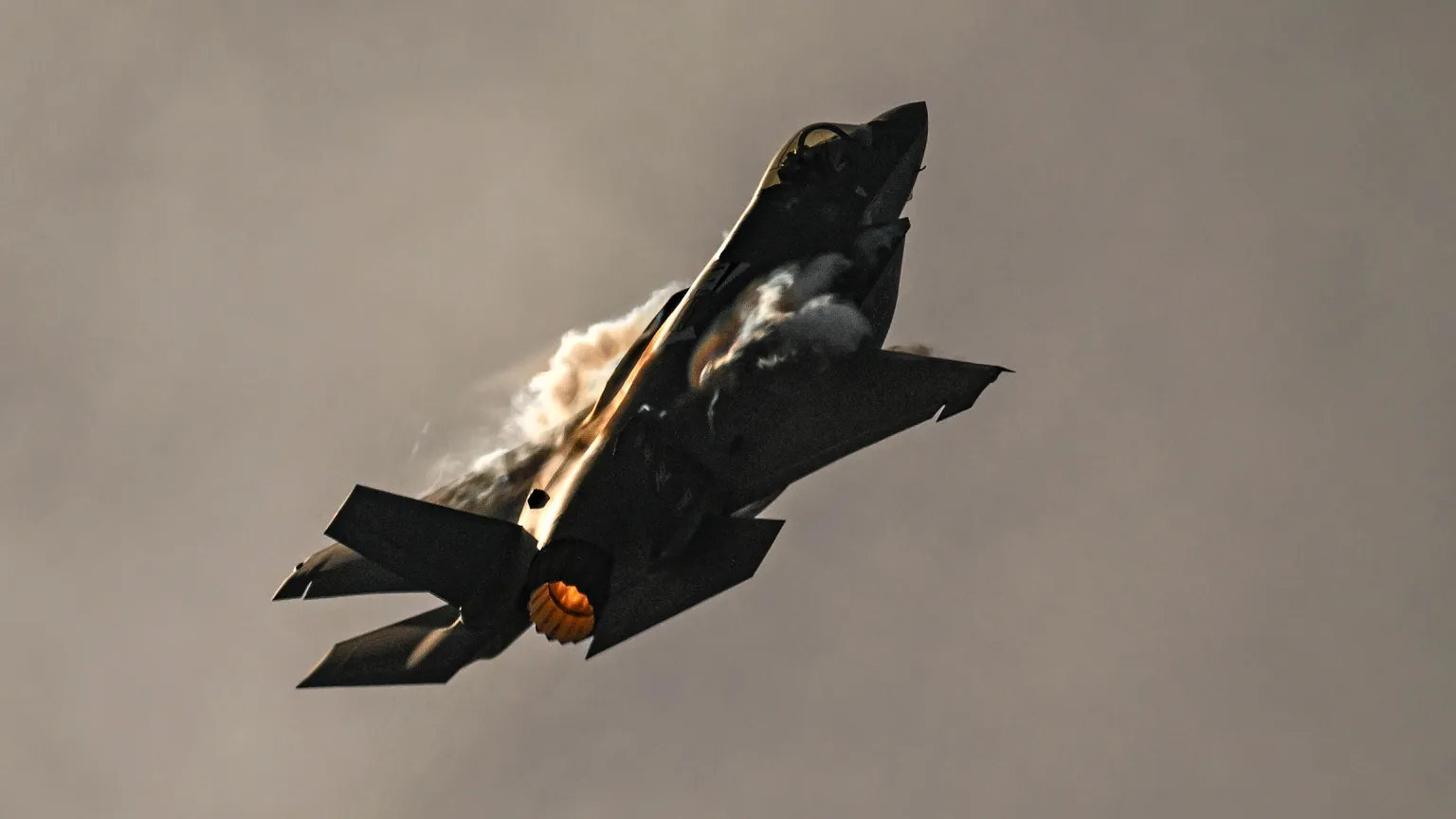
Image Credit: DoW
That’s why America can’t afford to let bureaucracy and budget infighting cripple this essential tool of deterrence.
The reality is simple: the F-35 works when it works. But the system supporting it is barely keeping the wings attached. Until Congress fully funds sustainment, modernization, and spare parts production — and until the War Department fixes its contracting culture — pilots will remain grounded while America’s adversaries close the technological gap.
President Trump and Secretary of War Pete Hegseth have pushed for stronger accountability in military programs like this, and that’s exactly what it will take to get America’s premiere jet back into fighting shape.