Marines Aim for Eyes Everywhere with 360-Degree Armor-Tech Upgrade
Posted By
Common Defense
On
In
National Security,News |
No Comments
The U.S. Marine Corps is stepping up its modernization game once again, this time looking to install 360-degree camera systems on its Light Armored Vehicles and other combat platforms.
The move, part of a broader survivability and situational awareness upgrade, seeks to give Marine crews an all-around view of the battlefield—even while locked down inside their vehicles with the hatches sealed tight.
According to the official notice posted by the Program Manager for Light Armored Vehicles, the Corps wants what it calls a “fully integrated, turnkey system” to deliver complete visual coverage.
Put simply, they’re looking for a set of cameras smart and tough enough to keep Marines alert to every potential threat while they remain protected inside their armor.
Each system would feature at least four cameras but up to ten, all merging their feeds into a seamless, 360-degree video stream for maximum visibility in every direction.
The cameras are expected to come equipped with infrared or thermal imaging for nighttime operations, 4K or 1080p resolution, accurate color rendering, and zoom features—all tools designed to enhance target identification, maneuverability, and crew coordination in fast-moving combat scenarios.
Image Credit: DoW
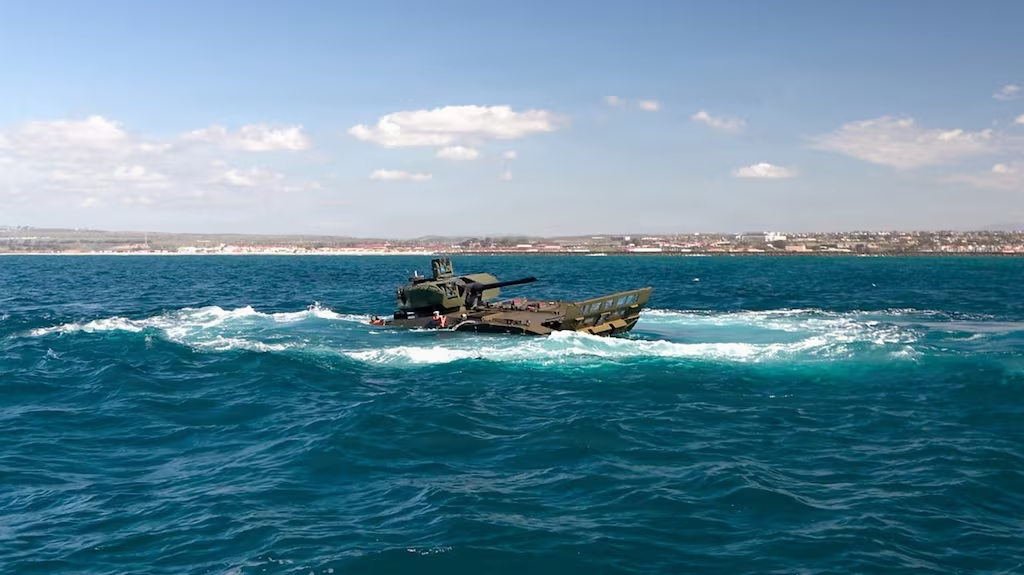
The Textron ARV-30 prototype conducts open water testing at Camp Pendleton, California. (U.S. Marine Corps)
The Light Armored Vehicle, or LAV-25, may be in its twilight years, having first hit the field in the early 1980s, but the Marine Corps isn’t letting it fade quietly.
This upgrade could extend the LAV’s relevancy until the new Advanced Reconnaissance Vehicle formally replaces it. Both the ARV and the Amphibious Combat Vehicle could benefit from this cutting-edge camera suite, ensuring new and legacy platforms alike stay a step ahead of evolving threats.
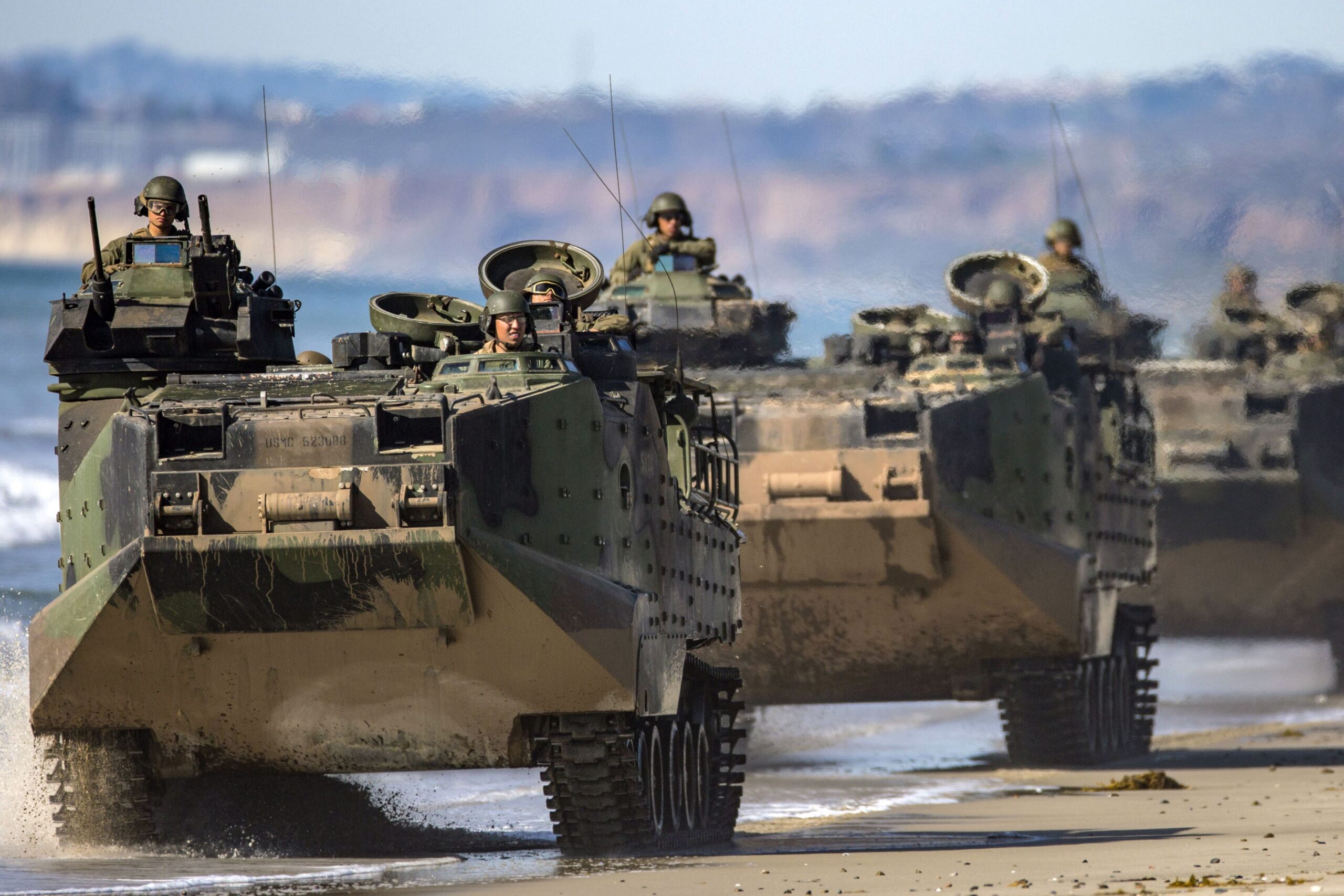
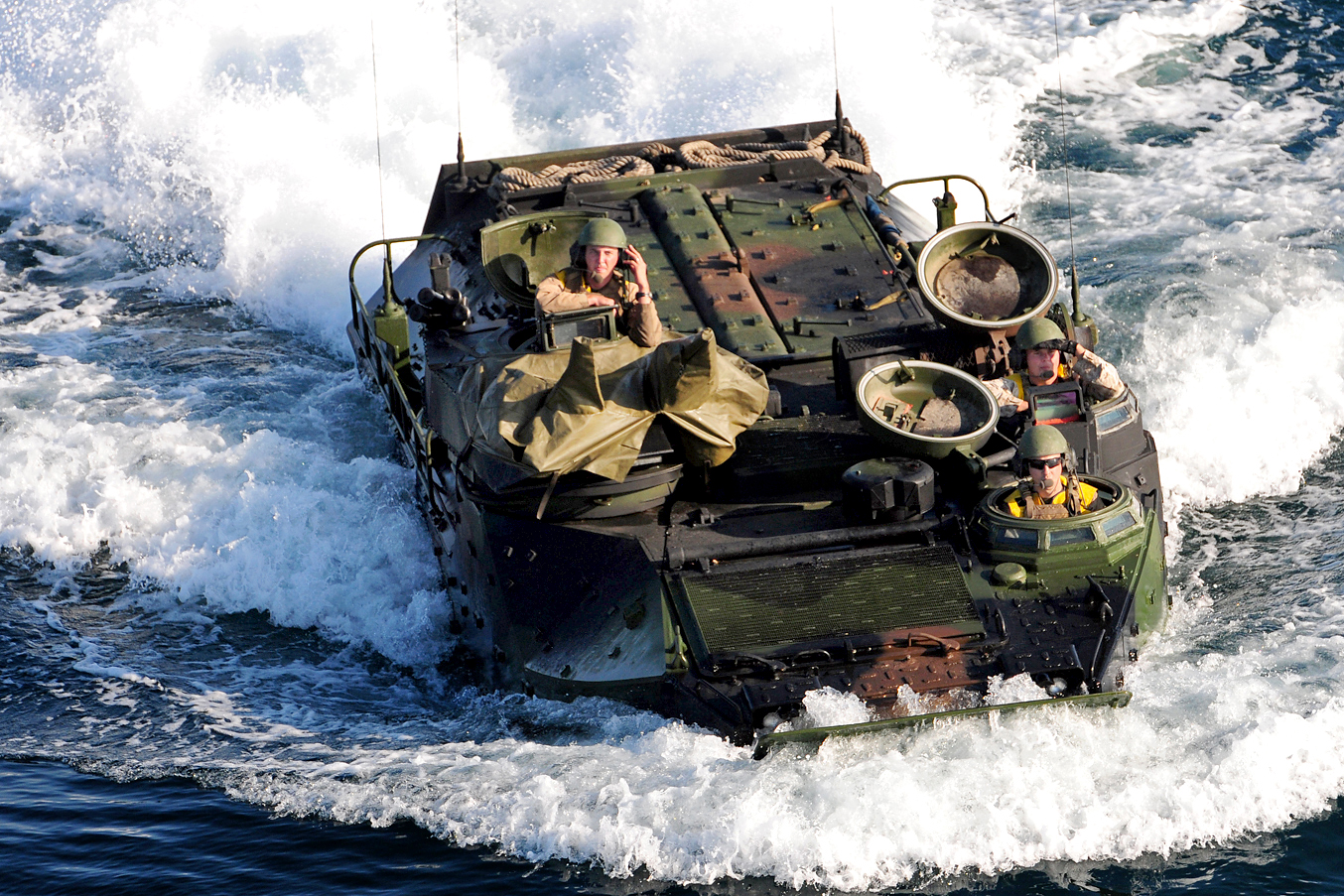
A particular focus of the Marine Corps request is on amphibious operations—where water, visibility, and safety concerns amplify every risk. The service has learned from previous experiences, including challenges detected by the U.S. Navy’s Naval Safety Center with open-hatch operations in the Amphibious Assault Vehicle.
When vehicles take on water during maneuvers, it can compromise systems, slow operations, and add unnecessary danger. Now the Marines want a camera setup that makes it easier to keep everything watertight while still maintaining full control.
Contractors responding to the Request for Information must demonstrate that their systems can handle saltwater, humidity, surf, and low-visibility maritime weather conditions.
Image Credit: DoW
That means the cameras need to continue functioning when the vehicle is fully or partially submerged and be optimized for littoral environments where both land and sea hazards can appear in moments.
Part of the requirement also includes the ability to detect and classify other vessels, recognize navigation lights and day shapes, and help personnel avoid collisions in the tight, unpredictable conditions of nearshore warfare. Essentially, the Marines want a system that functions like an advanced set of combat “eyes”—a total awareness package ready to guide crews through everything from surf zones to urban kill boxes.
Even the small details matter. The War Department’s guidelines call for the technology to assist crew members in judging wave patterns, assessing sea states, and identifying potential hazards obscured by fog, darkness, or rough weather.
These upgrades could be the difference between a successful amphibious landing and a deadly mishap.
Image Credit: DoW
The Corps’ RFI makes it clear this isn’t just another gadget shopping list. It’s about survivability, dominance, and adaptation—hallmarks of a modern Marine fighting force.
Marines can’t afford to be blind when the terrain, the weather, and the war itself are all shifting faster than ever. If a 360-degree camera package offers that edge, then it’s a natural fit for the modern battlescape.
Potential contractors must also show proof of prior deployment in challenging maritime or amphibious settings. This ensures taxpayers aren’t footing the bill for untested tech. The proposed cost cap is $160,000 per vehicle, covering everything from sensors to displays, software, and integration.
More than high-definition recording, this project embodies a new approach to modern warfare—one where the traditional boundaries between land, sea, and digital space are constantly blurring.
Under the renewed focus on American strength coming from leaders like War Secretary Pete Hegseth, upgrades like this reflect the wider push to reclaim battlefield superiority through smarter systems, tougher equipment, and sharper awareness.
Image Credit: DoW
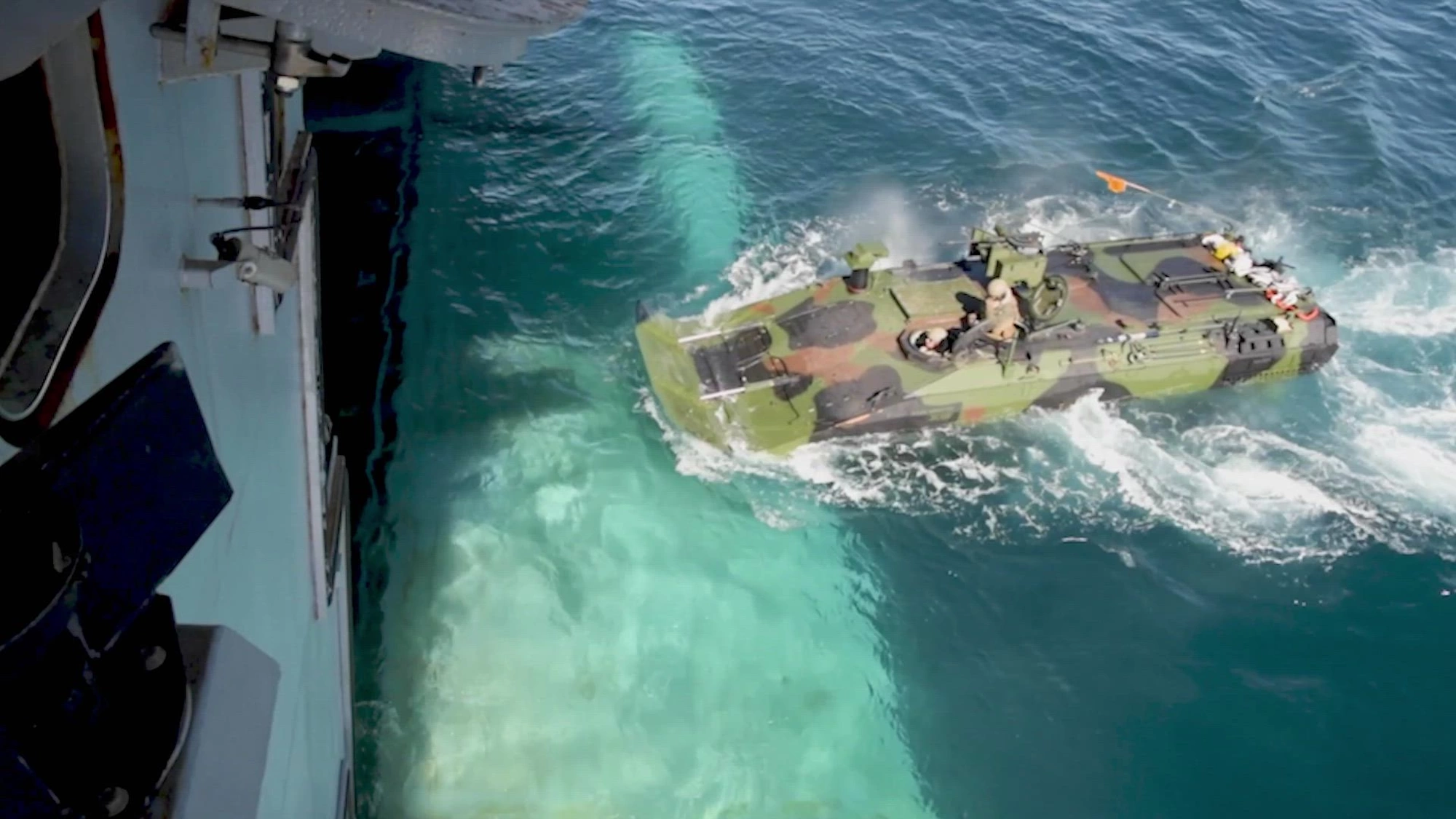
111101-N-YG354-189 PACIFIC OCEAN (Nov. 1, 2011) An amphibious assault vehicle assigned to the 11th Marine Expeditionary Unit (11th MEU) approaches the amphibious assault ship USS Makin Island (LHD 8). Makin Island is underway for routine operations off the coast of Southern California in preparation for the ship’s first operational deployment later this year. (U.S. Navy photo by Mass Communication Specialist 1st Class Douglas Bedford/Released)
As President Trump continues emphasizing American rearmament and strategic independence, efforts like this are living proof that the Marine Corps is following suit.
Every piece of gear that keeps Marines alive and lethal represents a quiet step toward restoring the nation’s rightful position as the toughest, most capable fighting force on Earth.
The deadline for contractors to submit proposals is June 18—a date many defense firms will have circled in red ink. For those ready to deliver durable, cutting-edge tech that can handle both mud and saltwater, this is a chance to make a real difference on the future battlefield.
If the Marines succeed in fielding these 360-degree systems, they won’t just be upgrading vehicles—they’ll be transforming the way armored warfare works.
Every LAV and amphibious craft will turn into a rolling command center, one with its “eyes open” to every angle of the fight, both above and below the waves.
And in the rapidly shifting world of modern warfighting, that kind of vision is priceless.