
The Marine Corps is taking aim at one of the toughest problems facing American sea power: how to break through hostile chokepoints and keep amphibious forces moving when our enemies throw everything they have to stop them.
In a bold new Request for Information, Naval Air Systems Command, on behalf of the Corps, is seeking innovative tools and methods to boost the “Future Attack/Strike,” or FASt, initiative.
The mission is simple: obliterate obstacles, control the air, and clear the seas so America’s amphibious groups can punch through any hostile corridor.
This is not theoretical war gaming; this is about real-world problems. From the Strait of Hormuz to the South China Sea, American warfighters face adversaries armed with drones, missiles, and fast-attack vessels.
Chokepoints have become kill zones, and the Marines want to flip that script.
The FASt program comes as the service prepares to retire aging workhorses like the AV-8B Harrier, AH-1Z Viper, and F/A-18 Hornet.
In their place, the Corps wants tech that extends beyond conventional airframes—think long-range precision missiles, MQ-58 Valkyrie combat drones, electronic warfare systems, and other next-gen tools that rely as much on information dominance as firepower.
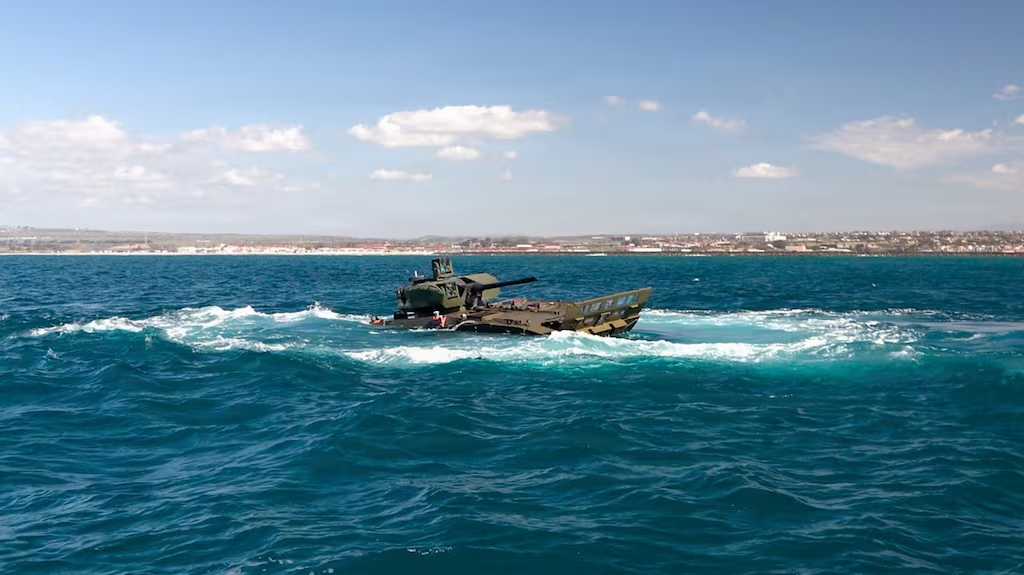
According to the Marine Aviation Plan for 2026, these assets will need to integrate seamlessly into amphibious assault operations, where the line between air and sea is razor thin.
The new RFI calls for analytical models able to simulate complex operations under fire, identify weak points, and test how new systems could crush those vulnerabilities fast and hard.
This push is a recognition that America’s next big fights may not be about large-scale land invasions but about controlling naval arteries—those narrow straits and waterways that dictate whether your convoys move or burn.
Iran’s harassment in the Persian Gulf and China’s fortifications in the Pacific are clear reminders that the Marines must be ready to fight for every inch.
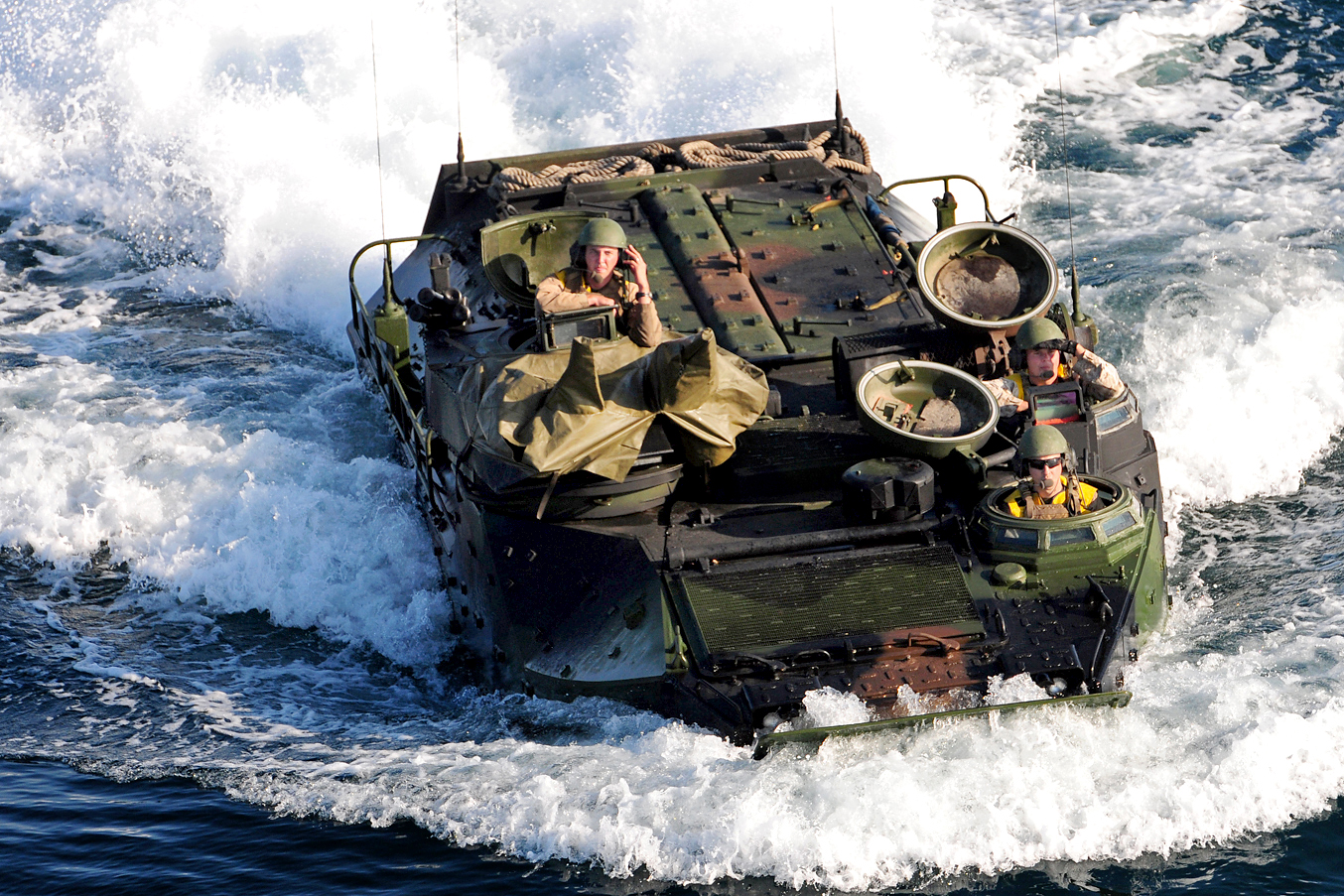
PACIFIC OCEAN (Nov. 1, 2011) An amphibious assault vehicle assigned to the 11th Marine Expeditionary Unit (11th MEU) approaches the amphibious assault ship USS Makin Island (LHD 8). Makin Island is underway for routine operations off the coast of Southern California in preparation for the ship's first operational deployment later this year. (U.S. Navy photo by Mass Communication Specialist 1st Class Douglas Bedford/Released)
The Corps wants inputs on how airpower, long-range fires, and autonomous tech can secure “key maritime terrain” while guaranteeing “passage through critical chokepoints under threat.”
That means everything from spotting hidden missile batteries to ensuring commercial and military shipping can pass safely.
This concept isn’t just about launching missile strikes; it’s about weaving together intelligence, surveillance, and reconnaissance over both sea and land.
It’s about escorting transport aircraft, delivering offensive air support, and neutralizing mobile launchers and hardened enemy sites before they can strike first.
Drone swarms, fast boats, and underwater threats are all on the radar. The analytical toolkit the Marines want must also calculate how to defend Amphibious Ready Groups and Marine Expeditionary Units against these multi-directional, multi-domain attacks.
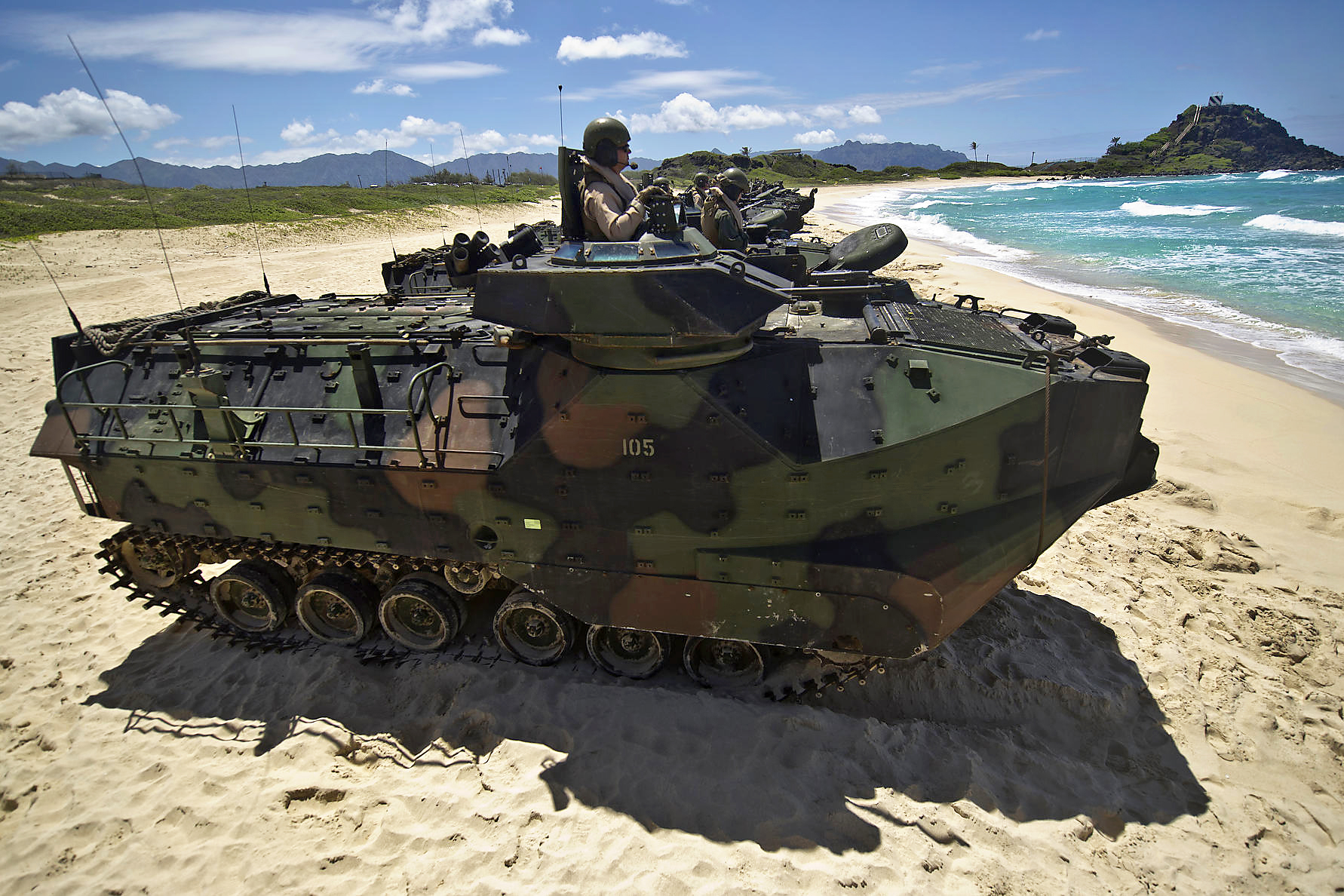
The battles of the future won’t look like the past—they’ll be chaotic, fast-moving, and fought in contested zones where communication and logistics are just as critical as ordnance.
MORE NEWS: U.S. Greenlights Nearly $2 Billion Counter-Drone Sale to Kuwait Amid Rising Iranian Aggression
Anticipating this environment, the Corps notes that new tools must handle scenarios where manned aviation is largely grounded or limited by advanced Integrated Air Defense Systems (IADS).
That means AI-powered—well, let’s call it machine-driven—analytics to evaluate the use of long-range, autonomous, and semi-autonomous weapons capable of fighting even when human pilots can’t reach the front.
Another element in development is the “joint kill web,” a cutting-edge networked targeting system linking sensors, shooters, and decision-makers across the battlespace.
Analytical platforms must map how this web functions in real time, from detection to strike to battle damage assessment, ensuring that enemies never get the last move.
In addition, the Marine Corps wants to analyze the logistical spine supporting these operations—how to sustain extended combat periods from both sea and land, under electronic interference, and while maneuvering in hostile waters. That level of modeling goes far beyond a single mission; it’s about readiness for prolonged conflict.
The Corps isn’t just turning to major contractors for answers, either.
The RFI specifically mentions a desire to work with small businesses and “non-traditional vendors,” signaling a willingness to innovate faster and smarter than the lumbering bureaucracy of the past. America’s warfighters are looking for creativity, not red tape.
Their goal is to wrap up development by fiscal 2027, ensuring that by the time new threats emerge in the Indo-Pacific or Middle East, the United States Marine Corps will have both the technology and the tactics to keep amphibious warfare viable, deadly, and dominant.
Across the Pentagon, there’s growing understanding that control of chokepoints defines modern power.
With enemies like Iran and China salivating at the idea of bottling up American naval convoys, the Marines’ FASt initiative is a loud signal: not on our watch. The sea lanes will stay open—and they’ll stay American.
The opinions expressed by contributors and/or content partners are their own and do not necessarily reflect the views of RobManess.com. Contact us for guidelines on submitting your own commentary.
Join the Discussion
COMMENTS POLICY: We have no tolerance for messages of violence, racism, vulgarity, obscenity or other such discourteous behavior. Thank you for contributing to a respectful and useful online dialogue.