Navy’s 20-Year Assault Case Archive Exposes Systemic Failures and Bureaucratic Cover
Posted By
Common Defense
On
In
National Security,News |
No Comments
A government release of two decades worth of assault and misconduct files aboard Military Sealift Command ships has cast a harsh light on how the system has repeatedly failed those who trusted it most.
For 20 years, from 2000 to 2022, 116 Naval Criminal Investigative Service cases were opened into shipboard sexual assaults and misconduct.
Only five of them resulted in any court action, either military or civilian. The rest—more than a hundred cases—fizzled out quietly into administrative nothingness or were dismissed outright.
The Maritime Legal Aid Foundation pried this information loose through a formal records request, and now the public can finally see what should never have been hidden: a staggering, bureaucratic black hole where accountability goes to die.
This new searchable database doesn’t just present disturbing case details, it reveals just how hard it has been for sailors, cadets, and civilian mariners to get justice in an environment that floats in legal limbo between uniformed military authority and civilian law.
Image Credit: Beachside Stock
Some of the cases are almost too absurd to believe. In 2018, a government-contractor engineer on the hospital ship USNS *Mercy* decided to “just whip it out” at a passing Navy helicopter crew.
NCIS concluded no law technically applied, so the punishment amounted to a laughable 30-day suspension. It’s galling that such acts can happen aboard a U.S. military vessel with little consequence.
In another case a year later, a college student serving as a Merchant Marine midshipman on the USNS *Richard E. Byrd* reported repeated unwanted touching by a navigator.
Prosecutors declined to pursue it, and while the accused denied wrongdoing, the entire incident was shelved. No disciplinary clarity, no institutional accountability, and no closure for the young man trying to serve and learn.
Other files ride the edge of misconduct definitions, like one crew member who felt harassed during a “friendly” fitness assist.
But buried deeper in the archive are horrifying accounts: a 2016 case where a woman reported being grabbed, groped, and bitten by another civilian on the USS Mt. Whitney, only for the Department of Justice to decline prosecution.
The file suggests ship command “was considering” taking action, but there’s no indication it ever did. “Considering” is a bureaucrat’s way of saying “we ignored it.”
Ryan Melogy, founder of the Maritime Legal Aid Foundation and architect of the new database, says none of this shocks him. The records merely confirm what he’s long known: that victims often have no advocate, no lawyer, and no presence in the process. “You’re trapped,” Melogy told reporters.
“You get assaulted in not only where you live, but where you’re working… It’s like there’s nobody.” NCIS, he argues, tends to interrogate the accuser just as aggressively as the suspect, turning victims into problems to be managed rather than people seeking justice.
Image Credit: DoW
Sen. Elizabeth Warren, D-Mass., introduced a proposal mandating the U.S. Comptroller General to carry out an investigation into how JAGs were reassigned to civilian jobs. (Naoto Anazawa/U.S. Air Force)
One major case Melogy now handles involves engineer Elsie Dominguez, who alleges she was violently raped in 2021 by her ship’s civilian captain on the USNS Carson City.
The captain gave up his license, but faces no criminal charges. Disturbingly, Dominguez was told her only course of action was a worker’s compensation claim through the Department of Labor because the assault occurred “in the performance of her duties.”
It’s bureaucratic doublespeak that neatly excuses criminal behavior behind red tape and paperwork.
Melogy hopes the new online archive will at least force sunlight onto these shady corners of naval bureaucracy, making it harder for future cases to evaporate into silence.
He notes that many of these victims are young cadets serving aboard ships as part of their maritime education—vulnerable, inexperienced, and often completely unaware of what avenues for help even exist. Without legal counsel or centralized oversight, they’re adrift in a system that’s supposed to protect them.
One 2013 case gained brief local news attention when a Navy reservist was caught secretly recording female cadets through ventilation holes in their cabin doors.
He ultimately received probation in 2016. That kind of punishment is common across the database—light, administrative, and designed to quietly move problems away rather than confront them.
The Department of War clearly has structural gaps when contractors and civilians serve alongside uniformed members but operate under separate jurisdictional umbrellas.
Image Credit: DoW
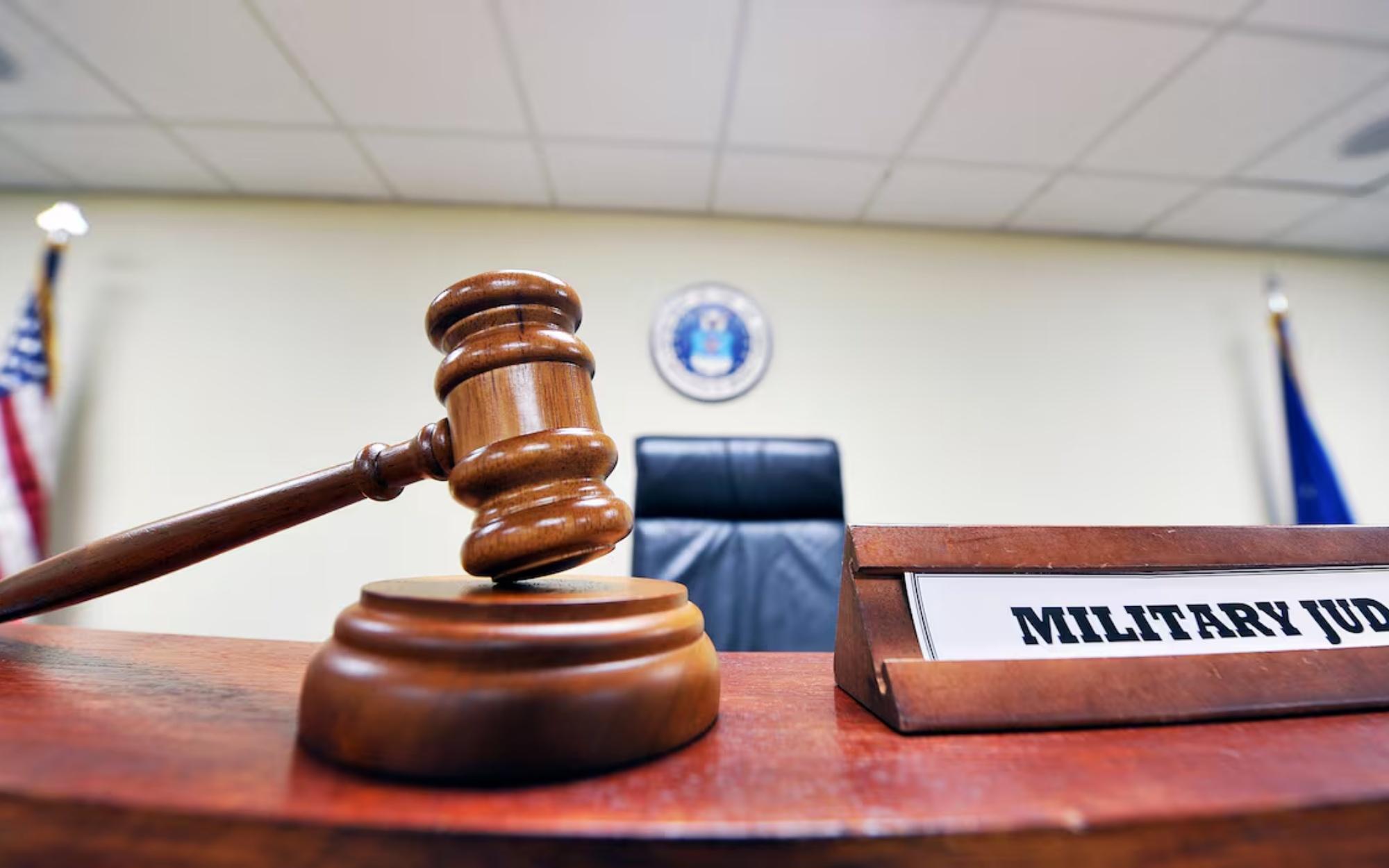
A gavel rests on the judge’s bench in the courtroom of the 39th Air Base Wing legal office at Incirlik Air Base, Turkey, Nov. 14, 2019.
That mix of military authority and civilian immunity leaves nobody clearly responsible. It’s the kind of bureaucratic confusion career functionaries thrive in and victims suffer from.
For the Navy, this release is more than an embarrassment—it’s a moral reckoning. We’re talking about American ships sailing under the national flag, carrying both sailors and civilians, yet the system governing conduct aboard them has failed to deliver basic justice.
The Biden-era bureaucracy may prefer quiet settlements and non-criminal resolutions, but sunlight is not partisan. The truth comes out eventually.
In an era when public trust in institutions is crumbling, the Maritime Legal Aid Foundation’s action cuts through the fog. It took civilians doing the government’s job to finally bring transparency.
Melogy says the hope is simple: “You never know what could happen when you take these kinds of files and bring them out, and let people look at them.”
The files are out now, and the public is looking. What happens next will tell us whether America’s naval leadership has the courage to clean its own decks—or whether this archive becomes just another pile of ignored paperwork in the swamp.