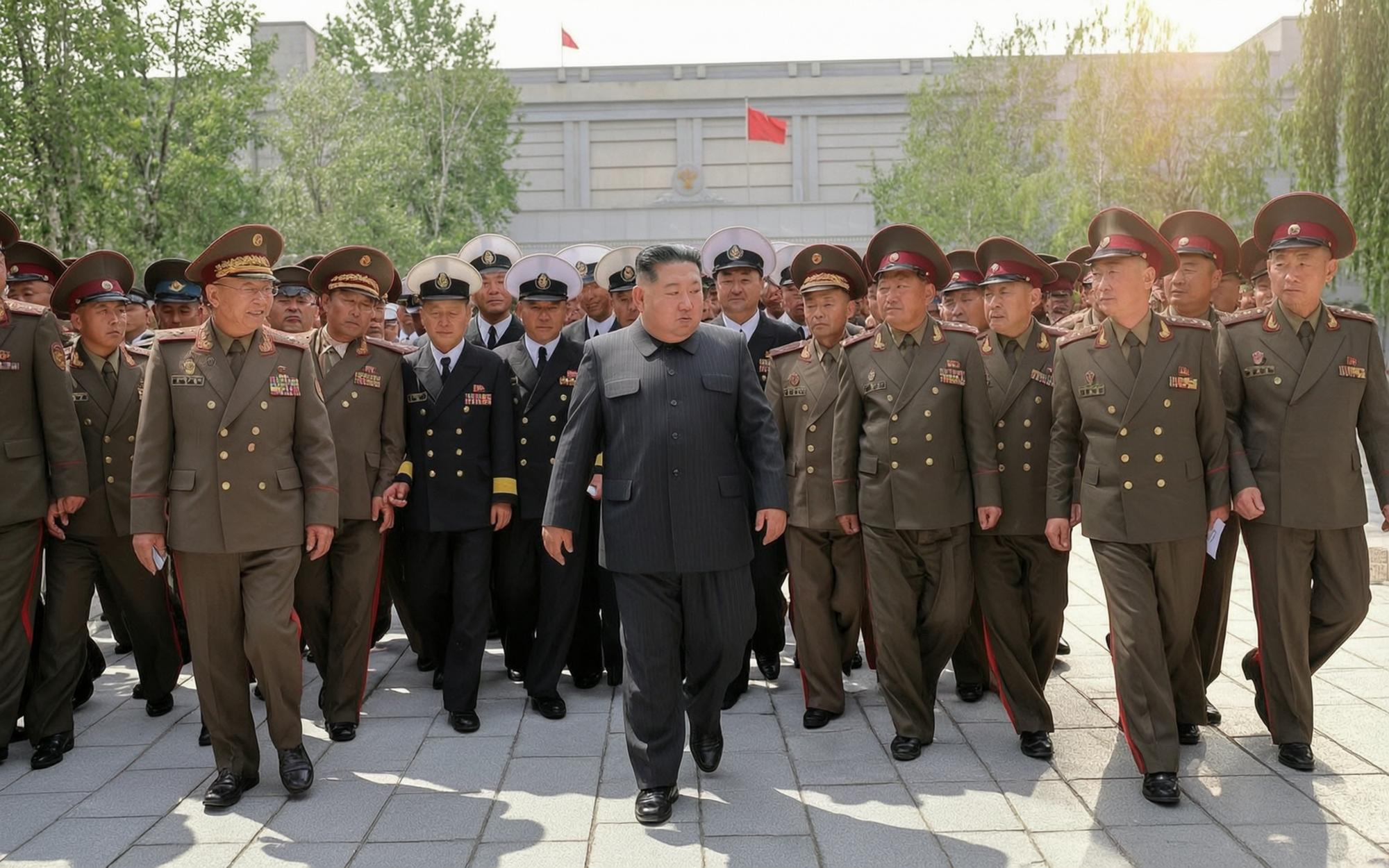
North Korea is doubling down on its nuclear ambitions once again. Kim Jong Un has declared that his regime will expand its nuclear arsenal and ramp up production of advanced warships, including a massive 10,000-ton strategic guided missile cruiser.
According to state-run media, Kim’s latest directive signals an all-out drive to project power and prestige on the international stage — at any cost.
The announcement came during a plenary meeting of the ruling Workers’ Party, where Kim reportedly told his generals and party elites that the nation’s war capabilities must be strengthened “without pause” with the explicit goal of “overtaking the world.”
In the eyes of Kim, more nukes and bigger ships are the keys to survival and dominance in an “unpredictable military and political environment.”
North Korea’s propaganda arm, the Korean Central News Agency (KCNA), framed the decision as a defensive reaction to what it described as U.S.-South Korean “aggression.”
The regime claimed that expanding joint drills and tightening cooperation through the Nuclear Consultative Group in 2023 had left Pyongyang with “no choice” but to accelerate arms expansion.
The KCNA report pushed a familiar narrative, accusing Washington and Seoul of “criminal” plans and alleging that allied exercises were rehearsals for an invasion.
It claimed the Nuclear Consultative Group had already drafted “detailed nuclear war scenarios,” proof, it said, that the United States was pushing the peninsula “to the brink of nuclear war.” In reality, the group’s purpose is deterrence — reminding Kim that any nuclear gamble would end his regime in hours.
Kim’s revelation of the planned missile cruiser caught analysts’ attention. The 10,000-ton vessel, if ever completed, would dwarf anything in the current North Korean fleet. Such a ship — roughly the size of U.S. Ticonderoga-class cruisers — would be a huge leap for a nation whose shipbuilding capacity is still limited.
Yet the move fits Kim’s obsession with prestige projects meant to look formidable, even when the reality tells another story.
Behind the propaganda, North Korea’s renewed focus on naval power is likely an attempt to offset U.S. and South Korean advances in missile defense and undersea warfare. Seoul has been steadily upgrading its submarine fleet and considering nuclear propulsion technology, a step Pyongyang describes as “undisguised provocation.”
South Korea’s War Ministry has not commented publicly on Kim’s latest remarks, but officials in Seoul have long dismissed North Korea’s threats as routine saber-rattling.
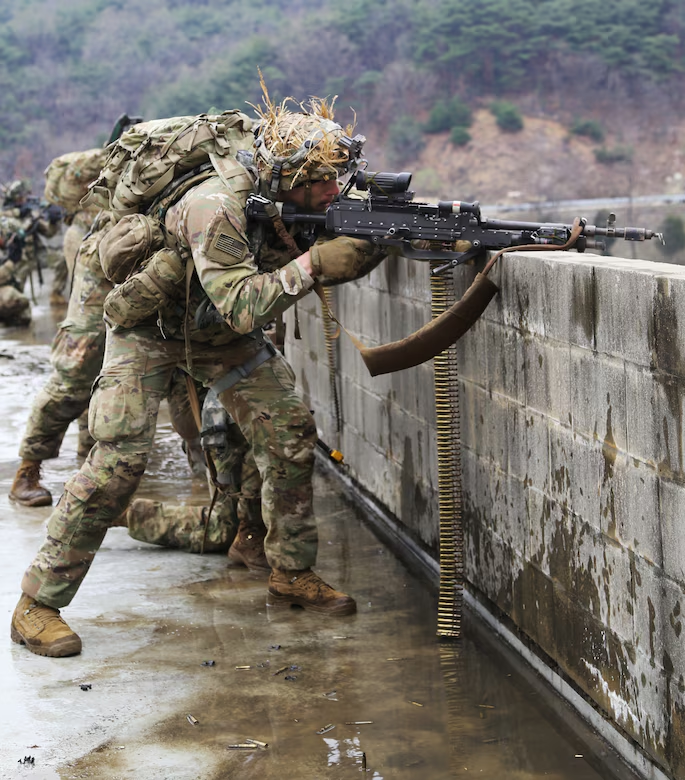
Still, the pace of Kim’s weapons testing has increased sharply in 2024. New tactical nuclear drills, multiple ballistic missile launches, and satellite missions have turned the Korean Peninsula into one of the most dangerous flashpoints on the planet.
The North’s emphasis on “uninterrupted strengthening” of its nuclear arsenal highlights the regime’s fixation with global attention — and its belief that intimidation equals relevance.
There’s also a domestic angle. By pushing new weapons programs and bold announcements, Kim rallies elites and reminds the public that the “supreme leader” alone ensures the nation’s survival.
It’s a well-used strategy to distract from food shortages and economic misery that continue to cripple ordinary North Koreans.
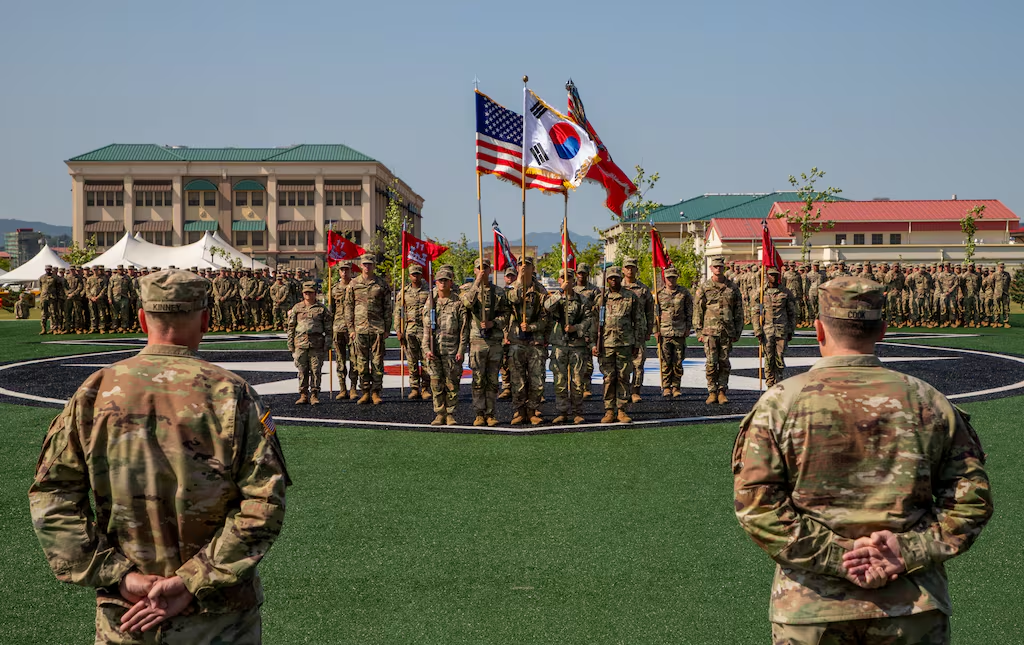
U.S. military officials have repeatedly warned that North Korea’s weapons actions are not just posturing. The continued progress of its nuclear and ballistic missile programs poses a growing threat to American forces in the region.
The Pentagon’s reborn War Department has been tightening cooperation with South Korea and Japan under President Trump’s leadership, ensuring mutual deterrence is credible — not just theoretical.
Secretary of War Pete Hegseth has backed a posture of “peace through strength,” arguing that only overwhelming readiness and a clear line of deterrence will keep Kim Jong Un in check. “Weakness invites conflict,” Hegseth has said, echoing a policy philosophy sorely missing during the last Democrat administration.