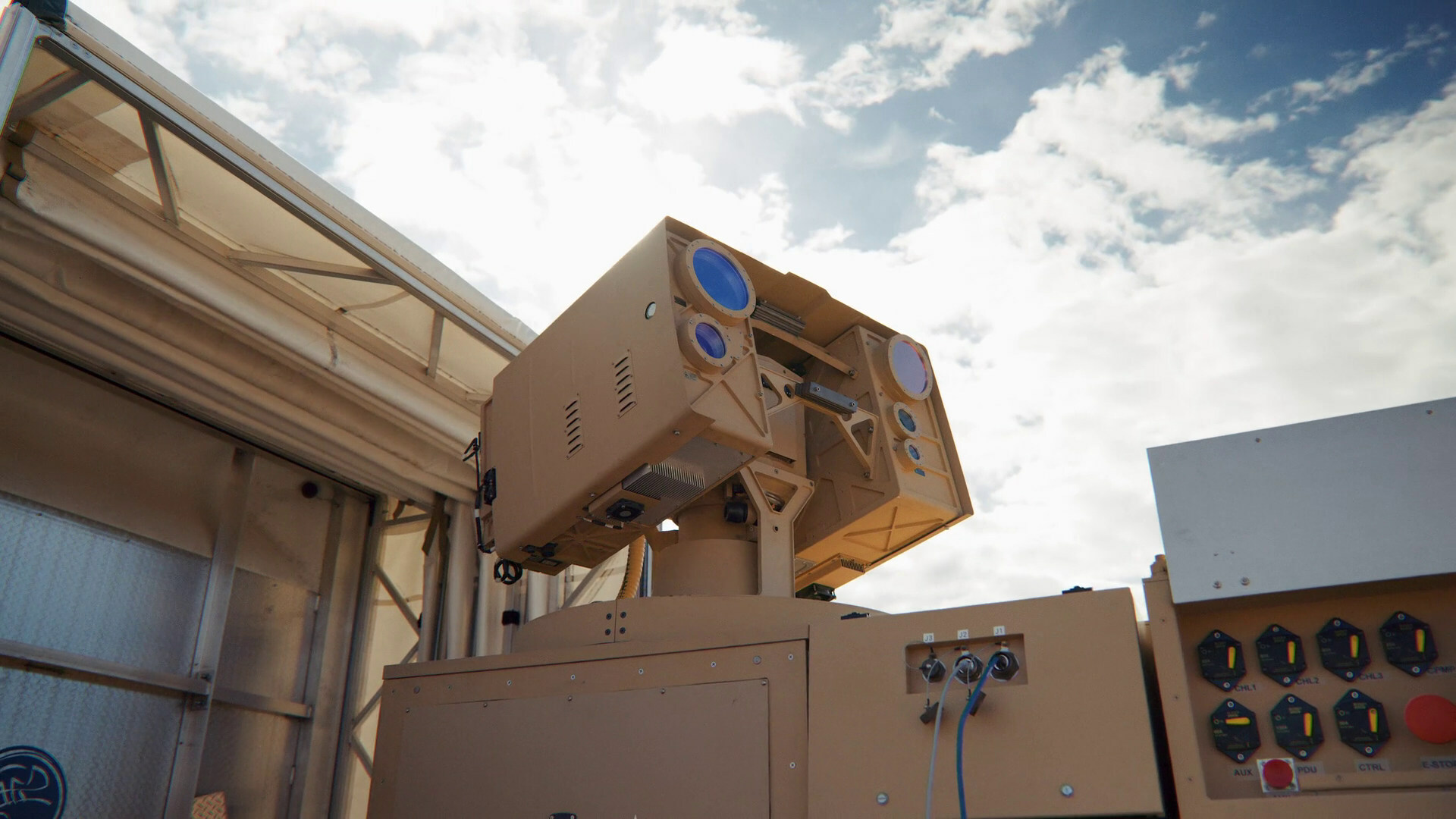
The Pentagon’s laser dream might finally hit the battlefield—and this time, it’s being fueled by President Donald Trump’s Golden Dome initiative to fortify the homeland with cutting-edge missile defense technology rooted in directed energy.
According to Undersecretary for Research and Engineering Emil Michael, who testified before the Senate Armed Services Committee on May 19, the science of these high-energy laser weapons is essentially complete.
What’s left now, he said, is the hard part: mass-producing them and ensuring they can be maintained by soldiers in the field, not just Ph.D.s in lab coats.
Michael told lawmakers that the United States now possesses a “suite of directed energy products” ranging from low-power systems to high-end laser weapons.
The task ahead, he said, is scaling those prototypes into deployable assets suitable for large-scale production and field use.
That effort is being supercharged by Trump’s Golden Dome project, a nationwide missile defense system relying in large part on directed energy.
Some in Washington mocked the concept at first, but Trump—backed strongly by War Secretary Pete Hegseth—has transformed it into a cornerstone of America’s technological resurgence.
Michael said the plan’s “big reliance” on laser technology has dramatically accelerated research and development, particularly after lessons learned in Iran.
The Pentagon plans to show off these field-ready laser weapons by the summer of 2028 as part of several Golden Dome demonstration events.

Michael noted that “there’s never been more effort in the department on this particular capability,” signaling a clear shift away from endless research and toward real-world application.
The money trail tells the story. The Trump administration’s fiscal year 2027 budget request includes $452 million for directed energy development under the Golden Dome umbrella—more than triple what was allocated in 2025.
The U.S. Army and Navy also plan to pour almost $676 million into the Joint Laser Weapon System, a containerized 150-300 kW platform positioned as the workhorse of the upcoming laser arsenal.
But while the enthusiasm is real, the engineering gauntlet remains brutal. The military’s record on laser weapons over the last decade reads like a lesson in frustration and failure.
From the Army’s high-profile Stryker-mounted systems that overheated in the desert, to the Navy’s abandoned HELIOS program, the obstacles have been technical, logistical, and bureaucratic.
Retired Lt. Gen. Robert Rasch once summed it up perfectly: “We can’t get by with the thought of having clean rooms out in combat.” It’s one thing to cut steel on a lab bench, another to fire lasers from a dusty command post in Iraq. That, in essence, has been the Achilles heel of directed energy—gorgeous in theory, clunky in combat.