U.S. Moves to Cut Fighters and Warships from NATO Mission as Europe Faces Reckoning
Posted By
Common Defense
On
In
National Security,News |
No Comments
The Biden administration has confirmed plans to slash the number of American aircraft and warships assigned to NATO missions across Europe, drawing fresh concern from allies and signaling a major shift in the transatlantic military balance.
According to reports first published by the New York Times, the United States will cut roughly one-third of its fighter jets—reducing from around 150 to 100 aircraft—and will also slash its maritime reconnaissance planes from 26 to 15.
A bomber group, a submarine, and a carrier strike group will also be relocated or reassigned under the plan.
The move represents the latest in a series of steady pullbacks of American military might from Europe.
NATO officials have downplayed the shift, calling it a rebalancing of responsibility, but the reality is that the alliance will lose a significant portion of its surveillance and strike capabilities almost overnight.
NATO spokesperson Allison Hart tried to frame the decision as positive spin, claiming the change “strengthens NATO’s defense plans by reducing over-dependence on one Ally.” She insisted that it puts NATO on a “more sustainable footing for the decades to come.”
But European partners reportedly interpret the cuts as an undeniable downgrade in shared readiness, especially at a time when the alliance faces the very real threat of Russian aggression and growing geopolitical turmoil.
U.S. European Command officials had already hinted at this drawdown earlier in the month. General Alexus G. Grynkewich, a U.S. Air Force commander under EUCOM, argued that NATO had developed an “unhealthy co-dependence” on American forces.
That statement seems to have paved the way for Washington to begin trimming its commitments, though no clear timeline has been given for the reductions. According to sources cited by the Times, the changes will “take effect very soon.”
Image Credit: DoW
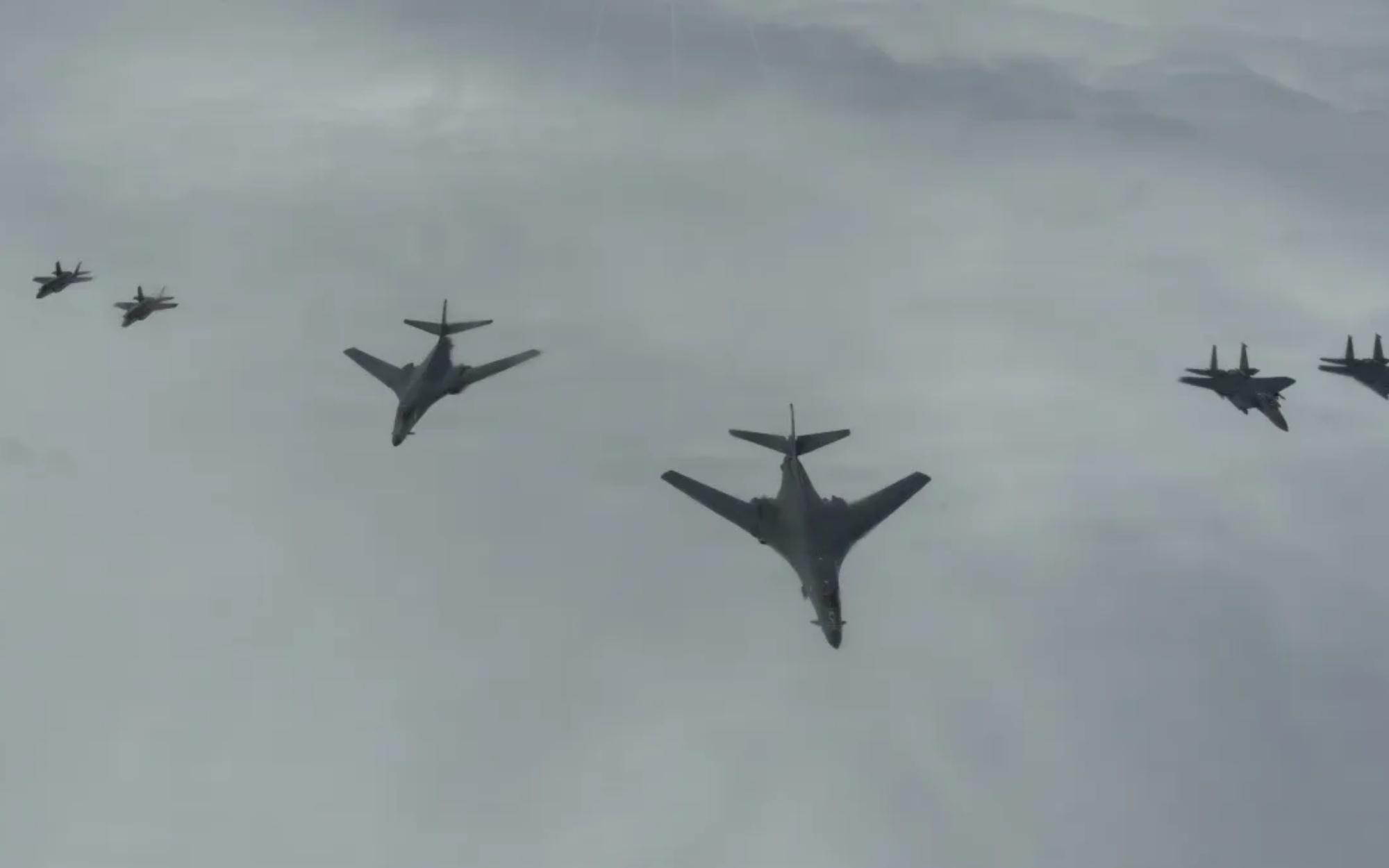
Air Force B-1B bombers, F-15E Strike Eagles and F-35A Lightning IIs fly over the North Sea on June 8, 2026 as part of the Astral Knight 26 exercise. U.S. Air Force photo by Staff Sgt. Nash Truitt.
The decision comes amid ongoing tension between President Donald Trump and some European leaders, especially Germany’s government, over Europe’s lack of investment in its own security.
While Trump has long demanded that NATO members meet the 2 percent defense spending benchmark they once agreed to, much of Europe continues to fall short—relying instead on American power to backstop their shortcomings.
In May, the War Department canceled multiple large troop deployments to Europe.
Roughly 4,000 soldiers from the 2nd Armored Brigade Combat Team, 1st Cavalry Division, were supposed to rotate through Poland and other NATO countries, but their deployment was halted on May 1. A separate unit, the 3rd Battalion, 12th Field Artillery Regiment—trained specifically for Europe—was also pulled from its rotation under the same directive.
The timing is no coincidence. With American forces pivoting to contain Iran and maintain long-term strategic flexibility, Washington appears to be turning the screws on NATO, urging Europe to take responsibility and stop freeloading off American defense spending.
Trump has consistently made the argument that the U.S. military is not Europe’s permanent security blanket.
Image Credit: Beachside Stock
American fighter squadrons have long bolstered the alliance, with F-16 units stationed at Spangdahlem Air Base in Germany and Aviano Air Base in Italy, and F-15s operating from RAF Lakenheath in the United Kingdom. The 48th Fighter Wing has routinely been tapped for missions in the Middle East and has played a key role in projecting power against Iran.
Those aircraft are integral to America’s extended deterrence strategy—but as the global security map shifts, they may soon find new assignments elsewhere.
Since 2022, the United States has ramped up its posture in Europe under Operation Absolute Resolve, deploying rotational troops across central and eastern Europe in response to Russian threats.
But that mission, like many others under the NATO umbrella, has relied heavily on U.S. assets to maintain deterrence. The latest cuts are a not-so-subtle reminder that this dependency cannot last forever.
Supporters of the reduction see it as a push toward strategic autonomy, forcing NATO members to finally invest in their own militaries rather than treating the U.S. as their eternal security guarantor. Critics, however, view the move as a setback to joint deterrence and fear it could embolden adversaries to test NATO’s mettle.
Image Credit: Beachside Stock
What’s clear is that a reckoning is coming for NATO. The alliance’s comfortable post-Cold War model—where the American taxpayer carries the burden while European governments posture politically—has run its course.
Europe must either take the reins of its own defense or face the uncomfortable truth that American support is no longer infinite.
In the meantime, the United States remains focused on aligning its military posture to global needs under a strategy that prioritizes strength, readiness, and America First. In the words of President Trump and Secretary of War Pete Hegseth, it’s time for allies to “step up or step aside.”