U.S. Pounds Iranian Targets After Tehran Fires Drones In Gulf Escalation
Posted By
Common Defense
On
In
National Security,News |
No Comments
The U.S. military hit Iranian radar and surveillance sites on Saturday, unleashing precision strikes after Iranian forces launched multiple attack drones toward the Strait of Hormuz.
The confrontation marked another escalation in the tense war that has gripped the Gulf, putting global oil flows and U.S. personnel in the crosshairs of Iran’s aggression.
According to U.S. Central Command, the Iranian drones appeared aimed at maritime activity in one of the world’s most vital shipping lanes.
American forces downed the drones before they could cause harm, then swiftly retaliated by targeting radar installations in Goruk and Qeshm Island. The clear message to Tehran: when you poke the American eagle, expect the talons.
Iran’s foreign ministry responded with its usual bluster, accusing Washington of breaking an April ceasefire and leaking the same tired threats about “illegal actions” and “responsibility for consequences.”
For a regime that’s been bankrolling terror and harassing ships for years, that lecture rings hollow. Iran’s defiance only reinforces why the Trump administration has refused to let the ayatollahs dictate terms in the Gulf.
Tehran’s Revolutionary Guard Corps then claimed to have fired ballistic missiles at U.S. bases in Kuwait and Bahrain, along with attacks on four tankers that it falsely claimed lacked “permission” to pass through the Strait. The fantasy of Iranian maritime control didn’t end well.
Kuwait’s army reported intercepting seven missiles and confirmed only limited damage with no casualties. Bahrain sounded air raid sirens and urged residents to find shelter—another reminder of how Iran’s belligerence destabilizes the entire region.
Both Kuwait and Bahrain blasted Tehran’s aggression. Kuwait’s foreign ministry condemned the assault as a “blatant” act threatening citizens and regional stability. Their message echoed across the Gulf: Iran’s recklessness isn’t resistance—it’s desperation.
Image Credit: DoW
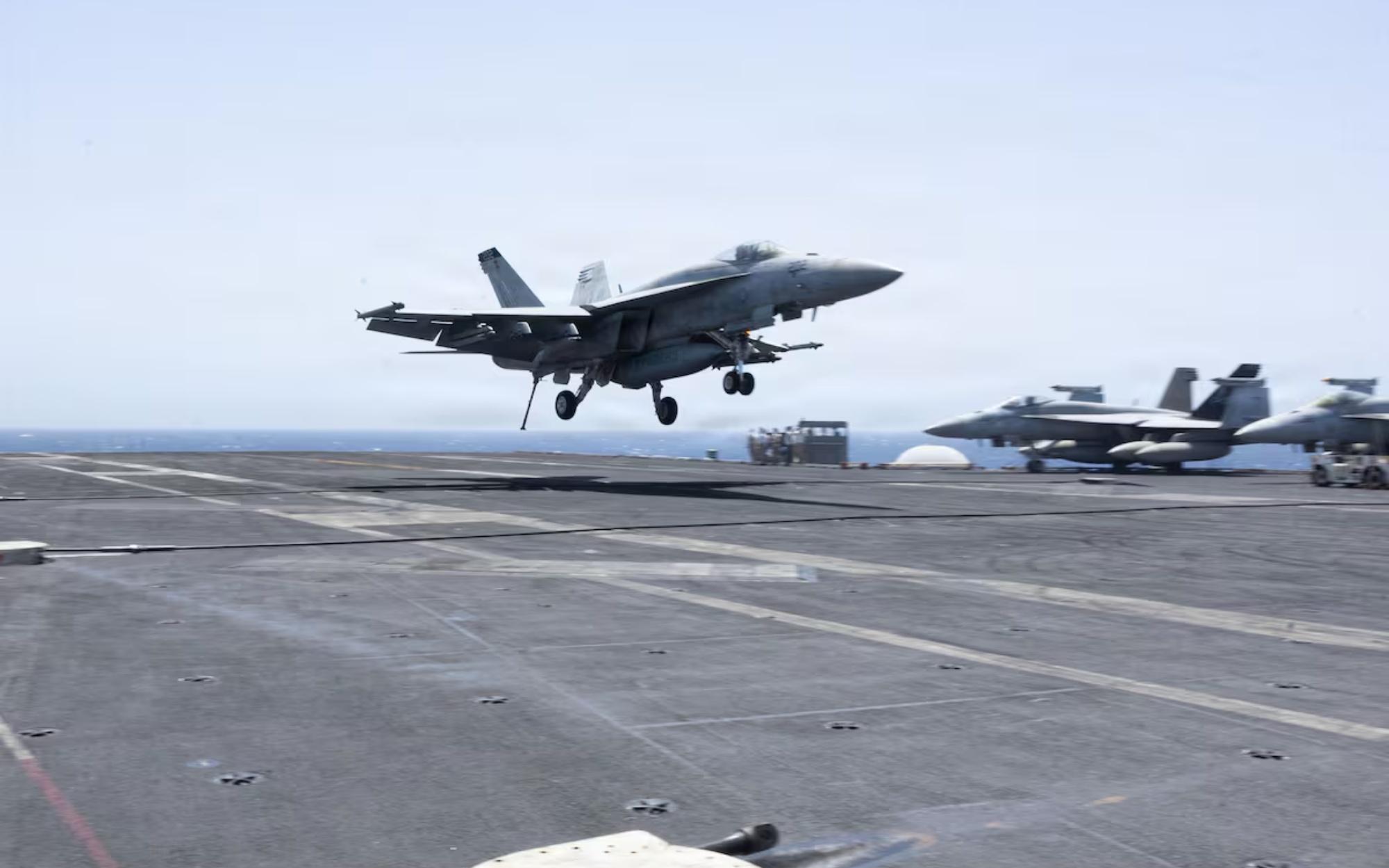
An F/A-18F Super Hornet lands on the flight deck of Nimitz-class aircraft carrier USS George H.W. Bush while sailing in the Arabian Sea, May 26, 2026. (U.S. Navy)
The U.S. military confirmed that six of Iran’s missiles were intercepted and a seventh fell short. American defense systems, bolstered under President Trump’s leadership, once again proved why strength—not appeasement—keeps U.S. interests safe abroad.
Behind the weapons fire lies a diplomatic deadlock. Washington and Tehran have been locked in indirect talks to end the three-month-old conflict, but Iran has stonewalled progress.
The regime demands access to frozen oil money, relief from sanctions, and unfettered leverage over the Strait of Hormuz—a choke point for roughly 20 percent of global oil traffic before the war.
Iran’s manipulation of the waterway has strained supply lines worldwide. For regimes like Tehran, chaos at sea equals cash, as rising fuel prices pressure Western economies.
Even humanitarian programs like the U.N. World Food Programme now warn that rising costs are pushing millions toward hunger. It’s the predictable fallout when tyrants weaponize energy markets.
Meanwhile, Pakistan has tried to act as a go-between, sending its interior minister, Mohsin Naqvi, to Tehran with a message for Supreme Leader Mojtaba Khamenei.
Image Credit: DoW
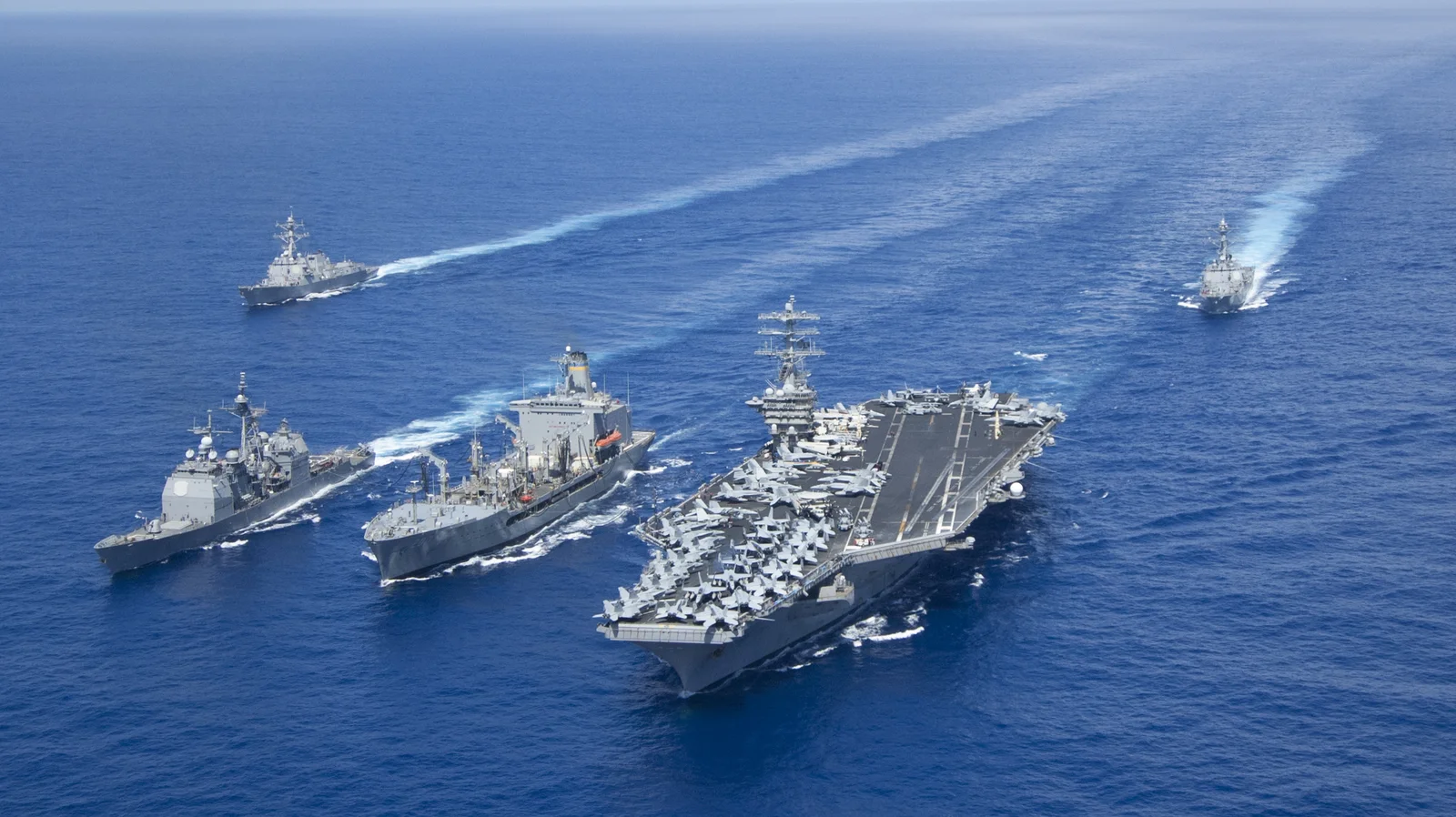
USS Nimitz traveling with its strike group. Michael D. Cole/US Navy
It’s unclear whether Islamabad can shift anything—especially when Iran’s conditions resemble extortion more than negotiation.
President Trump, speaking on NBC’s “Meet the Press,” was candid about the battlefield reality. He said most of Iran’s drone and missile factories have been destroyed, though the regime still possesses roughly 21 to 22 percent of its arsenal.
“It’s a lot of missiles, but it’s not what it was when we first attacked,” Trump said. That’s the kind of blunt assessment that Americans have come to expect from a leader who doesn’t sugarcoat the truth.
Asked why Iran hasn’t accepted peace talks given its weakened state, Trump noted that Iranian leaders are “strong” and “proud”—but also cornered.
“They’ve got no choice,” he said, predicting that pressure will eventually force Tehran’s hand. He’s right: Only firm power, not polite negotiation, will bring the mullahs to heel.
Iran’s latest threats include warnings from adviser Mohsen Rezaei, who told CNN that any further attacks could push America into a “dark corridor” unless Washington unfreezes $24 billion in Iranian assets. That kind of language only underscores who’s really desperate for cash and leverage.
While the Gulf sparred, tensions in Lebanon also escalated. Israel struck a Lebanese army vehicle, killing two officers and a soldier, after identifying what it said was a Hezbollah staging area.
Hezbollah, ever the Iranian proxy, accused Israel of “continued aggression” while rejecting a U.S.-brokered ceasefire proposal that didn’t meet its demands. Iran, as expected, made halting the Israel-Hezbollah fight a condition for any broader truce with Washington.
Image Credit: DoW
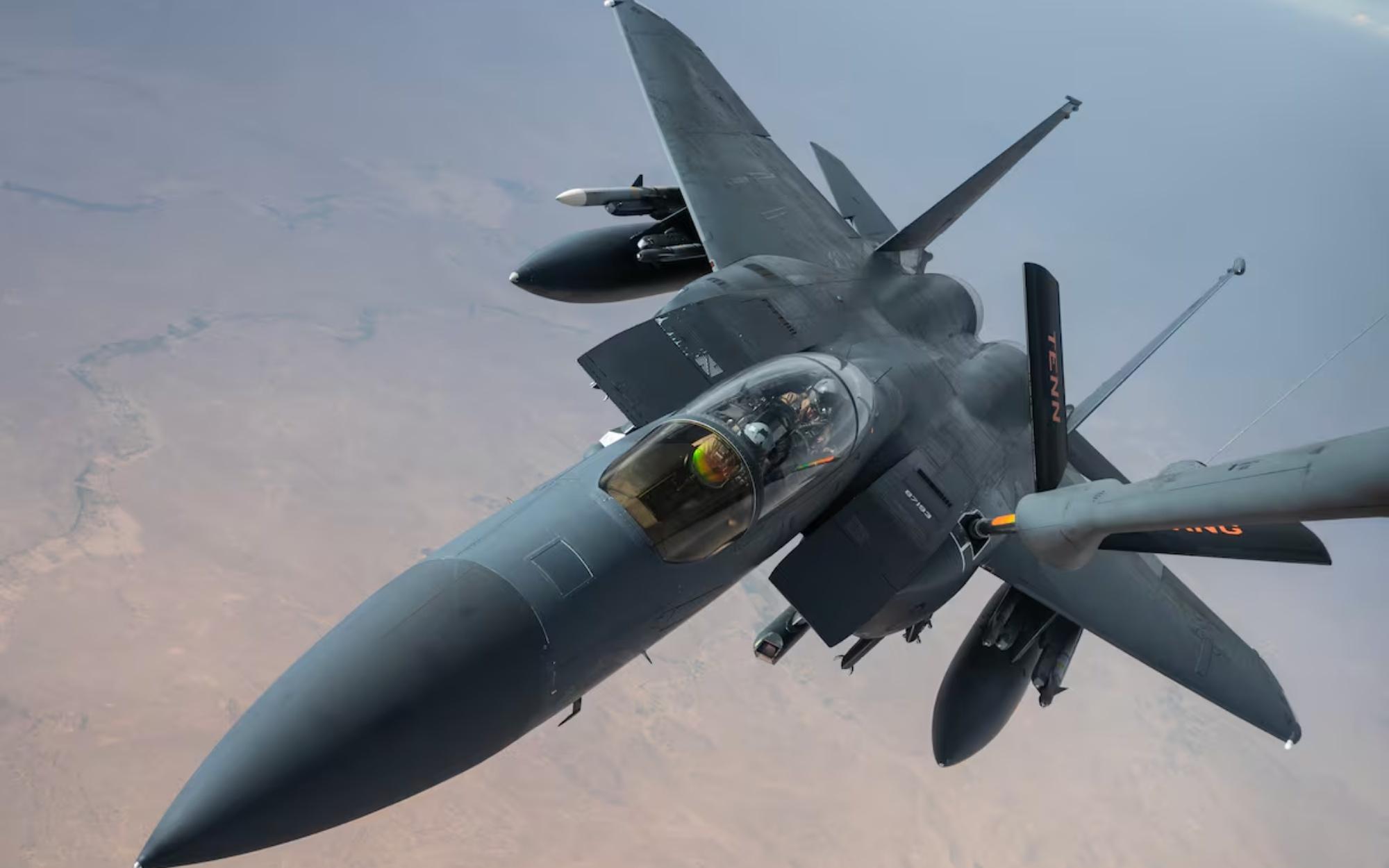
A U.S. Air Force F-15E Strike Eagle receives fuel over U.S. Central Command, April 20, 2024. (U.S. Air Force)
The reality is that Iran wants to control not just its own territory, but the post-war map of the region—from the Strait of Hormuz to Lebanon.
But President Trump’s posture leaves no doubt: the U.S. will not bow to Tehran, will not surrender control of international waters, and will strike back decisively whenever America’s enemies test its resolve.
This weekend’s exchange made that policy abundantly clear. America acted not out of impulse but strength.
Tehran gambled, and once again, it lost ground both militarily and diplomatically.
For the Iranian regime, the message is simple—the United States under Trump and War Secretary Pete Hegseth doesn’t wait to be hit twice. It hits back harder.