Air Force Bets Big on Thousands of Low-Cost Cruise Missiles to Overwhelm Enemies
Posted By
Common Defense
On
In
National Security,News |
No Comments
The U.S. Air Force is turning a major page in its strategy book, moving away from ultra-expensive cruise missiles toward an arsenal that can be built in bulk and fired at will.
The Pentagon announced new framework agreements with three companies for the Family of Affordable Mass Missiles, known as FAMM, signaling a clear pivot toward a “quantity has a quality all its own” approach rooted in battlefield realism rather than bureaucratic extravagance.
At the heart of the new program are three defense innovators: Anduril, CoAspire, and Zone 5 Technologies. Each will be developing its own low-cost missile variant designed to expand the Air Force’s strike reach across vast distances without draining the war chest.
The decision reflects a long-overdue correction in Pentagon acquisition strategy—championed by War Secretary Pete Hegseth—to favor fast, scalable, and affordable solutions that deter near-peer adversaries like China and Russia.
The contrast in costs tells the story. The Air Force’s current Joint Air-to-Surface Standoff Missiles cost over $1.3 million apiece. In stark comparison, the new FAMM missiles will clock in around $218,000 each—a price point that lets the service fire several shots for the cost of just one of its high-end weapons. This means the Air Force could saturate enemy defenses with sheer numbers instead of relying solely on elite but limited munitions.
FAMM comes in two variants: FAMM-L, designed for fighters and bombers, and FAMM-P, meant to be dropped by cargo planes. Both will boast operational ranges between 250 and 500 miles, a sweet spot that allows pilots to strike deep behind enemy lines while staying well outside the reach of hostile missile defenses.
According to Anduril, their Barracuda-500 missile was “specifically designed to expand the United States’ stand-off strike capability.”
In a statement, the company said, “By augmenting existing critical munitions inventories with a more affordable, producible, and flexible option, Anduril is enhancing America’s arsenal of munitions, ensuring that we have the capability required to deter our adversaries.”
Image Credit: DoW
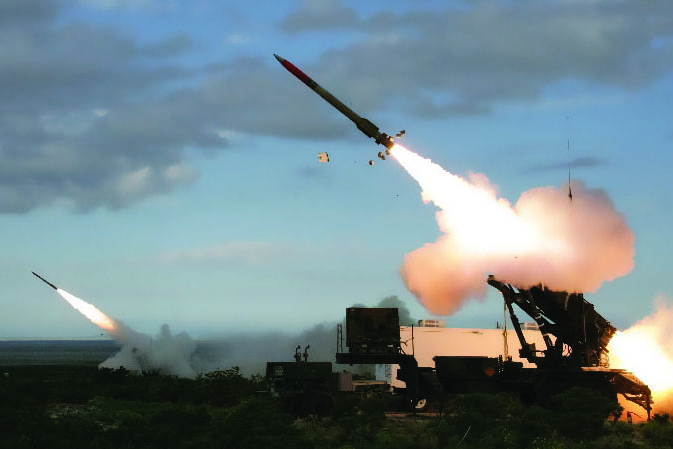
The Army test fires a Patriot missile in a recent test. The Patriot missile system is a ground-based, mobile missile defense interceptor deployed by the United States to detect, track and engage unmanned aerial vehicles, cruise missiles, and short-range and tactical ballistic missiles. Patriot, along with other missile defense systems, are included in the Army Air and Missile Defense 2028, which provides the Army’s overarching vision for the AMD force, describes how the AMD force is postured to support the Army and joint forces, and articulates what must be accomplished to achieve the 2028 desired end state of preventing and defeating adversary air and missile attacks through a combination of deterrence, active and passive defense, and support to attack operations. (U.S. Army photo)
The framework agreements don’t lock in immediate missile purchases but instead set the stage for a long-term partnership. This contract model gives these firms confidence to invest in production lines while keeping the Air Force’s procurement options open.
The expectation is that real production will ramp up beginning in 2027, with as many as 8,000 missiles purchased annually across all vendors.
Anduril’s deal runs for seven years, with CoAspire and Zone 5 signed on under similar terms. Collectively, the Air Force intends to buy roughly 28,000 FAMM missiles over five years, at a projected program cost of $12.6 billion.
It’s an investment strategy rooted in wartime practicality: giving airmen the tools to dominate any engagement without being handcuffed by budgetary absurdities.
Still, none of these deals mean anything without congressional approval. The Pentagon will need lawmakers on board to fund the multiyear agreements. With many in Congress increasingly supportive of industrial expansion and rearmament amid global instability, there’s a growing recognition that speed and affordability are now just as vital as capability.
To keep the vendors sharp and competitive, the Pentagon has tied the deals to firm fixed-price terms with guaranteed minimum orders. Companies that outperform expectations and beat production schedules become eligible for more orders.
Image Credit: DoW
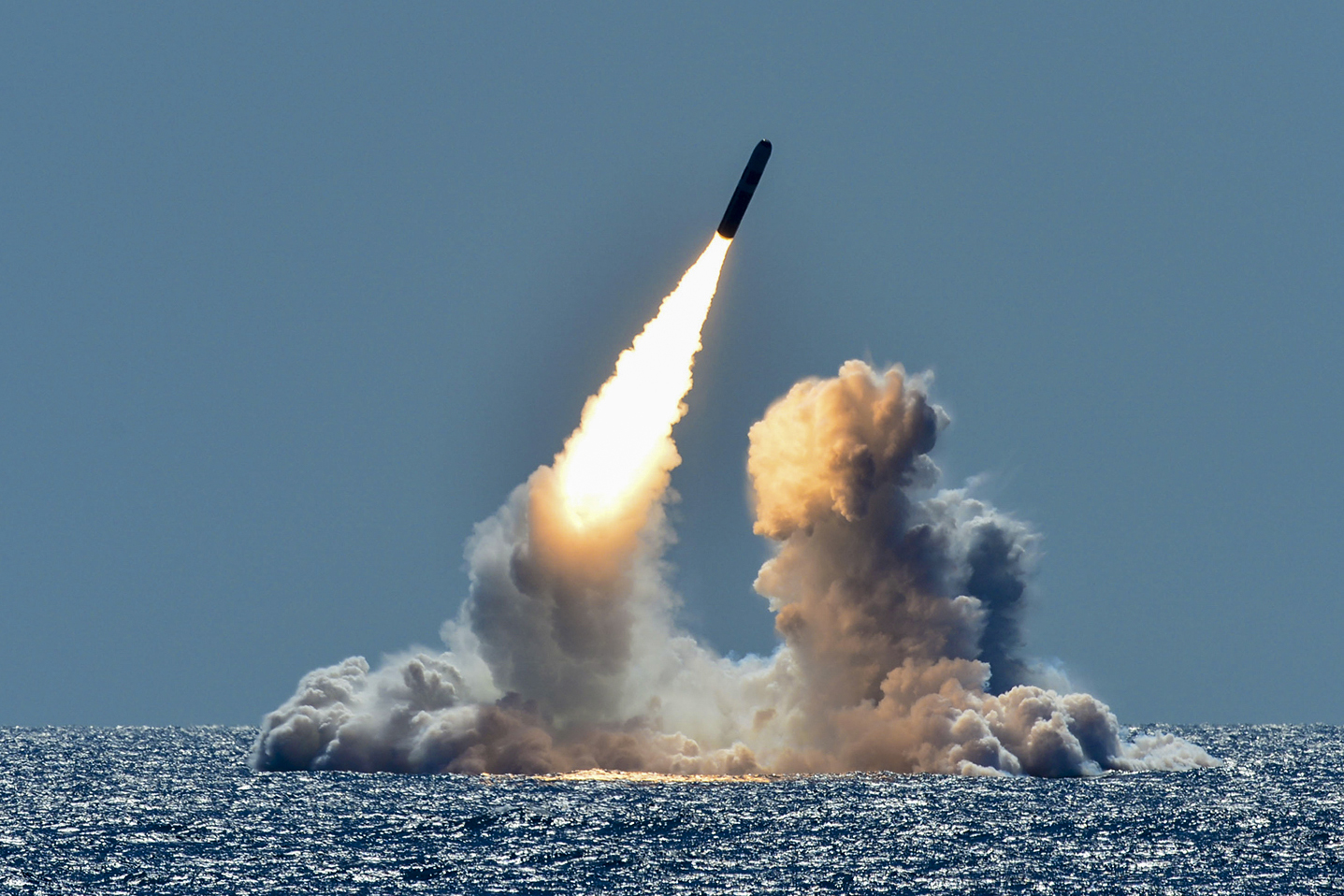
180326-N-UK333-012 PACIFIC OCEAN (March 26, 2008) An unarmed Trident II D5 missile launches from the Ohio-class ballistic missile submarine USS Nebraska (SSBN 739) off the coast of California. The test launch was part of the U.S. Navy Strategic Systems Program’s demonstration and shakedown operation certification process. The successful launch certified the readiness of an SSBN crew and the operational performance of the submarine’s strategic weapons system before returning to operational availability. (U.S. Navy photo by Mass Communication Specialist 1st Class Ronald Gutridge/Released)
This incentivized model, a hallmark of Hegseth’s Acquisition Transformation Strategy, aims to break free from stagnant procurement habits that plagued the War Department for decades.
Michael P. Duffey, undersecretary for acquisition and sustainment, praised the agreements as proof of progress. He said the FAMM deals exemplify efforts to “expand the defense industrial base, field capabilities faster, and attract private investment.” Translation: the War Department is finally moving at the speed of war, not red tape.
Zone 5 Technologies—though acquired by Norwegian firm Kongsberg—continues to run its U.S. operations out of California. Anduril is a familiar American defense disruptor headquartered in California, and CoAspire hails from Virginia.
All three companies stand to benefit from the War Department’s push to tap into private-sector speed and innovation rather than relying solely on the traditional “Big Five” contractors that dominate the landscape.
This FAMM effort also coincides with the Army-led Low-Cost Containerized Missiles program that’s engaging many of the same companies.
That program focuses on portable, ground-based missile systems that could fill warehouses and transport containers worldwide—a logistical advantage that echoes the same “cheaper, faster, smarter” spirit driving the Air Force’s FAMM initiative.
Image Credit: DoW
The message behind this new strategy couldn’t be clearer: the Pentagon is done overpaying for yesterday’s solutions. With Secretary Hegseth leading the charge, the Department of War is sharpening America’s arsenal for an age of rapid confrontation and high-intensity conflict.
The United States no longer needs to rely on scarcity and complexity to win. This time, it’s about scale, strength, and a return to tactical common sense.