The U.S. Army has developed a groundbreaking new process for rifling artillery barrels that could dramatically extend the life of America’s big guns while cutting costs and boosting performance — a combination that’s welcome news in today’s high-demand world of cannon warfare.
The cutting-edge process, known as electrochemical machining (ECM), was unveiled at the Army’s Benét Laboratories in New York, where engineers have spent years fine-tuning a method that carves the rifled grooves of 155mm howitzer barrels without the cutting tool ever scraping the metal.
Instead of grinding through hardened steel, ECM uses a fascinating combination of salt water, electricity, and chemistry to dissolve metal precisely.
The result is a pristine interior barrel surface — one far better suited for modern artillery that faces extreme levels of heat, pressure, and erosion in battle.
Christopher Mulligan, a materials engineer at Benét Laboratories, explained just how critical this process is.
“The protective coating applied to the bore is the primary defense against the extreme thermal and erosive environment inside a firing cannon,” he said. Without a flawless surface for bonding, those coatings fail, he added, leading to catastrophic barrel wear under the stresses of modern propellants.
Traditional rifling cuts, which physically grind grooves into the bore, leave micro-damage and imperfections that can weaken the barrel over time.
ECM eliminates that problem entirely, producing a chemically perfect surface that bonds seamlessly with modern high-resistance coatings.
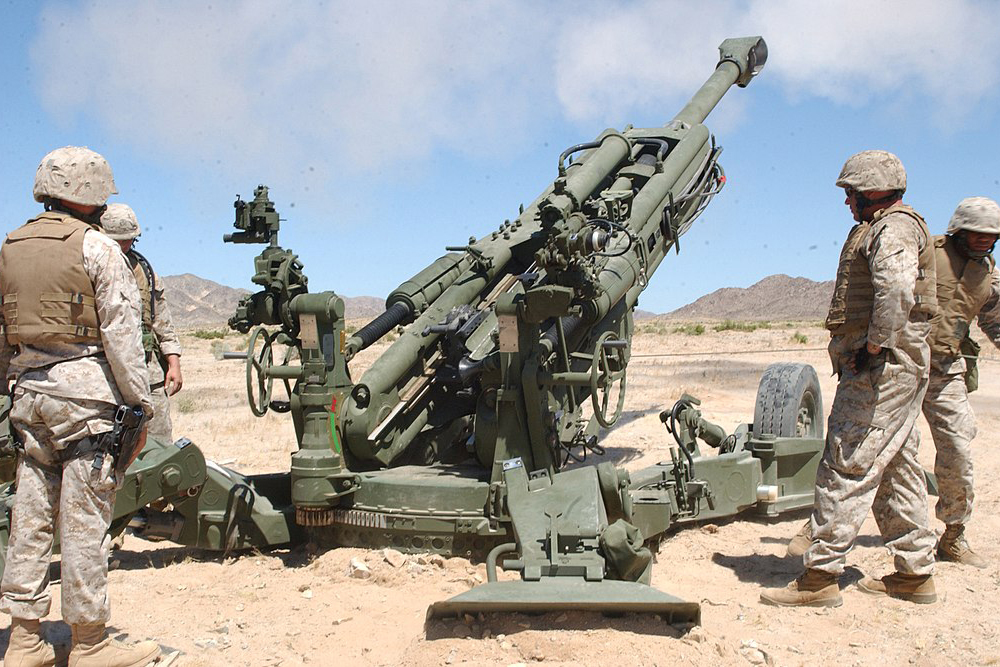
The ECM method can carve all 48 rifling grooves of an M284 cannon barrel in one swift operation, making it both faster and more precise than older mechanical processes. That speed translates into real-world readiness and cost savings for America’s arsenal of democracy.
Christopher Humiston, who leads the ECM project at Benét Laboratories, called the breakthrough “a significant advancement in cannon production.”
He emphasized that since the tool never physically touches the steel, “it experiences virtually no wear,” saving untold maintenance hours and replacement costs.
Humiston added that the flexibility of ECM opens new doors for precision design, allowing engineers to experiment with complex rifling profiles, including variable depth grooves that were previously impossible to manufacture reliably.
This gives the Army an edge in developing artillery that shoots farther and lasts longer in the field — exactly what’s needed as global threats evolve.
The project was made possible through collaboration between Benét Laboratories, part of the Army Combat Capabilities Development Command Armaments Center, and several private industry partners who brought advanced machining expertise into the fold.