Can America’s Military Still Adapt When the Fight Changes?
Posted By
Common Defense
On
In
National Security,News |
No Comments
The U.S. military has long prided itself on its world-class readiness—numbers of troops on call, ships at sea, and aircraft ready to launch.
But in an era of evolving warfare driven by drones, artificial intelligence, and lightning-fast battlefield shifts, readiness may no longer be the full measure of strength. The bigger question is: How fast can America’s war machine adapt when the unexpected strikes?
Commanders across the services can measure nearly every tangible factor of power—how many soldiers are deployable, how many fighters can fly, how quickly a brigade can mobilize.
Yet, despite all the spreadsheets and metrics, there’s a growing concern that the Department of War may not be measuring what matters most in the wars ahead: adaptability, judgment, and flexibility under fire.
No military plan survives first contact, as the old saying goes, and modern warfare is proving that axiom more brutal than ever.
Rapid technological advancement, especially in unmanned systems, has rendered yesterday’s assumptions obsolete almost overnight. According to defense experts, the ability to think and act faster than the enemy—not just show up on time—is becoming the decisive variable of victory.
The Pentagon’s own 2022 National Defense Strategy essentially admits that the future battlefield will be a maelstrom of uncertainty.
Between China’s swarm of drones, Russia’s erratic cyber tactics, and Iran’s proxy networks, American forces will face a level of chaos that can’t be easily predicted or spreadsheeted.
Nora Bensahel, a professor at Johns Hopkins, laid it bare: “You have to train your forces to fight in a particular way, but the odds are you’re going to be wrong.”
And with technology transforming at breakneck speed, the traditional training pipelines and bureaucratic models simply can’t keep up.
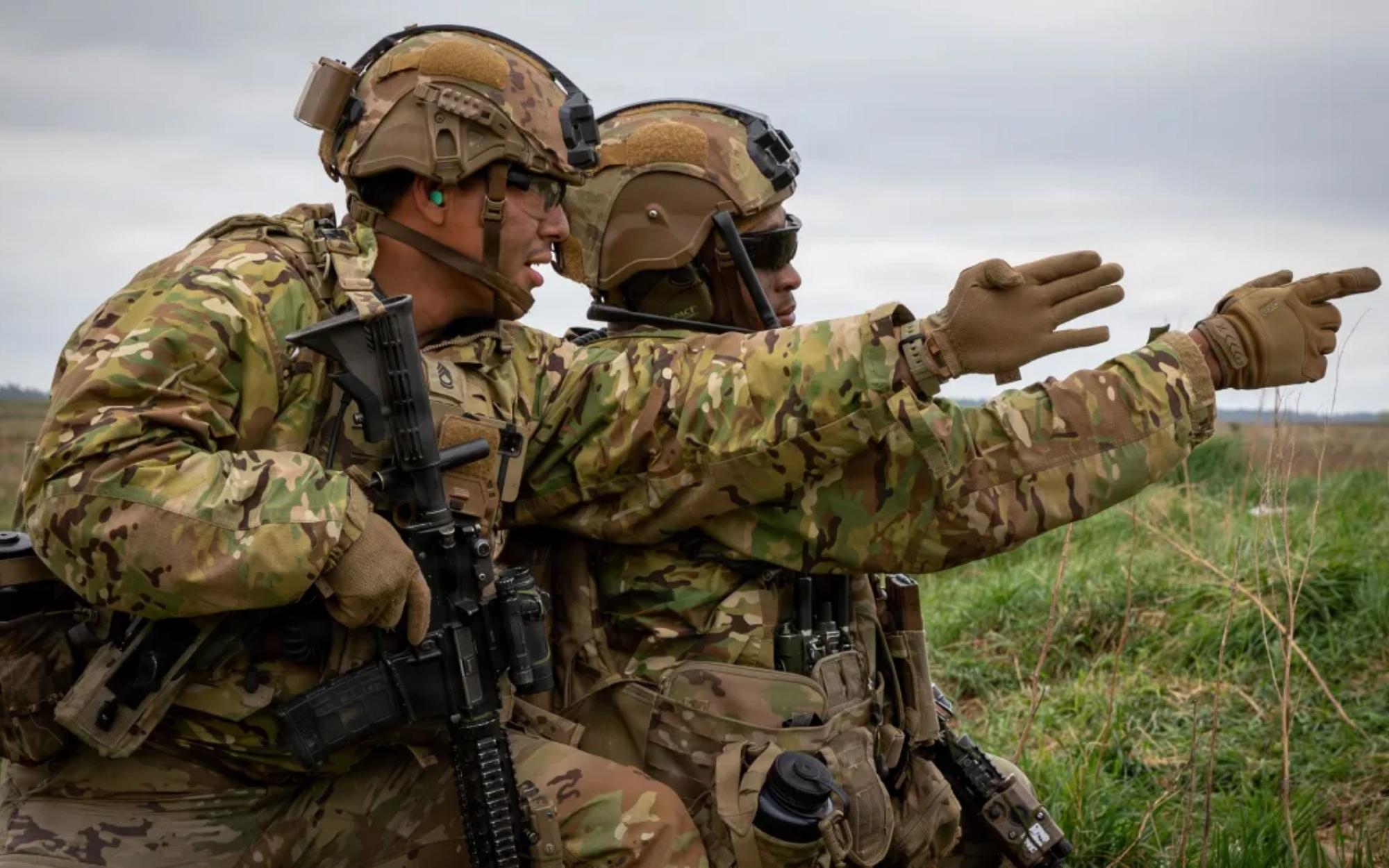
Image Credit: DoW
Soldiers assigned to Bull Troop 1, 2nd Cavalry Regiment, near Bemowo Piskie Training Area, Poland, May 7, 2026. A cancelled deployment of U.S. troops to Poland may now be back on, according to a Polish defense official. Army photo by Spc. Thomas Madrzak.
Ukraine’s blood-soaked fields are already serving as the laboratory for the next generation of war. The proliferation of drones, both cheap and sophisticated, has flipped the old hierarchies upside down. Suddenly, a farmer with a joystick can decimate million-dollar armored vehicles.
The lesson is brutal and simple: the adaptable survive, the rigid perish.
America’s services are taking note. The Army has refocused its combat doctrine to reflect lessons learned from Ukraine, emphasizing decentralized flexibility under its mission command model. The Navy is doubling down on unmanned undersea and surface experimentation.
The Air Force is pursuing autonomous “wingmen” in its collaborative combat aircraft programs. Each service is pushing modernization, but the question remains—are they moving fast enough?
Current readiness assessments are still rooted in counting gear, tracking training hours, and measuring mission capability.
That data tells commanders whether units can fight; it does not reveal whether they can evolve mid-battle when things blow up—literally and figuratively. As Bensahel put it, “Readiness indicators are very important, but they can’t tell you anything about adaptability.”
Adaptability, she argues, depends on three key elements—doctrine, technology, and leadership. Mission command doctrine embodies that spirit by entrusting junior leaders to show initiative, take measured risks, and make independent decisions when the fog of war sets in. But that mindset must be cultivated, not simply drafted into manuals.
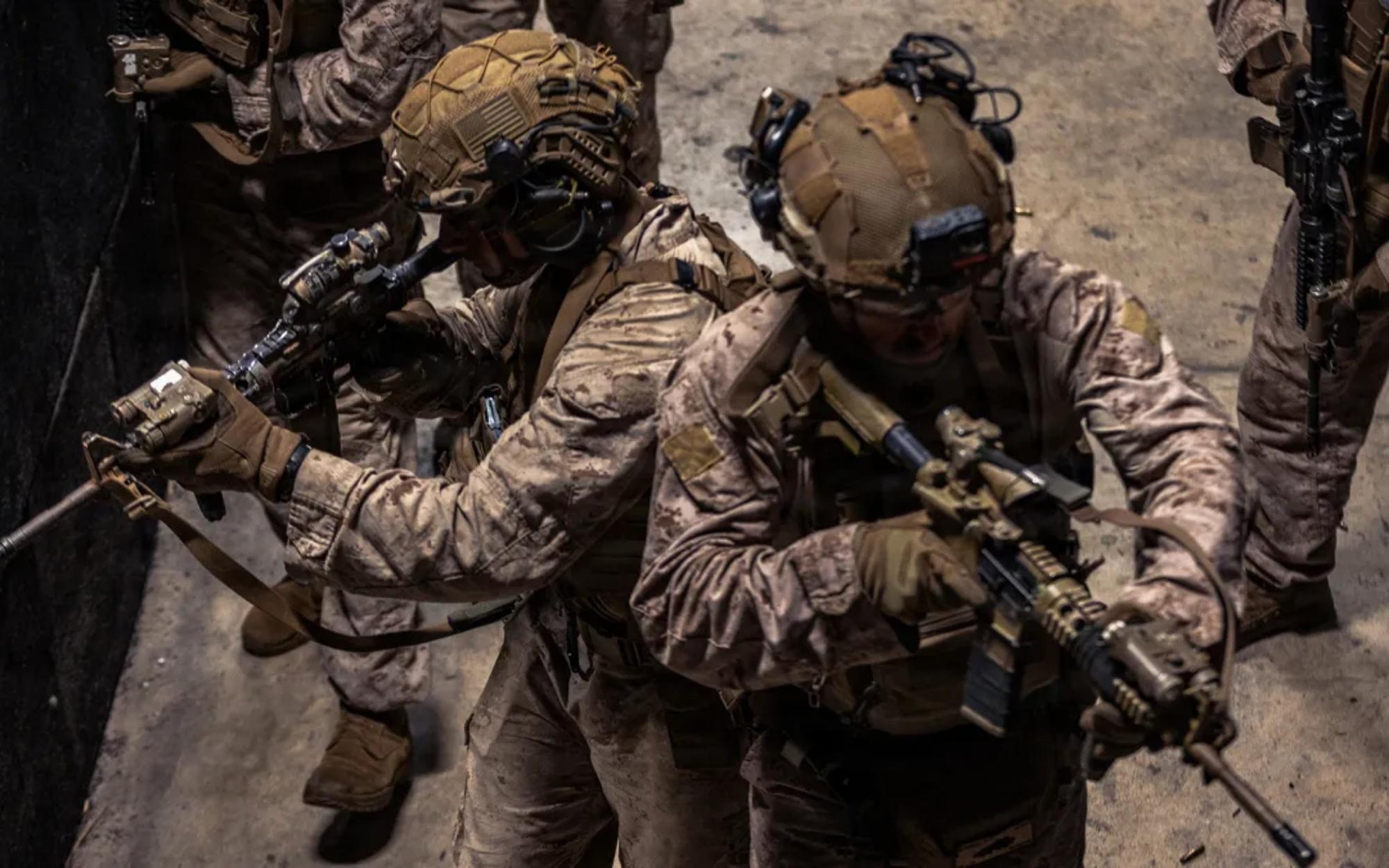
Image Credit: DoW
Marines with the 22nd Marine Expeditionary Unit (Special Operations Capable), walk back-to-back down a hallway during a live-fire shoot house at Camp Santiago, Puerto Rico on April 18, 2026. Marine Corps photo by Sgt. Tanner Bernat.
Training adaptability across a two-million-person force is a steep mountain to climb. While junior officers and enlisted leaders often displayed impressive initiative in Iraq and Afghanistan, institutional inertia among senior leadership slowed the larger adaptation process. Bureaucracy smothers flexibility, and the War Department knows it.
Retired Marine intelligence officer Ben Connable warned that the problem isn’t collecting information—it’s doing something useful with it.
“There’s almost a belief that knowledge now exists in this kind of ether,” he said. “We don’t really have to do much with it anymore.” In other words, military institutions are drowning in data but starving for wisdom.
Connable argued that American military education, while rich in historic case studies, hasn’t adapted its lessons fast enough from recent conflicts.
“We’ve done a particularly poor job of transmitting recent cases into modern knowledge,” he said. “The lessons that you fail to learn, you wind up repeating.” It’s a painful truth for an institution built on after-action reports and PowerPoint briefings.
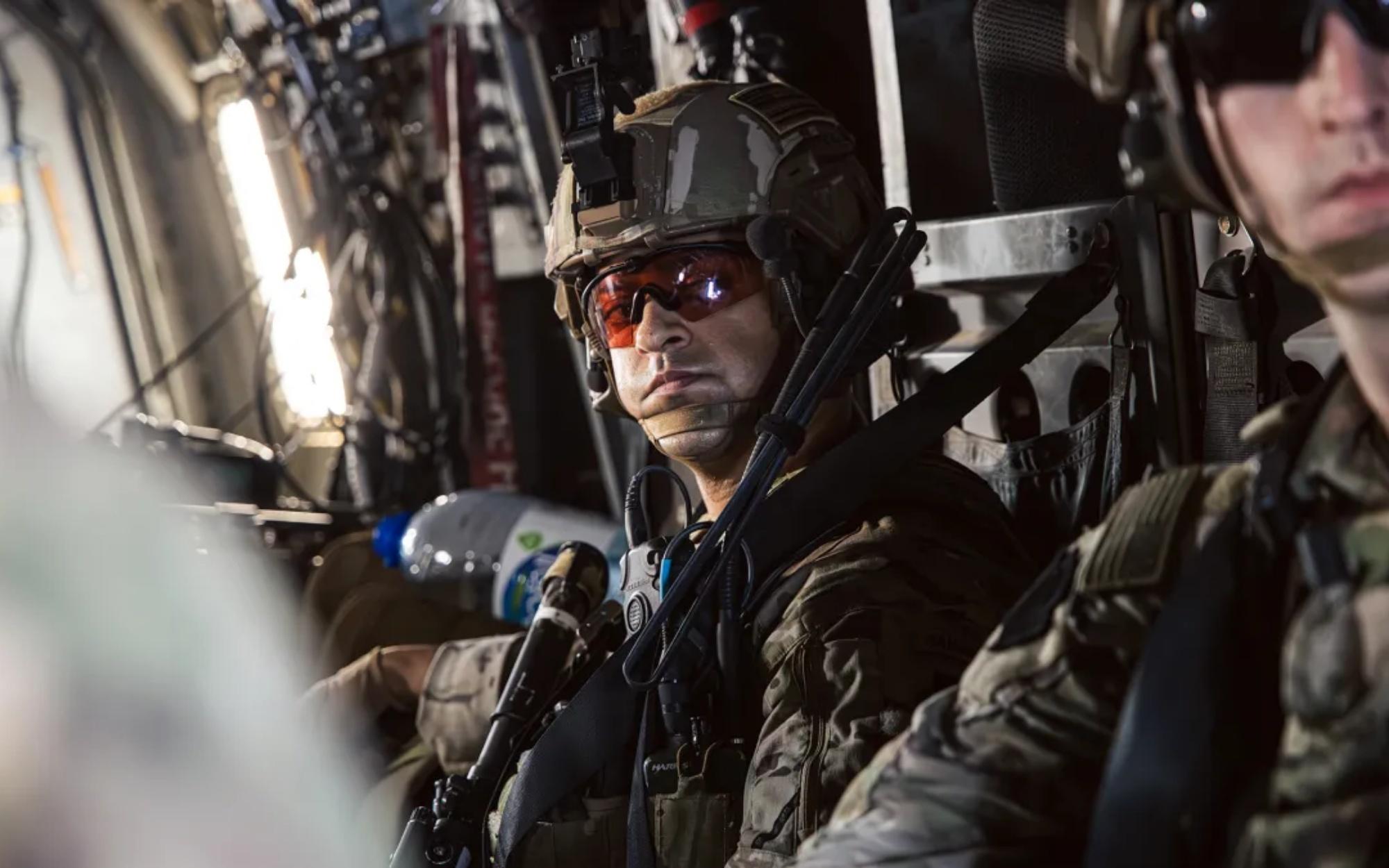
Image Credit: DoW
Soldiers assigned to Task Force Associator, East Africa Response Force sit inside an MV-22 Osprey prior to takeoff at Camp Lemonnier, Djibouti, May 15, 2025. Army photo by Sgt. Nicholas Session.
Ultimately, the nation’s fighting force must rediscover the value of experimentation—and tolerate the occasional failure that comes with it.
Bensahel put it bluntly: “If you want to get leaders in the habit of trying new things that might or might not work, you have to have some tolerance for failure.”
That requires leadership willing to take risks, loosen bureaucratic shackles, and reward creative solutions instead of blind compliance. Fortunately, under President Trump’s renewed emphasis on combat effectiveness and War Secretary Pete Hegseth’s push to restore grit, accountability, and mission focus, the winds are shifting.
The future warfighter must not only be ready but adaptable—because the battlefield of tomorrow will belong to those who move smarter and faster than the enemy can anticipate.