Gen. Christopher Donahue Steps Down After Short Stint Leading Army Europe and Africa
Posted By
Common Defense
On
In
National Security,News |
No Comments
U.S. Army Gen. Christopher Donahue handed over command of U.S. Army Europe and Africa this week, marking the end of an unexpectedly brief 18-month tenure that leaves the Army’s European posture in a moment of transition.
The ceremony in Wiesbaden, Germany, came quietly but spoke volumes about the reshuffling currently sweeping through the Pentagon’s top ranks under Secretary of War Pete Hegseth.
The Army confirmed that Maj. Gen. Christopher Norrie will serve as acting commander until Donahue’s replacement is nominated and confirmed by the Senate.
It’s not often that a theater-level command changes hands this suddenly, and the Army’s decision not to disclose a reason has certainly raised eyebrows among observers of the ever-growing bureaucracy inside Washington’s war establishment.
Donahue’s farewell was classic soldier simplicity—direct, proud, and focused on the mission. “I love this team—it has been the honor of a lifetime to be a part of it,” he said during his departure remarks.
“I’m proud of what we built and I have absolute confidence in what you will build next.” It was a farewell that underscored his deep loyalty to the troops, even as the machinery above him grinds through another personnel overhaul.
Image Credit: DoW
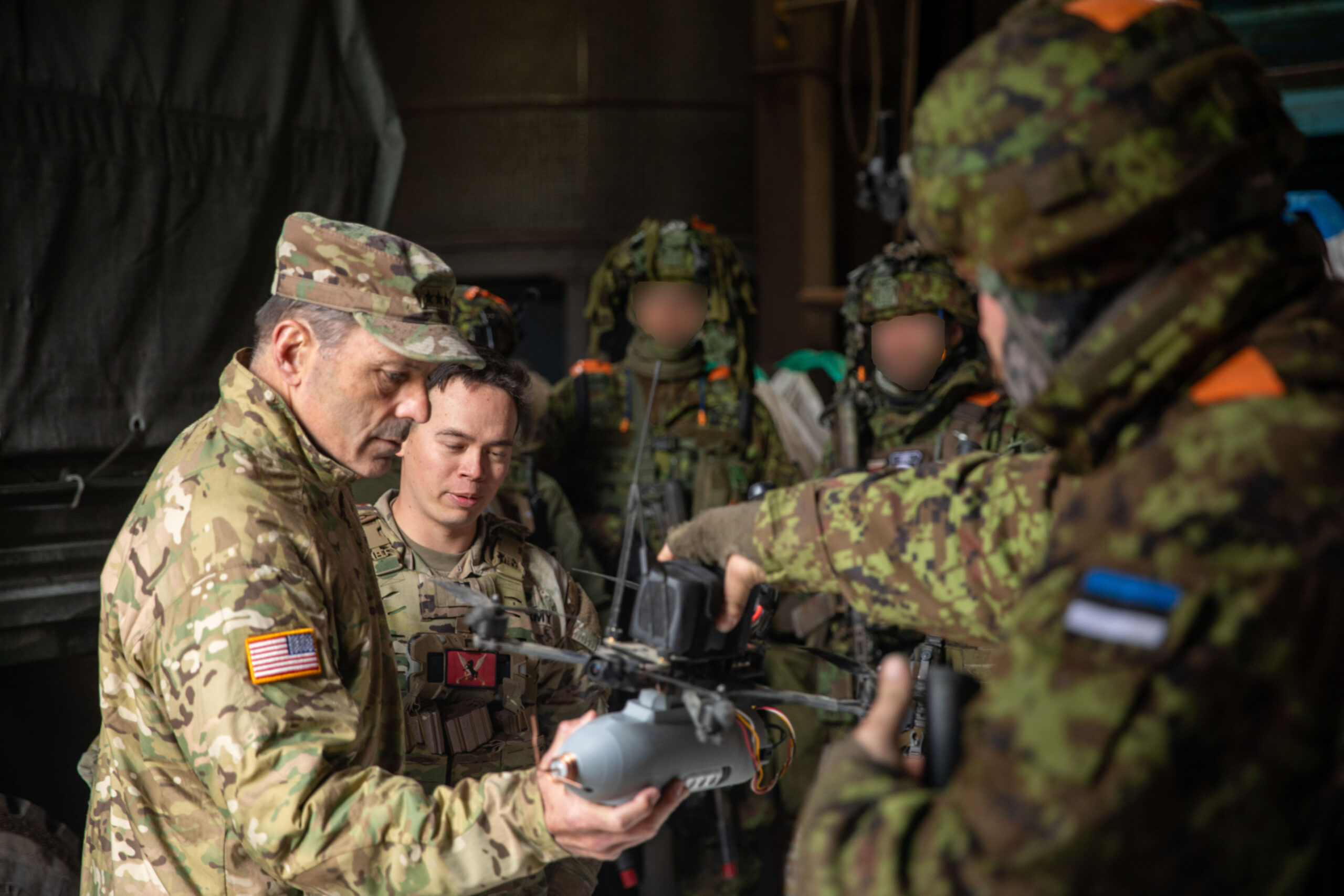
U.S. Army Gen. Christopher Donahue, the commanding general of U.S. Army Europe and Africa (USAREUR-AF), holds an Estonian soldier’s drone during Exercise Hedgehog 25 near Camp Reedo, Estonia, May 15, 2025. Exercise Hedgehog 25 is a large-scale international military exercise led by the Estonian Defence Forces, focused on the rapid deployment of allied forces and the enhancement of multinational interoperability. (U.S. Army photo by Pfc. Jaidyn Moore) (Photo by Pfc. Jaidyn Moore)
A 1989 West Point graduate, Donahue’s career reads like a study in airborne grit. He led the XVIII Airborne Corps and the 82nd Airborne Division before taking the helm in Europe and Africa.
He’s no stranger to high-stakes missions or political turbulence either—his leadership during the 2021 withdrawal from Afghanistan etched his name into the closing chapter of America’s longest war.
The now-iconic night vision image of Donahue boarding the final C-17 out of Kabul symbolized both the end of a two-decade campaign and the foggy uncertainty of what followed.
His time commanding in Europe came at a pivotal moment as the U.S. repositioned forces along NATO’s eastern flank. Russia’s ongoing aggression and the growing demands on American logistics across the continent meant Donahue’s command carried heavy operational significance.
The short duration of his post only adds to speculation about whether the move was purely administrative or signals a broader recalibration in strategic leadership.
Inside the War Department, Secretary Hegseth has been quick and decisive in realigning leadership. Since taking office, he has removed or replaced at least a dozen senior officials, calling for a renewed focus on combat readiness, deterrence, and mission success over bureaucratic politics.
Image Credit: DoW
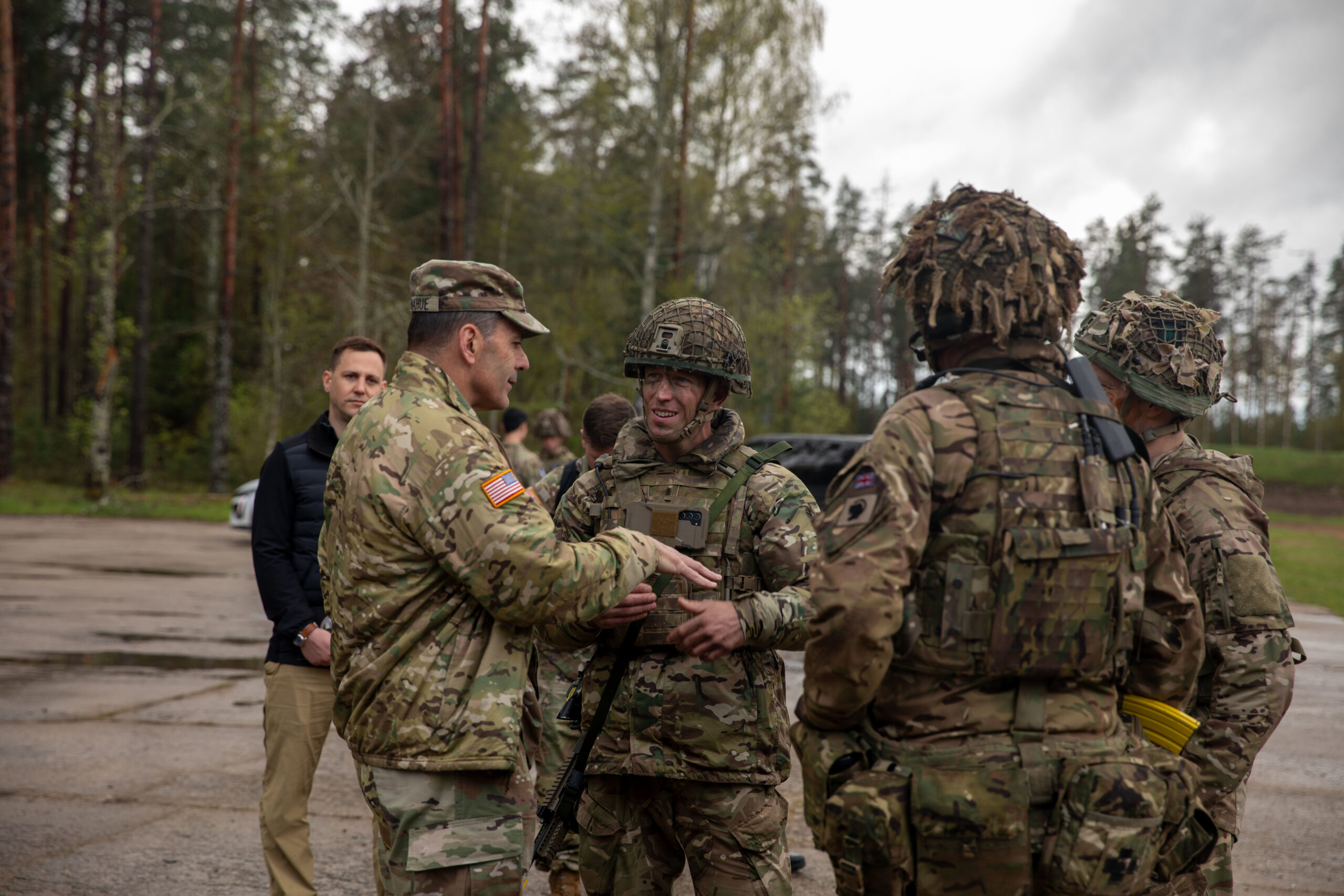
U.S. Army Gen. Christopher Donahue, the commanding general of U.S. Army Europe and Africa (USAREUR-AF), speaks with British soldiers during Exercise Hedgehog 25 near Camp Reedo, Estonia, May 15, 2025. Exercise Hedgehog 25 is a large-scale international military exercise led by the Estonian Defence Forces, focused on the rapid deployment of allied forces and the enhancement of multinational interoperability. (U.S. Army photo by Pfc. Jaidyn Moore) (Photo by Pfc. Jaidyn Moore)
Critics inside the establishment whisper about “disruption,” but supporters see a much-needed course correction led by a Secretary committed to putting warriors, not politicians, in charge of America’s military direction.
For Donahue, the timing of this transition carries personal and institutional symbolism. It closes a chapter that began with the chaotic end of Afghanistan and continued into the unfolding European tensions triggered by an increasingly hostile Russia.
Commanding from Wiesbaden meant working at the heart of the Army’s transatlantic complex—an arena balancing both diplomacy and deterrence.
Despite the mystery surrounding the leadership change, few doubt Donahue’s credentials or legacy. He’s the kind of battle-tested general forged in the crucible of real combat, not political talking points. Soldiers respected him for his steady hand, his clarity in crisis, and his unapologetic dedication to troops first and foremost.
His departure leaves Maj. Gen. Norrie with big boots to fill and a balancing act to manage between continuity and adjustment.
Norrie, a respected leader in his own right, inherits not only a large multi-theater command but also a shifting strategic environment as the Biden administration’s uncertain foreign policy continues to blur priorities in Europe and beyond.
Image Credit: DoW
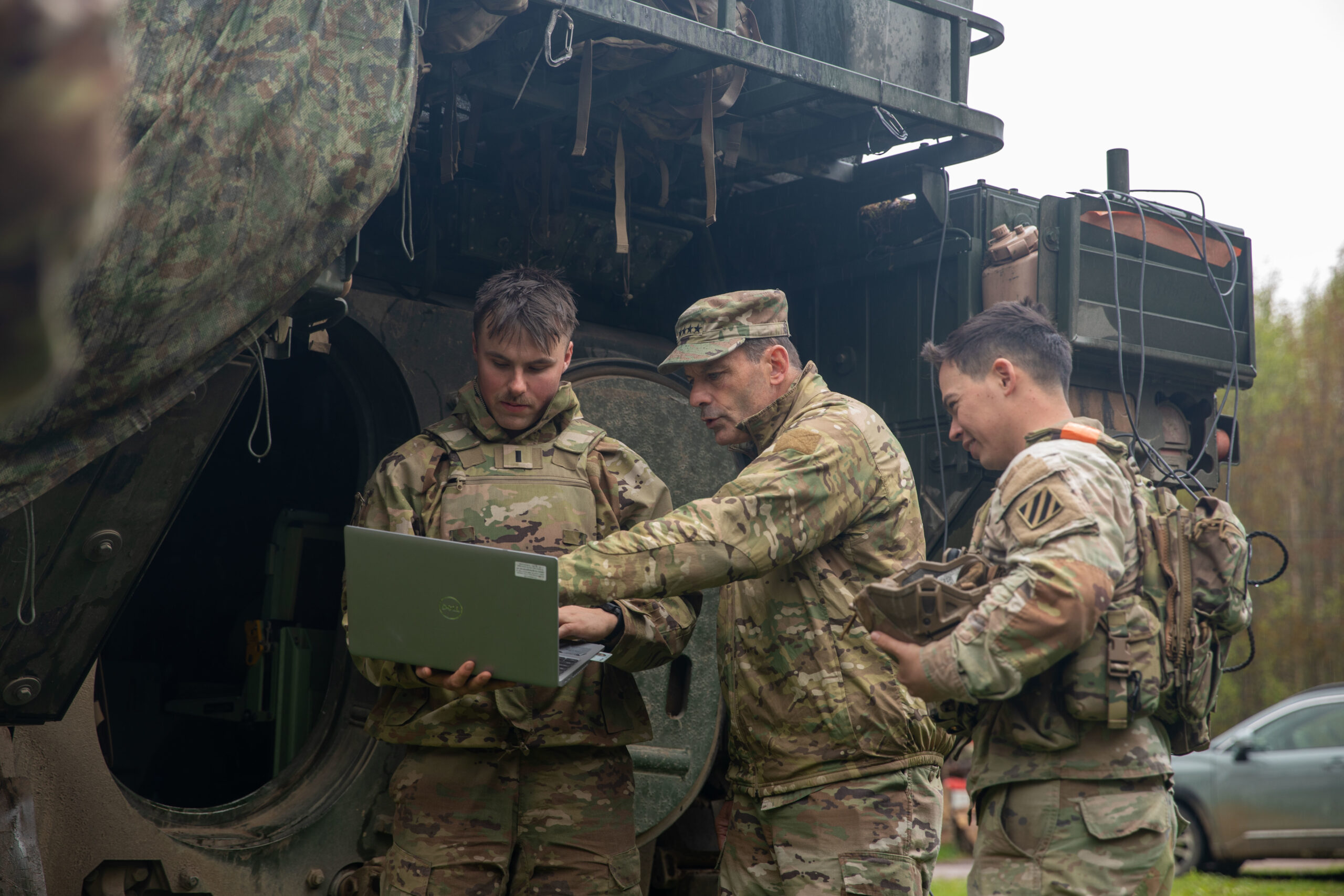
U.S. Army Gen. Christopher Donahue, the commanding general of U.S. Army Europe and Africa (USAREUR-AF), talks with a U.S. Soldier assigned to 5th Squadron, 7th Cavalry Regiment, 1st Armored Brigade Combat Team, 3rd Infantry Division about the training scenario during Exercise Hedgehog 25 near Camp Reedo, Estonia, May 15, 2025. Exercise Hedgehog 25 is a large-scale international military exercise led by the Estonian Defence Forces, focused on the rapid deployment of allied forces and the enhancement of multinational interoperability. As the designated opposition force, 5-7 CAV challenges participating units with a complex, realistic scenario to strengthen multinational interoperability and readiness. (U.S. Army photo by Pfc. Jaidyn Moore) (Photo by Pfc. Jaidyn Moore)
Observers expect that Secretary Hegseth will install a permanent commander aligned with his ongoing effort to restore operational grit to the War Department.
His emphasis on accountability and mission-driven leadership has already reshaped the culture within major commands, breaking through years of Beltway complacency.
Donahue’s send-off was understated, as fitting a warrior accustomed to action rather than fanfare. For many, his service in this role will be remembered as one of quiet excellence, rooted in experience and discipline. For others, it may symbolize the ongoing transformation underway within America’s military leadership structures.
What’s certain is that this isn’t an ending so much as a continuation of a reshaping effort aimed at getting back to basics—readiness, resolve, and results. Donahue departs with the respect of his soldiers and the admiration of a nation that knows real leadership when it sees it.
The Army, under new stewardship, presses forward—leaner, tougher, and ready for whatever comes next.