Military Air Traffic Controller Shortage Puts Safety, Missions on the Line, Watchdog Warns
Posted By
Common Defense
On
In
National Security,News |
No Comments
A serious shortage of civilian air traffic controllers working for the military is now hitting safety, readiness, training, and mission execution, according to a federal watchdog report that should have every commander paying attention.
The problem is not complicated, which makes it even more frustrating. Civilian controllers who work for the services are leaving for better paying jobs elsewhere, and the military is struggling to compete.
Army, Marine Corps, Navy, and Air Force officials told investigators they cannot keep pace with the civilian sector when it comes to hiring and retaining air traffic control personnel. That is not exactly a small matter when pilots, aircraft, and operational timelines depend on people safely managing crowded skies.
According to the Department of War Inspector General report released last week, the average air traffic control specialist across the Air Force earns about $113,032. The average pay at the Federal Aviation Administration is $161,150, a gap of roughly 43 percent, based on a 2026 RAND report cited by investigators.
That kind of pay difference does not require a think tank to decode. If Washington wants skilled controllers to stay in uniformed service airfields and support military operations, it cannot pretend that patriotism alone pays the mortgage.
The watchdog also found that the services are using inconsistent job grades that do not always reflect the real demands of the job. Those federal classifications help determine pay and career progression, meaning bad grading can quietly bleed talent over time.
RAND noted that the FAA pay bands “provide greater pay flexibility and address pay disparities.” In plain English, the FAA can offer a more attractive deal while the military side is stuck watching trained people walk out the door.
The FAA controls the National Airspace System, including controlled and uncontrolled airspace over the United States and surrounding waters. The military services operate their own air traffic control workforce, coordinating with the FAA for military flights and operations.
Image Credit: DoW
An F-22 Raptor aircraft performs a ‘tail slide’ maneuver during an aerial demonstration at the SkyFest air show in Spokane, Washington, June 22, 2019.
The Inspector General said the Department of War controlled 29 percent of national airspace traffic in fiscal year 2024, while the FAA controlled 71 percent. That is a massive operational responsibility, and it does not get easier when the personnel pipeline starts cracking.
The report said the Department of War air traffic control shortages “negatively impact” aviation safety and overall readiness. Air Force officials said the shortage has forced them to limit airfield hours, reduce airspace availability, and close “critical safety functions.”
At Eglin Air Force Base in Florida, investigators found that the problem “created risks to aircraft and airfield maintenance and caused overseas mission delays.” That means this is not just a human resources spreadsheet problem, no matter how much the bureaucracy may wish it were.
Image Credit: DoW
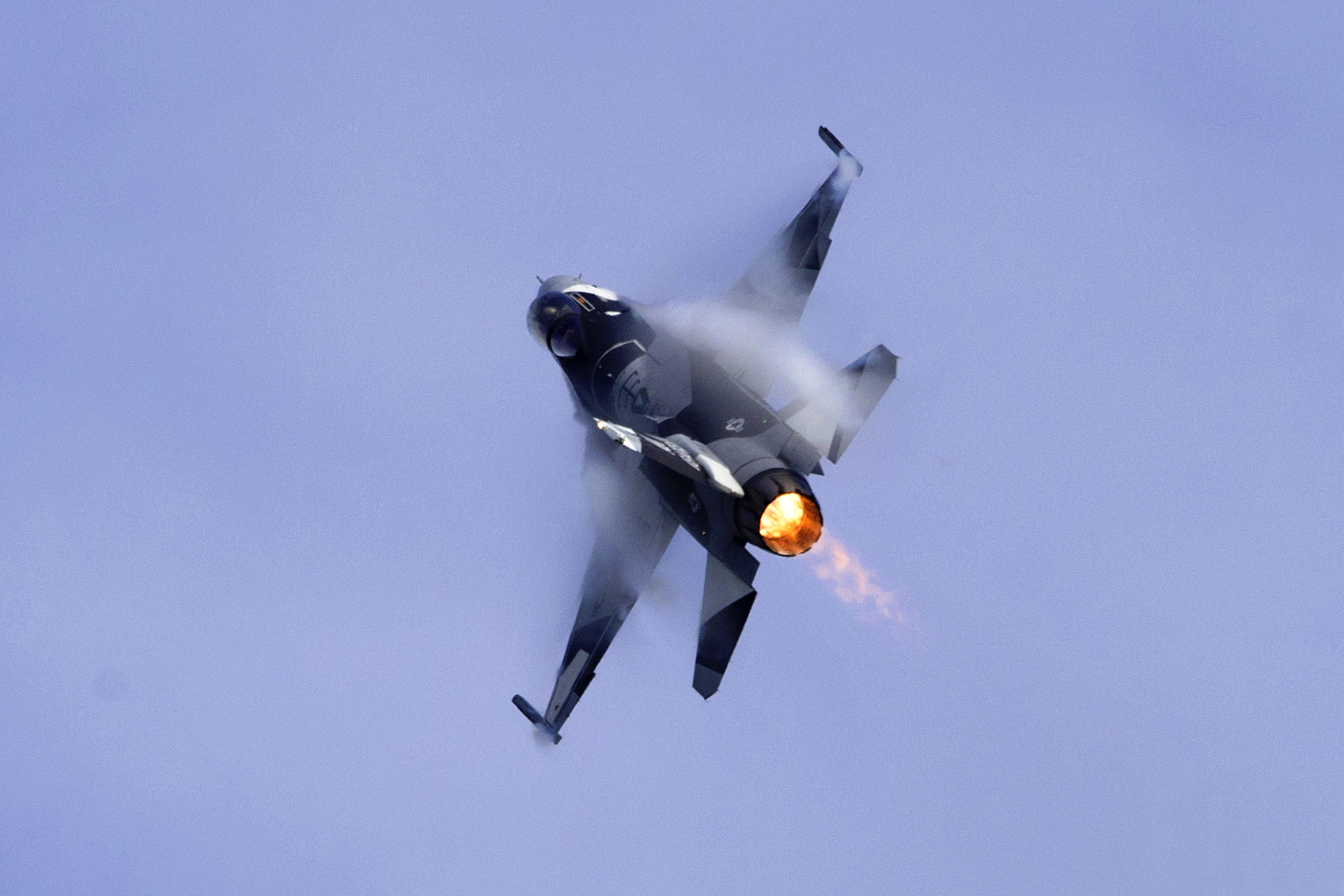
A U.S. Air Force F-16 Fighting Falcon, assigned to the 18th Aggressor Squadron out of Eilson Air Force Base, performs aerial maneuvers during the Arctic Thunder Open House at Joint Base Elmendorf-Richardson, Alaska, June 30, 2018. This biennial event hosted by JBER is one of the largest in the state and one of the premier aerial demonstrations in the world. The event features multiple performers and ground acts to include the JBER joint forces, U.S. Air Force F-22 and U.S. Air Force Thunderbirds demonstrations teams, June 30-July 1. (U.S. Air Force photo by Alejandro Peña)
Pilots are also paying the price because fewer controllers means fewer opportunities to train, move, and operate efficiently. “The shortages are causing a reduction in [air traffic control] services, decreased operational efficiency, and less pilot training because [air traffic control] personnel are not available to manage the aircraft’s movement along air routes,” the report said.
The controller shortage is not limited to the military. The FAA has also reported being short thousands of controllers because of recruiting struggles, retention problems, and expected retirements in the coming years.
Even so, the watchdog report shows the military side is being hit harder in some ways because it is losing its own trained workforce to the FAA. That is a brutal cycle, because the services invest in skilled personnel only to see them leave for better pay and more flexible structures.
Investigators warned that these shortages “hinder” the military’s ability to meet homeland defense goals laid out in the 2026 National Defense Strategy. That strategy includes a renewed focus on countering unmanned aerial threats, a mission set that demands tighter airspace awareness, not fewer qualified controllers in the tower.
Image Credit: DoW
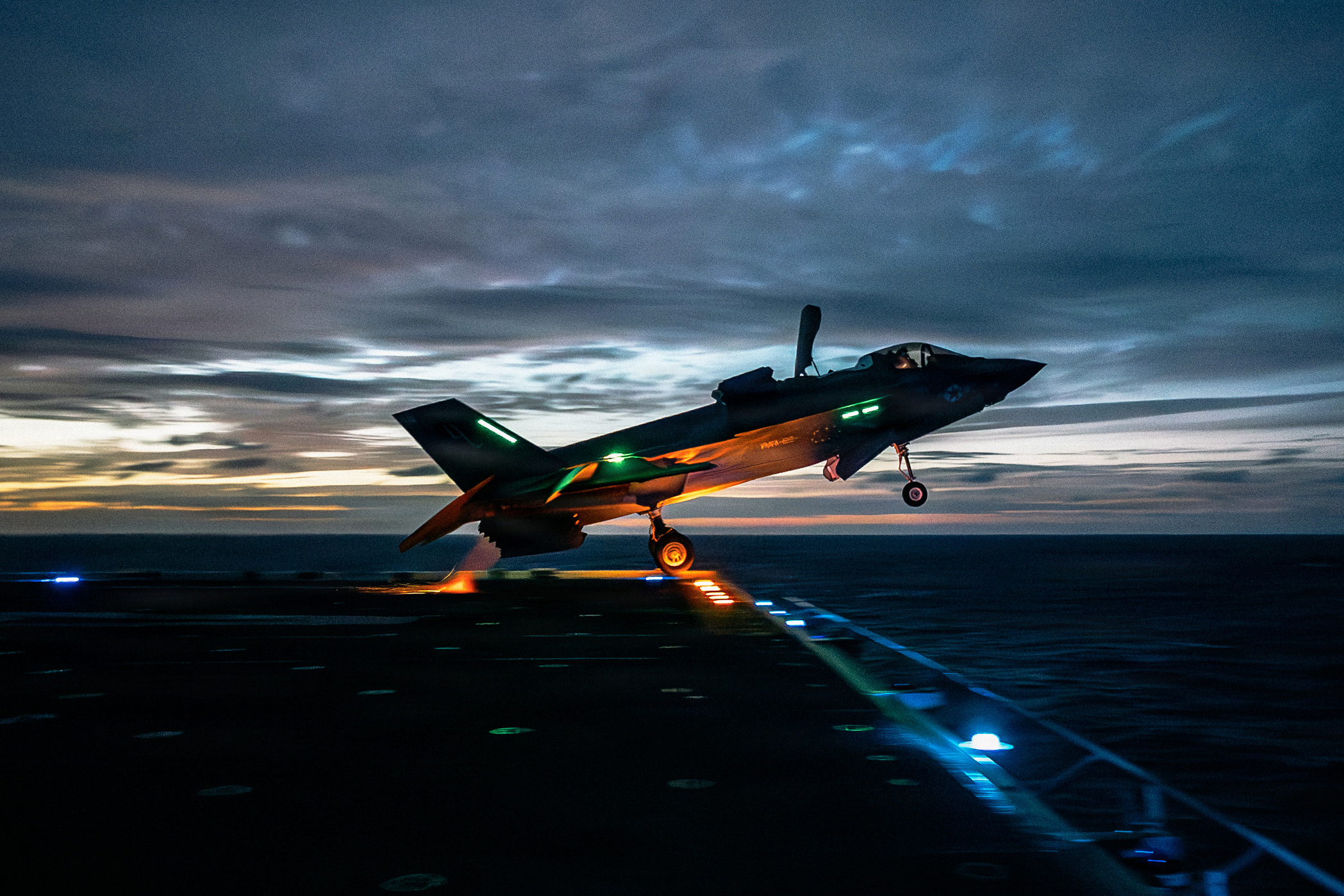
A Marine Corps F-35B Lightning II takes off from the USS Boxer in the Pacific Ocean, March 28, 2026.
“To maintain its warfighting advantage and align with its strategic priorities, the [Department of War] must address these civilian [air traffic control] shortages to improve the Department’s overall readiness and lethality,” the report said. That is about as direct as government watchdog language gets.
For Secretary of War Pete Hegseth, this is exactly the kind of readiness issue that deserves a hard look and a sharper fix. The military cannot claim to be serious about lethality while allowing basic aviation control functions to erode because civilian pay tables are out of step with operational reality.
President Trump has repeatedly emphasized rebuilding military strength and restoring common sense to national security. This report offers another reminder that readiness is not only about ships, jets, missiles, and headlines, but also about the trained Americans in control towers making sure missions launch safely and on time.
The left loves to throw money at fashionable programs and bureaucratic pet projects, but the force still needs functioning airfields, trained controllers, and pilots who can actually train. If Washington cannot get that right, all the glossy strategy documents in the world will not keep aircraft moving when the mission clock starts ticking.