A new era is unfolding inside the War Department’s rapidly expanding drone industry, and it isn’t being led by the traditional bloated defense primes—but by scrappy young startups that are moving faster, thinking sharper, and delivering results now.
The Pentagon’s latest “Drone Dominance” competition revealed as much, showcasing how innovation and battlefield utility are finally being driven by the private sector rather than Beltway bureaucracy.
Last month at Camp Grayling, Michigan, 49 companies squared off in this $1.1 billion effort aimed at boosting America’s domestic unmanned aerial systems. The War Department’s goal was simple: find who can build smarter, tougher, ready-to-fly drones that serve the real-world needs of troops.
After nearly two weeks of testing, 19 companies advanced to the next phase—a testament to how quickly America’s private innovators are outpacing government timelines.
Unlike the defense contractors of the past, these aren’t outfits sitting on Washington contracts for decades. Most of these finalists are young, privately-held companies producing small tactical drones for today’s battlefield realities.
About half are already on the War Department’s “Blue UAS” cleared lists—meaning they’ve passed the government security vetting that ensures they’re safe from foreign interference. Many of these startups didn’t even exist a decade ago, yet they’re challenging corporate giants at their own game.
J.R. Mullis, a retired Air Force contracting officer turned defense innovation advisor, described the group as “more mature than the average drone startup.”
n his words, “They’re able to be deployed right now.” These companies aren’t chasing headlines—they’re chasing capability. America’s warfighters need drones that work today, not next decade, and these entrepreneurs are delivering.
Mullis emphasized that the secret sauce isn’t just in building an airframe, but in creating the entire ecosystem—sensors, software autonomy, payloads, and more.
“If you were to circle all of them and mash them together,” he said, “I think it would make a really good capability.” Translation: while large defense corporations bicker over bureaucratic turf, these small teams are building the full picture element by element.
The real revolution underway here is not only technological but cultural. The War Department, long criticized for its sluggish acquisition processes, is changing its tune.
By identifying gaps openly and giving American innovators a fair shot, the Pentagon is finally acting like a modern warfighting institution rather than a slow-motion logistics office. It’s a shift that President Trump and his allies like Secretary of War Pete Hegseth have been pushing for—prioritizing speed, innovation, and results.
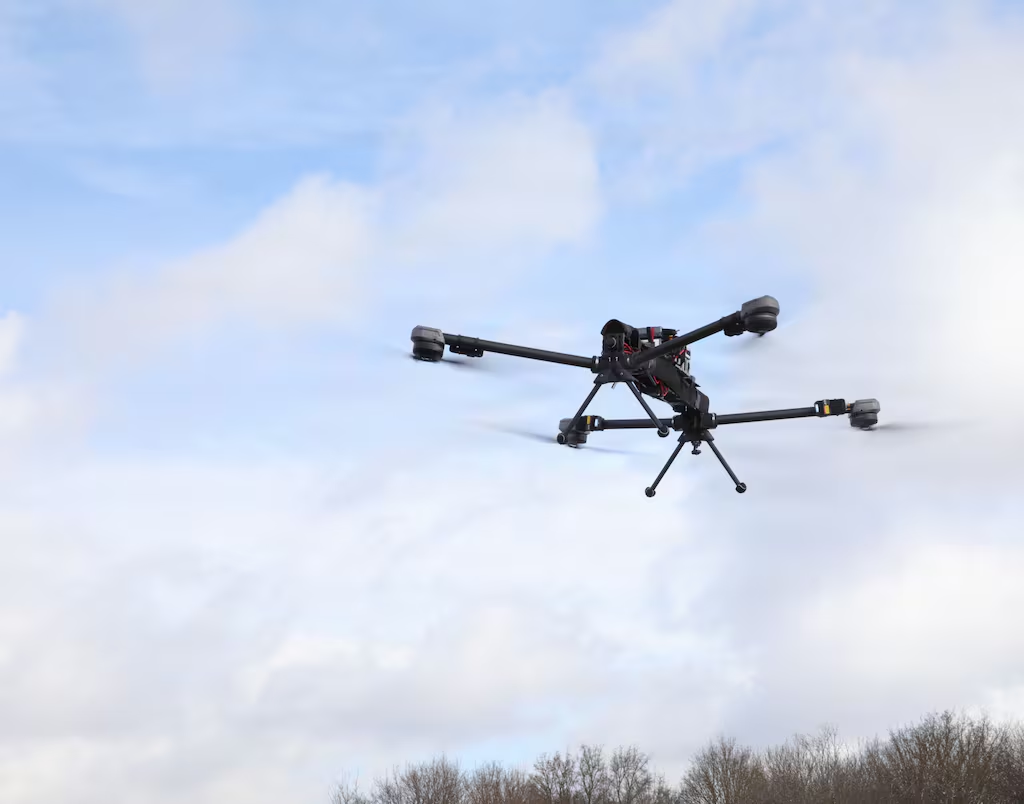
One example is Ascent AeroSystems from Massachusetts. Founded by a pair of brothers and a friend, it started as a hobbyist idea—build a rugged little drone for hiking.
Today, their Aero Spirit drone sits proudly on the Pentagon’s Blue UAS list, with over $2 million in contracts and a major acquisition by Robinson Helicopter behind it. That’s the American dream playing out in the defense-tech world: small inventors with grit, rewarded for solving real problems.

![Arctic Front Flares Up: FPV Drones Redefine Arctic Warfare After Ukraine [WATCH]](https://www.commondef.com/wp-content/uploads/2026/03/2026.03.14-03.45-commondefense-69b58297e6199.avif)