Ukraine Cleared to Build Patriots Under Trump Deal, But Production Could Take Years
Posted By
Common Defense
On
In
National Security,News |
No Comments
Kyiv is setting its sights higher after President Trump’s landmark decision to license Ukraine to build its own Patriot interceptors—a privilege reserved for only a handful of trusted allies.
While the move marks a historic shift for U.S.–Ukraine defense ties, it also exposes the magnitude of the challenge ahead: building one of the world’s most complex missile defense systems from scratch, likely over several years and at a staggering cost.
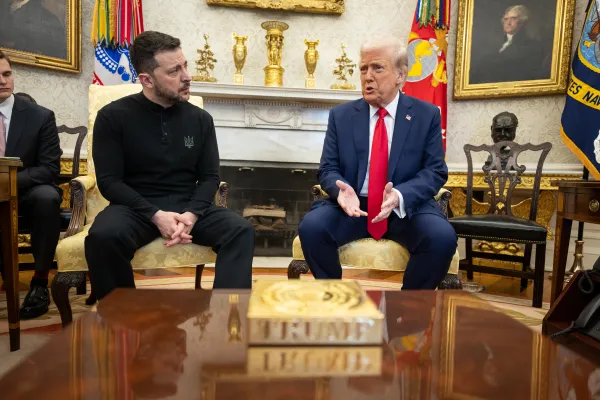
Ukrainian President Volodymyr Zelenskyy praised Trump’s decision as a “positive signal” and proof that Washington sees Ukraine as ready to handle the Patriot program.
“Thank you for the positive decision regarding the license for the production of Patriots,” he said, noting that Trump “repeatedly emphasized that today only two or three countries in the world can produce Patriots, because others are not technologically ready.”
That readiness question will define how soon Ukraine can field its own Patriots. With Russia hurling ballistic missiles at Ukrainian cities almost nightly, Kyiv’s need for air defense has never been more dire.
Trump’s decision lightens the load for U.S. taxpayers and NATO allies who’ve been footing the bill for Ukraine’s protection, signaling a new phase where Ukraine stands more on its own two feet.
The Patriot deal is also a reminder that Washington under Trump is prioritizing burden-sharing over endless foreign aid. Allowing Ukraine to produce high-tech interceptors inside its borders means American manufacturers stay focused on U.S. needs while Ukraine starts taking responsibility for its own defense.
It’s a rare alignment of America First priorities and Ukrainian necessity.
Image Credit: DoW
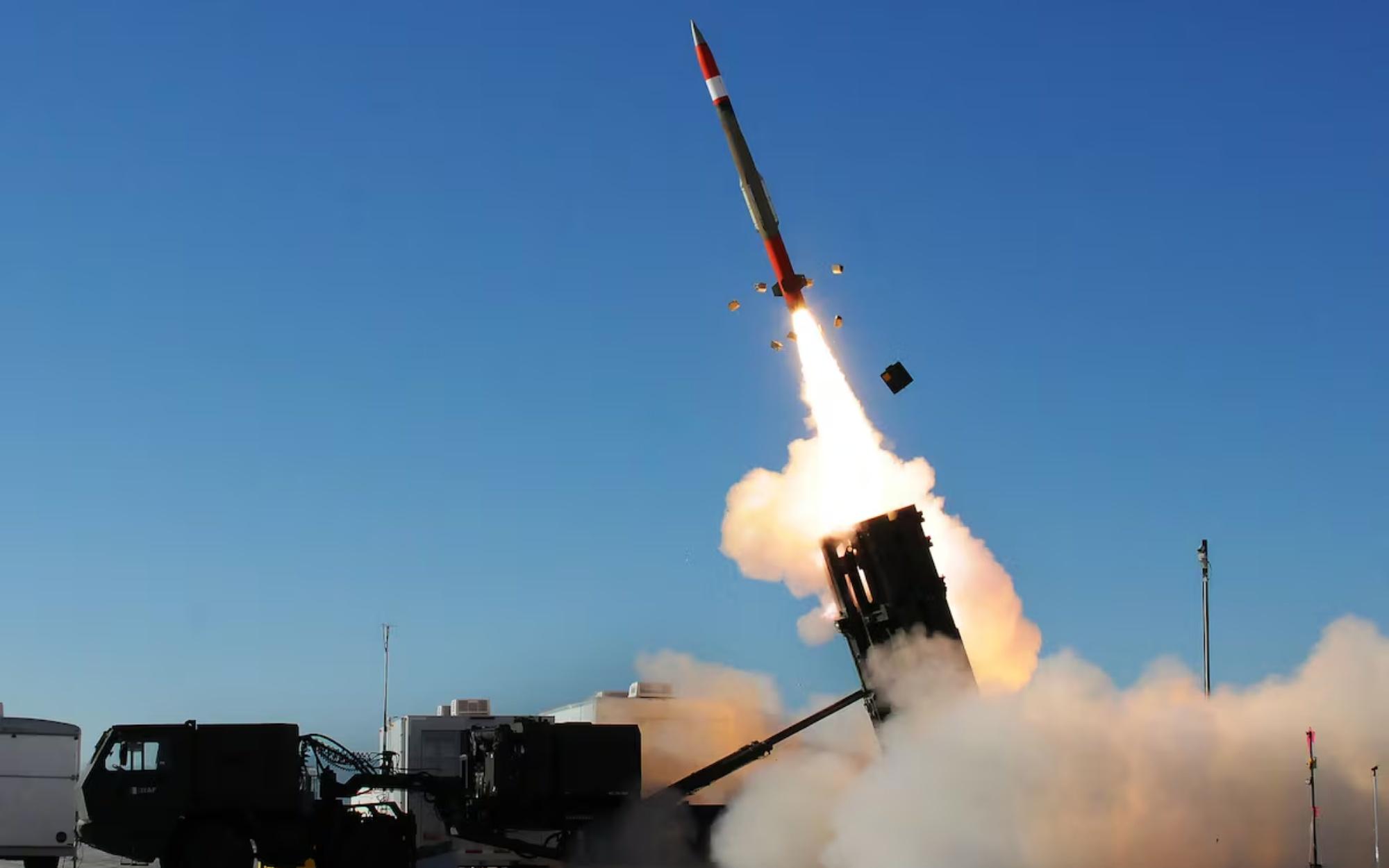
A PAC-3 interceptor fires from Medium Extended Air Defense system launcher during a test. (John Hamilton/U.S. Army)
Right now, the promise remains mostly on paper. No signatures have hit an official agreement, and Lockheed Martin, the American manufacturer, hasn’t even been formally informed of the arrangement.
“We haven’t informed the company of that yet,” Trump said, confirming that bureaucratic formalities still need to catch up to his strategic vision.
When production finally begins, Ukraine will face steep industrial and technical hurdles. The Patriot’s PAC-3 interceptor, America’s crown jewel of missile defense, is among the most protected weapon systems in the U.S. arsenal.
It’s designed to destroy incoming missiles by direct impact, a feat of precision that requires world-class radar, guidance, and propulsion systems all working flawlessly together.
Currently, only Japan has a U.S. license to produce Patriots, and a European line jointly run by Germany, the Netherlands, and Spain is still taking shape.
Washington’s caution over sharing the technology runs deep—it’s not simply a matter of trust, but national security. The fear that advanced tech could leak into enemy hands is always a factor, and the War Department keeps an especially tight leash on Patriot construction.
Image Credit: The White House
Adding to the challenge, global production capacity remains limited. Each Patriot interceptor takes roughly two years to complete, and the supply of crucial parts—like solid rocket motors and seeker heads—is a known bottleneck.
A Boeing plant in Huntsville, Alabama, produces every seeker, and even with expanded capacity, worldwide output will take years to meet demand.
Lockheed Martin delivered about 620 of its most advanced interceptors last year. Pentagon contracts aim to quadruple that to 2,000 annually by 2030, but even under those terms, Ukraine’s assembly line would take several years to reach operational capability.
War Minister Mykhailo Fedorov acknowledged as much, warning that Russia launches more missiles at Ukraine each month than the world’s Patriot factories produce in the same period.
To fill that gap, Zelenskyy is doubling down on domestic innovation. His team has been developing a new air defense system dubbed “FREYA,” a Ukrainian-built missile network bolstered by European radars and command systems.
FREYA, he says, will be a cheaper and faster way to close Ukrainian skies while the Patriot production timeline stretches into the next decade.
Image Credit: DoW
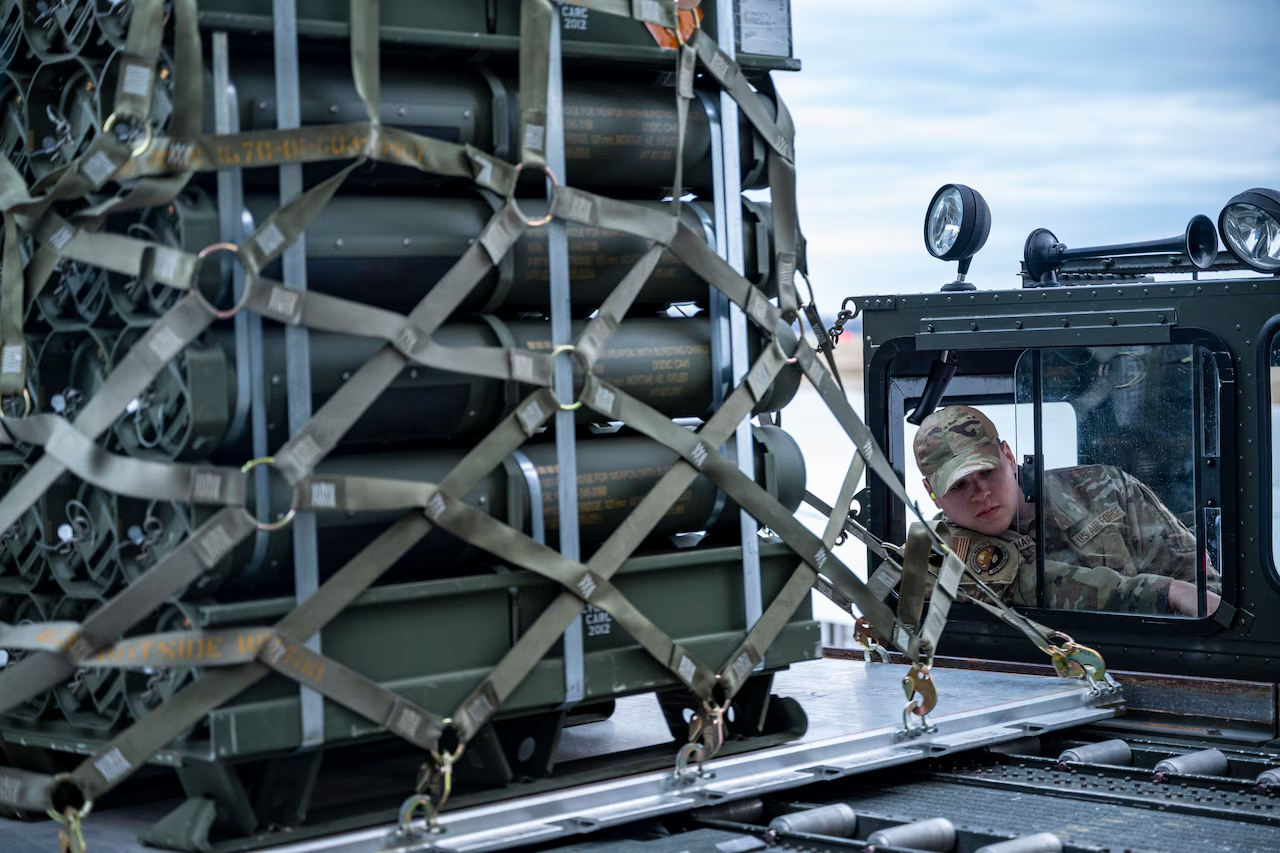
A service member operates a cargo loading vehicle carrying a pallet of munitions. An airman with the 436th Aerial Port Squadron maneuvers a cargo loading vehicle during a Ukraine security assistance mission at Dover Air Force Base, Del., Jan. 13, 2023.
Meanwhile, Ukraine continues relying on a patchwork of Western systems.
France and Italy have begun shipping SAMP/T batteries, which Zelenskyy calls “an analogue of Patriot,” though they too are limited in numbers. Production across Europe remains slow, and demand from other allies puts Ukraine at the back of the queue for high-end missiles.
Despite these realities, the Trump-Zelenskyy Patriot deal is a defining geopolitical signal. It recognizes Ukraine not as a charity case, but as a strategic partner trusted to build and control one of the West’s most powerful defensive weapons.
It also underlines Trump’s broader vision: America leading from strength, empowering allies to carry their own weight, and tightening the global supply chain for freedom’s front line.
If Kyiv can overcome the industrial and technical mountain ahead, Ukraine will eventually produce Patriots on its own soil — a far cry from the foreign-dependent model of the past.
“Then we will close Ukraine’s sky with our own capabilities,” Zelenskyy said, adding that Ukraine’s goal is full self-reliance.
For now, the Patriots remain a promise built on patience. But it’s a promise forged in the new global posture of President Trump’s America — one where strength, sovereignty, and shared responsibility redefine what victory looks like.