
At the McGregor Range Complex in New Mexico, part of Fort Bliss, soldiers are finding out what happens when bureaucracy, bad planning, and understaffing collide at the dining hall.
Reports from multiple troops stationed at the range say long lines at the dining facility have become such a problem that many soldiers are skipping meals entirely, despite the Army’s insistence that “no soldier goes unfed.”
Videos circulating on social media paint the picture: troops stacked in lines so long the camera can barely capture the full queue.
It’s an embarrassing sight at a time when the Army is struggling with morale and recruiting, while claiming to be “modernizing” everything from chow halls to hair regulations.
Soldiers report waiting well over an hour to get their food, which isn’t exactly a recipe for readiness or morale.
Two soldiers stationed at the range told reporters that these delays are so regular that some troops have simply stopped trying.
Instead, they’re paying out of pocket at base exchange shops or local food trucks—despite the fact that the Army already withholds a portion of their pay specifically for chow hall meals.
Fort Bliss Public Affairs Director Guy A. Volb insists there’s nothing wrong.
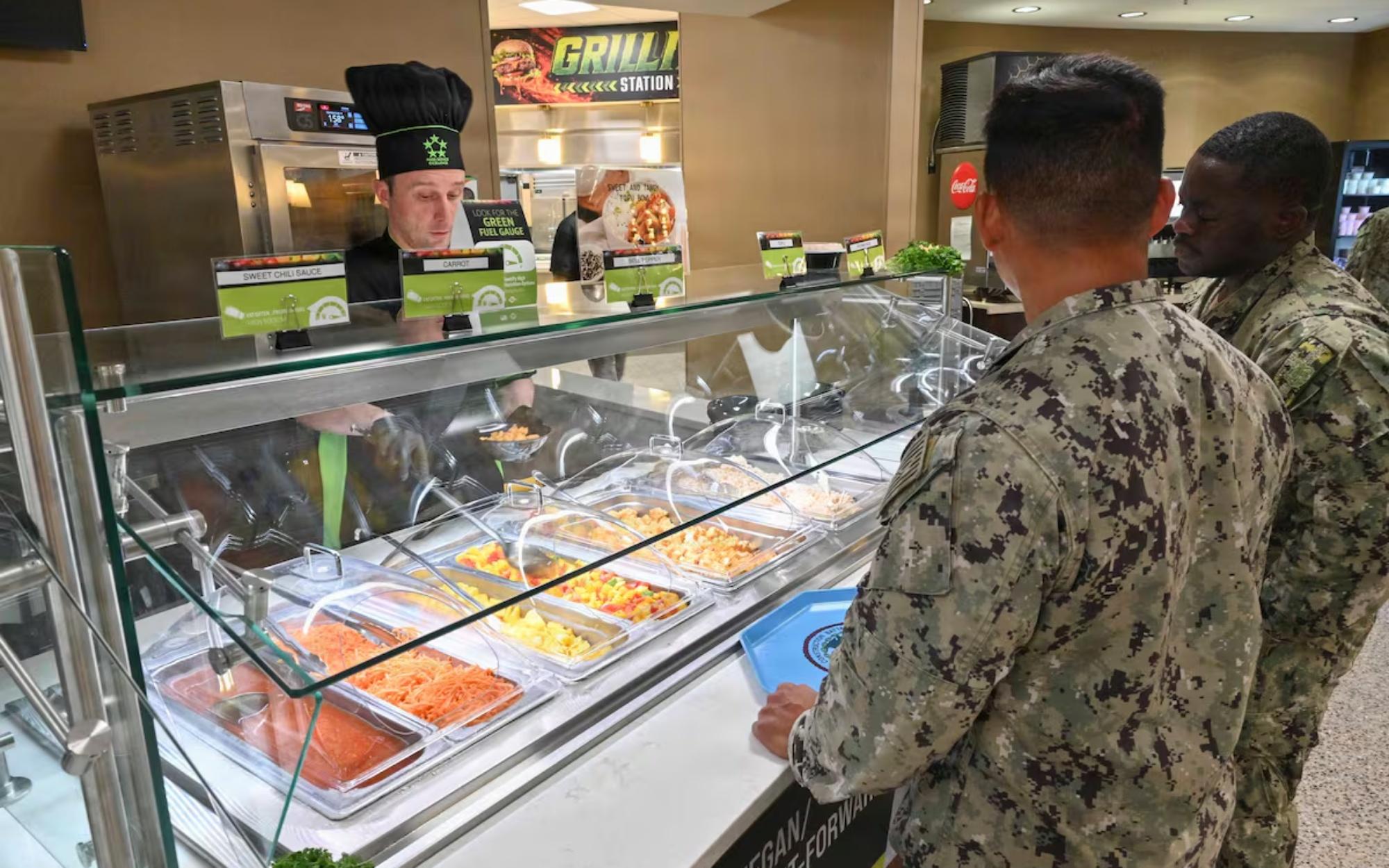
In response to complaints, he said the McGregor Range facility has a “100% feeding policy,” claiming, “No soldier is turned away. If a soldier is in line before the DFAC closes, they get fed.” In other words, as long as you’re willing to burn through your free time standing in line, the system works perfectly.
Volb added that the base has already extended dining hall hours and is “working to stagger meal times” to ease congestion.
He also mentioned that funding limits prevent the chow hall from staying open all day. Translation: the budget can’t cover adequate staffing, and troops are paying the price—literally.
Army veteran Rob Evans, who runs the popular “Hots & Cots” app that tracks service member complaints about on-base facilities, noted that this is more than just an inconvenience.
“Soldiers on a meal card don’t have a fallback,” Evans explained. “A closed DFAC isn’t an inconvenience for them like a closed restaurant is for everyone else; it’s their food access.”
The chow hall bottleneck at McGregor is far from an isolated incident. Across posts nationwide, similar frustrations are emerging.
At Schofield Barracks in Hawaii, troops recently told commanders that one DFAC was often closed, forcing privates to turn to Uber Eats just to get dinner. One soldier told his superiors bluntly: “I don’t like seeing my Joes eating from Uber Eats every day.”
For enlisted men stuck on base pay, that’s not just frustrating—it’s unsustainable.
Staff shortages and contract issues have caused disruptions from Alaska to Georgia. In early 2025, Fort Johnson soldiers were suddenly told they’d have to pay out of pocket for their meals, with promises of a reimbursement later. At Hunter Army Airfield, a similar meal card failure left troops scrambling to find food themselves.
Meanwhile, the Army brass brags about “modernizing food service” with privatized chow halls and digital kiosks that look more like college dining options. It’s another example of big-picture PR talk colliding with the day-to-day grind of real life in uniform.
The troops on the line aren’t interested in sleek touchscreens—they just want a hot meal without wasting their limited downtime.
It’s hard to ignore the timing of all this. The same leadership that’s been more focused on social experiments than soldier welfare keeps promising that things are improving. But the reality, as seen at McGregor, is that too many troops are missing meals while the bureaucracy pats itself on the back for “innovations.”
Even the War Department’s contracting issues are part of the problem. As budgets balloon for civilian contractors and new combat gear, basics like properly staffed chow halls somehow continue to fall through the cracks.
That’s the kind of short-sighted mismanagement that President Trump and Secretary of War Pete Hegseth have promised to root out. Soldiers shouldn’t be left to decide between hunger and wasting half their lunch break in line.
What this all comes down to is accountability. The Army keeps deducting pay for meals it can’t deliver.
Instead of demanding efficiency from contractors or adjusting budgets to support soldiers’ needs, the bureaucracy just releases another press statement assuring everyone that “no one goes unfed.” Yet, in McGregor’s dust and heat, plenty of troops are proving that’s not true.
Until senior leadership starts focusing on fixing what’s broken, the young warriors who serve this country will keep waiting—sometimes with empty stomachs—for the system to catch up. For an institution that prides itself on readiness, that’s a mission failure no amount of PR spin can disguise.
The opinions expressed by contributors and/or content partners are their own and do not necessarily reflect the views of RobManess.com. Contact us for guidelines on submitting your own commentary.
Join the Discussion
COMMENTS POLICY: We have no tolerance for messages of violence, racism, vulgarity, obscenity or other such discourteous behavior. Thank you for contributing to a respectful and useful online dialogue.