
The Gulf is boiling again, and this time the stakes are higher than ever.
Iranian forces launched a massive drone and missile attack on Kuwait, striking its airport and diplomatic sites, while the U.S. military answered with precision strikes near the Strait of Hormuz.
The war drums in the region are pounding louder by the day, and after months of friction, it’s clear Iran is probing for weakness — and not finding much patience from Washington’s new War Department leadership.
Kuwaiti officials confirmed that flights were grounded and dozens were injured after Iranian weapons hit their capital’s airport. One death was reported, along with significant property damage.
By Wednesday night, Kuwait Airways and Jazeera Airways were scrambling to restore limited operations after emergency checks ensured skies were momentarily clear of Iranian drones.
Meanwhile, Tehran bragged to its state-run media that its Revolutionary Guards had attacked the U.S. Fifth Fleet headquarters in Bahrain and hit an American airbase. But that narrative didn’t make it past the facts.
U.S. Central Command shot back quickly, confirming that none of its bases were hit and that Iran’s so-called “precision” missiles didn’t even reach their targets.
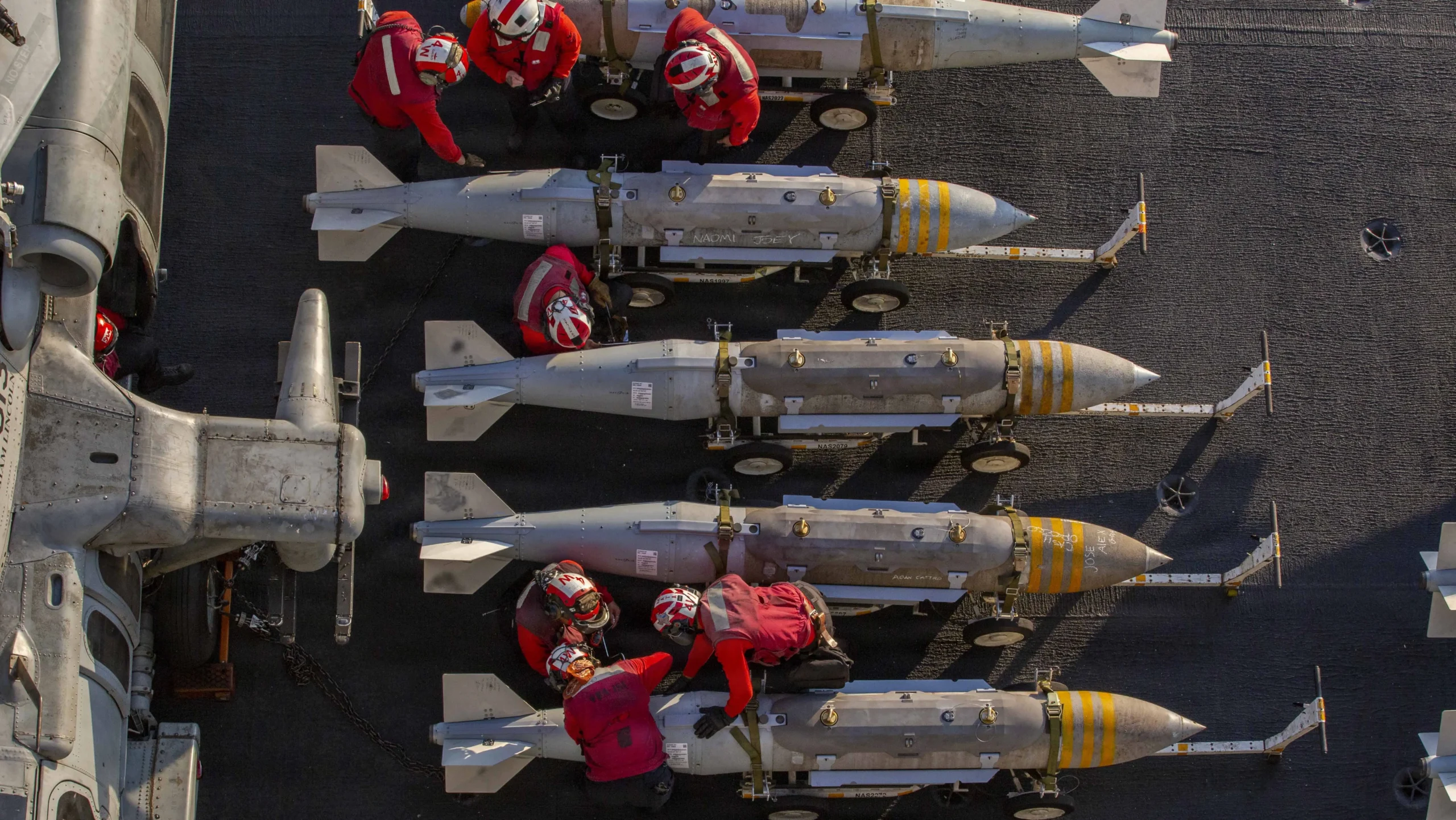
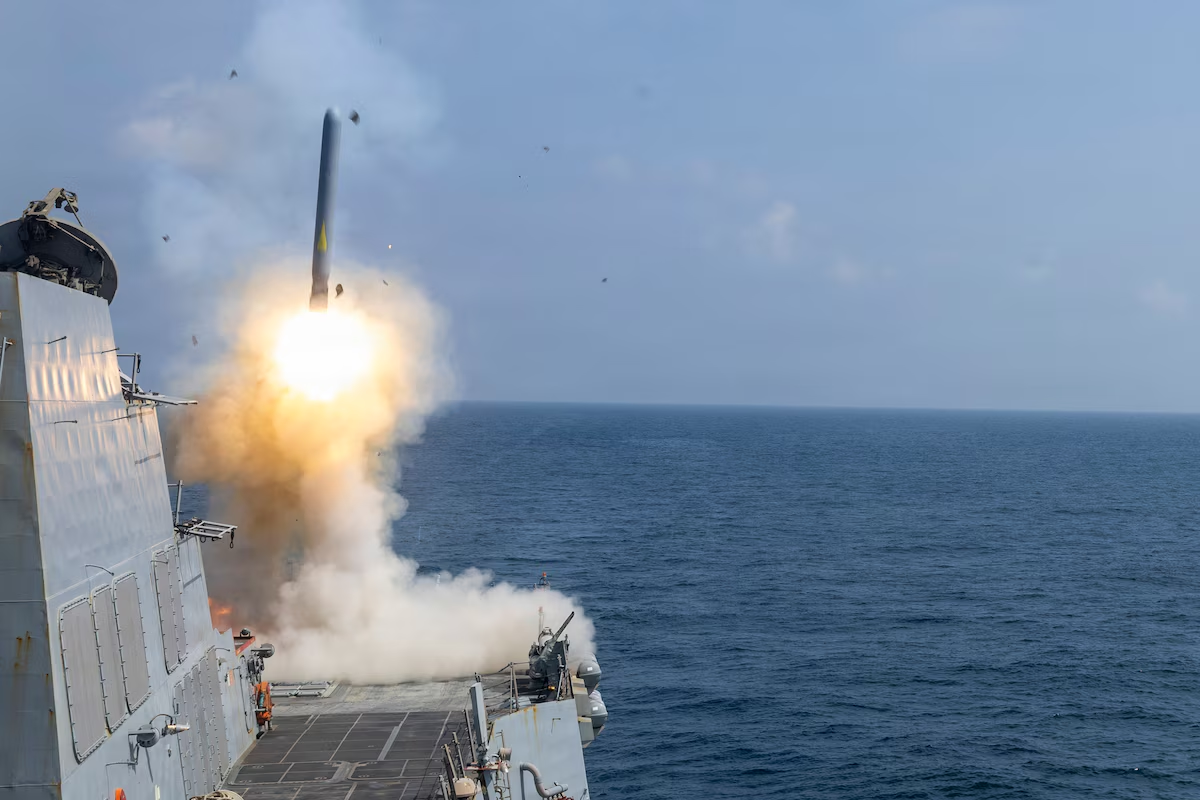
CENTCOM officials said American forces carried out a new wave of “defensive strikes” on Iranian missile platforms and mine-laying boats operating near the southern coast.
Targets included Qeshm Island, just off the vital Strait of Hormuz — a waterway through which roughly one-fifth of the planet’s oil once flowed freely before Tehran’s terror games closed it nearly three months ago.
This aggressive exchange highlights how fragile the region’s tenuous ceasefire truly is. Iran has spent months targeting both U.S. military sites and civilian infrastructure throughout the Gulf, fueling instability and sending energy costs soaring worldwide.
With oil prices jumping over two percent after this latest attack, the global markets are already reacting to Iran’s recklessness.
MORE NEWS: $10 Billion Price Tag and Bureaucratic Battles Loom Over Plans for Separate U.S. Cyber Force
President Donald Trump, working to close a deal to end the hostilities without rewarding Iranian blackmail, has said repeatedly that Tehran would never be allowed to build a nuclear weapon.
His message remains clear: peace is possible, but not at the price of American credibility. In an interview released Wednesday, Trump revealed that Iran had already agreed to that core condition.
“They’ve already agreed they’re not going to have a nuclear weapon,” he said, adding that even Iran’s Supreme Leader Ayatollah Khamenei has been directly involved in those negotiations.
Tehran, however, is dragging its feet. Iran’s semi-official Tasnim news agency admitted that talks had been paused, blaming Washington for refusing to end the fighting in Lebanon. The regime is seeking to link every negotiation to its regional proxies — Hezbollah, the Houthis, and others — as part of its endless leverage game. Trump’s camp isn’t buying it.
At the same time, an Iranian military adviser close to Khamenei, Mohsen Rezaei, warned publicly that Tehran would answer any “aggression” with “a barrage of missiles and drones.” For decades, the Iranian playbook has relied on just that kind of posturing.
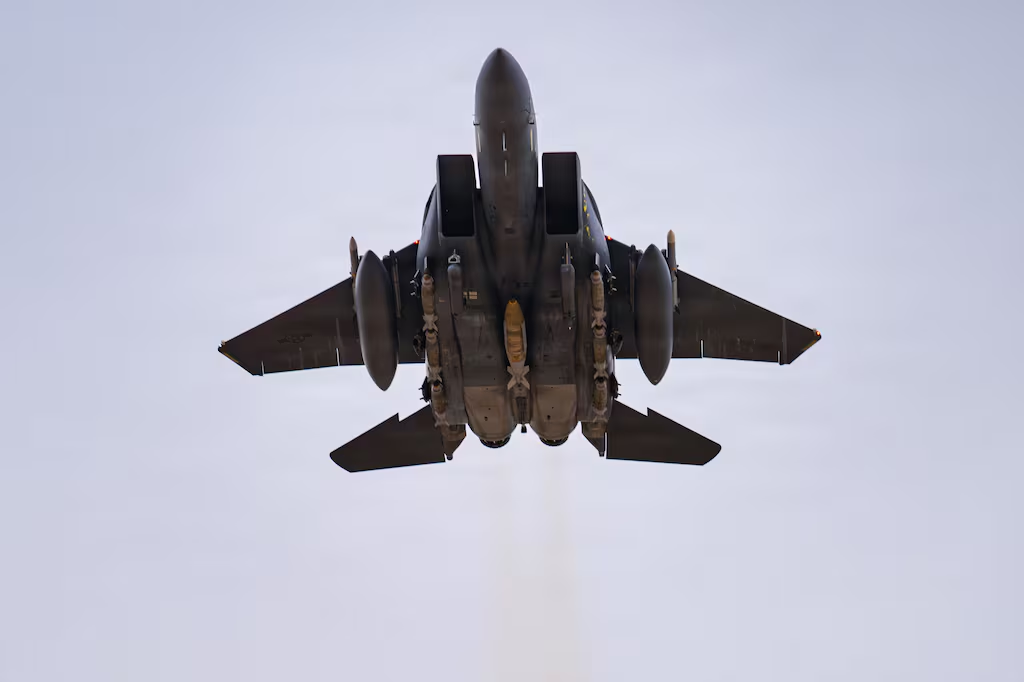
Now, as pressure mounts, their bluff is being tested by a resurgent U.S. posture under Secretary of War Pete Hegseth and a commander-in-chief who has no interest in appeasement.
Regional partners are now calling for unity against the Tehran threat. Anwar Gargash, senior adviser to the UAE president, declared that the repeated missile attacks on Kuwait and Bahrain were attacks on the entire Gulf.
“The aggression does not target one country alone, but all of us,” he wrote. The message is spreading fast — and so is the need for a coordinated regional defense strategy capable of countering Iranian terror.
While the military conflict continues, Israel remains engaged on its northern front with Hezbollah, the Iranian-backed militants using Lebanon as their launchpad.
Israeli drones struck multiple Hezbollah positions on Wednesday, killing six and even hitting a vehicle near Beirut — their closest strike to the Lebanese capital since a Trump-mediated ceasefire took effect earlier in the week.
Behind closed doors, tensions are just as high. Trump reportedly had a colorful exchange with Israeli Prime Minister Benjamin Netanyahu, urging restraint as he sought a broader regional deal to restore order and reopen the Strait of Hormuz.
“At some point I said, Bibi, we got to stop this,” Trump recounted. It’s a sign that the former president intends to keep America as the decisive voice in ending the chaos — on U.S. terms, not Tehran’s.
For now, thousands are dead, millions impacted, and the global economy continues to feel the shock. The War Department’s intelligence analysts expect Iran to keep pushing its luck, betting that the U.S. won’t risk a broader war.
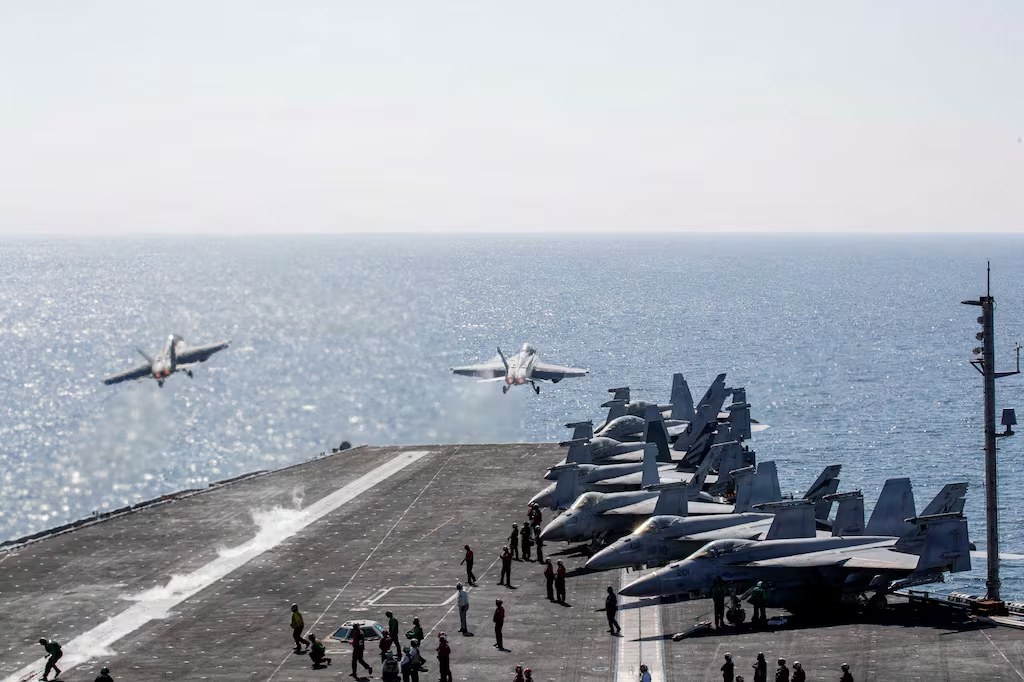
But Iran’s growing boldness could be its undoing. With American naval power already active in the Gulf and Trump personally managing the diplomatic levers, patience in Washington is running thin.
The Gulf is once again at a crossroads. Iran’s missiles and bluster are running into hard American steel, and the message coming out of the Trump camp is unmistakable: the days of bowing to Tehran’s tantrums are finished.
If Iran keeps escalating, it will learn — again — that in the modern era, American strength still rules the sea.
The opinions expressed by contributors and/or content partners are their own and do not necessarily reflect the views of RobManess.com. Contact us for guidelines on submitting your own commentary.
Join the Discussion
COMMENTS POLICY: We have no tolerance for messages of violence, racism, vulgarity, obscenity or other such discourteous behavior. Thank you for contributing to a respectful and useful online dialogue.