
The U.S. Army is putting its foot down—literally—on foreign-made gear. After decades of outsourcing, the service is calling on American manufacturers to step up and make better boots that are entirely produced on U.S. soil.
The Army’s goal is to both upgrade the quality of footwear for America’s warfighters and reignite an American manufacturing base that globalist trade policies and corporate outsourcing have nearly dismantled.
According to the Army’s newly released Request for Information (RFI), the mission is clear: “Support re-shoring of the domestic footwear industry, improve capabilities for the domestic military footwear industrial base, and ultimately provide the best performing footwear technology to the warfighter.”
That’s a tall order, especially considering that 99% of all footwear sold in the U.S. in 2020 was imported, largely from factories in Asia.
After years of watching Chinese factories pump out cheap shoes—including those marketed directly to service members—some in the Pentagon finally seem ready to reclaim American production capability.
The RFI outlines several key areas where companies must prove their worth. The Army wants to see real strategies for increasing domestic output, adopting high-tech and automated manufacturing methods, and demonstrating flexibility to produce different types of military boots.
Companies must also show how they’ll make U.S.-made boots more cost-effective, durable, and high-performing compared with their foreign counterparts.
There’s one major requirement that separates contenders from pretenders—manufacturers must already operate in the U.S. and comply with the longstanding Berry Amendment. That 1941 law bars the War Department from using taxpayer funds for uniforms, gear, or textiles produced overseas.
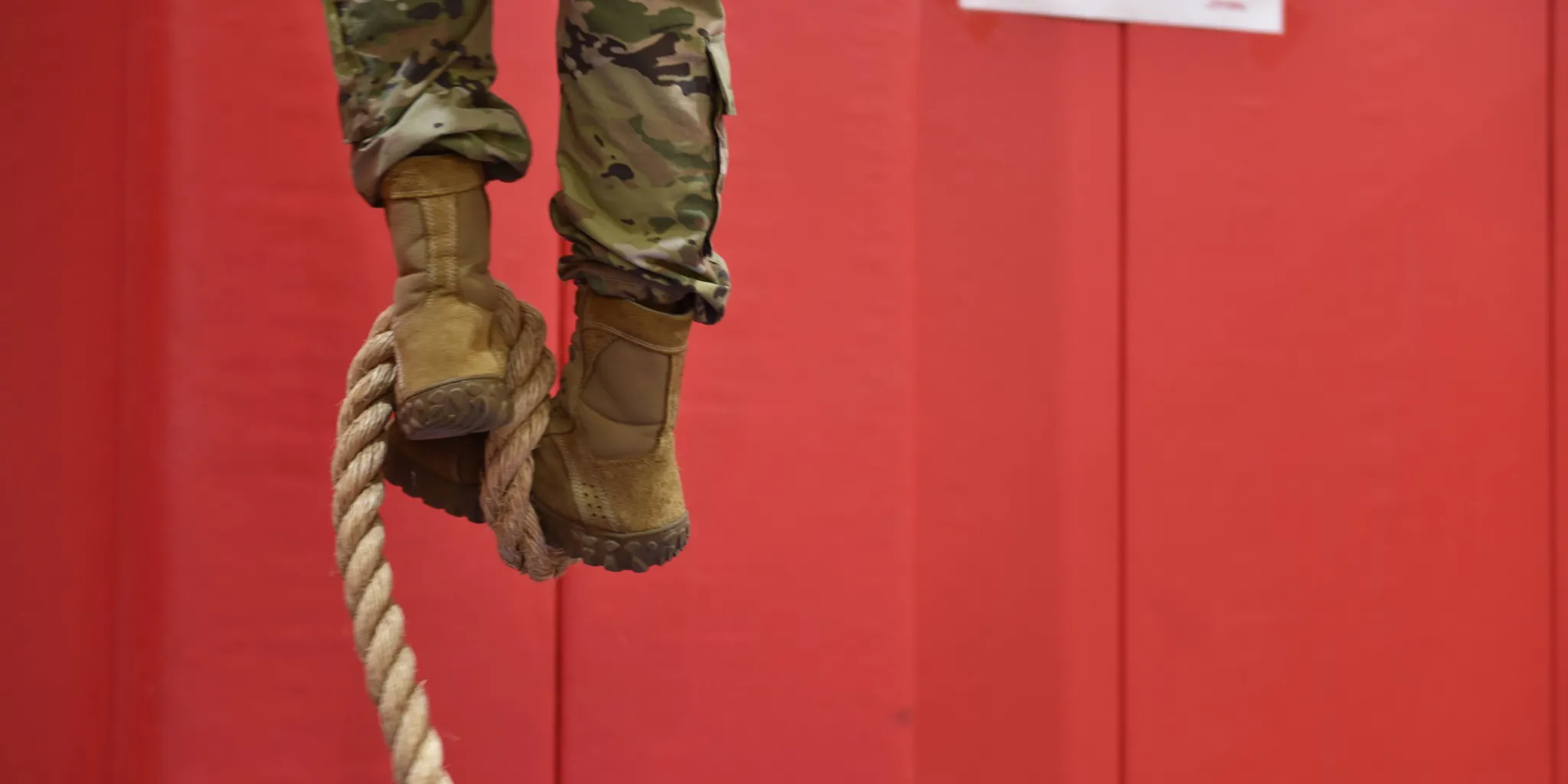
Unfortunately, Congress and prior administrations have looked the other way as more and more dollars flowed to Chinese manufacturers under the guise of “choice” for service members.
The Army now wants to rein that in, asking companies to show hard numbers on how they plan to expand annual output, reduce costs, and improve defect rates. On top of that, prototype boots demonstrating performance improvements will earn bonus points.
This initiative comes through the Supporting Warfighters through Innovative Footwear Technologies (SWIFT) program, established by Congress in 2024. SWIFT’s goal is to connect manufacturers, suppliers, and research universities to develop better gear and restore enduring American capability in military-grade footwear production.
Interestingly, this renewed focus aligns with a legislative effort being pushed in Congress. The Better Outfitting Our Troops Act—appropriately shortened to the BOOTS Act—was introduced for fiscal year 2025 by Senator Tammy Duckworth of Illinois.
It would require that any combat boots sold to or used by troops, whether issued or voluntarily purchased with uniform allowances, must be made entirely in America.
While the Berry Amendment already requires issued uniforms to come from U.S. sources, it’s been widely ignored in the optional boot market. Many service members use their allowances to buy imported boots online or at military exchanges, where foreign-made footwear—including Chinese-manufactured pairs—line the shelves.
As William McCann, executive director of the United States Footwear Manufacturers Association, bluntly put it, “Foreign-made boots manufactured in China and other Asian factories are openly sold through official military exchanges, online storefronts, and retail channels targeting military personnel, sending taxpayer dollars to support foreign manufacturers.”
That “optional boot” market represents a staggering $250 million in annual commercial sales—most of it heading straight overseas. McCann and other advocates say that American manufacturers have the know-how and technology to bring all that production back home.
What they’ve lacked is the institutional willpower and procurement consistency from Washington to make it feasible again.
Now, with the SWIFT program funded and the BOOTS Act gaining traction, there’s a path to not only rebuild this capability but also to give American troops the top-quality footwear they deserve.
After all, if we expect soldiers to depend on their boots for miles of rough terrain, harsh climates, and battlefield conditions, they shouldn’t be made in a foreign factory that doesn’t share America’s interests.
MORE NEWS: $10 Billion Price Tag and Bureaucratic Battles Loom Over Plans for Separate U.S. Cyber Force
Restoring American supply chains strengthens both national security and industrial readiness—two priorities that pro-Trump conservatives like War Secretary Pete Hegseth and patriotic lawmakers have long championed. Rebuilding our warfighting base starts with producing exactly what our troops wear and use.
The Army’s call to restore domestic boot production is long overdue but undeniably welcome.
Reviving this sector isn’t just about stitching leather and rubber; it’s about reclaiming control of a strategic manufacturing capability that belongs in American hands.
No warfighter should ever have to depend on China for battlefield essentials.
America built the boots that won two world wars. It’s past time we lace up that legacy again.
The opinions expressed by contributors and/or content partners are their own and do not necessarily reflect the views of RobManess.com. Contact us for guidelines on submitting your own commentary.
Join the Discussion
COMMENTS POLICY: We have no tolerance for messages of violence, racism, vulgarity, obscenity or other such discourteous behavior. Thank you for contributing to a respectful and useful online dialogue.