
The U.S. Navy is pushing forward with a full-scale overhaul of its shore dining operations, rolling out an ambitious “grab-and-go” food initiative that promises all-day access to meals for sailors by the close of 2026.
The move is part of a broader push to modernize and improve daily life at naval installations while cutting down on wasted time and limited food hours that have frustrated service members for years.
Vice Adm. Scott Gray, commander of Navy Installations Command, said Wednesday that this new approach is about giving sailors real flexibility to eat when their schedules allow, not just during the standard galley windows.
“We acknowledge that our sailors are busy,” Gray explained during a media briefing. “This grab-and-go is an effort to ensure that no matter what your schedule looks like during the day, you have the opportunity not only to ensure that you get something to eat but that you get healthy options.”
In plain terms, the Navy is catching up to reality. Service members don’t live their days in neat three-meal blocks.
Between shifts, drills, watches, and odd-hour operations, personnel need food access that matches the unpredictable rhythm of military life. Gray’s announcement makes clear that the Navy finally intends to meet that need.
As of 2025, grab-and-go options were spotty to nonexistent at most shore-based galleys. But by June 2026, Gray said, sailors can expect to see grab-and-go stations at 95 percent of all shore installations.
That’s a significant upgrade, signaling that the Navy is serious about improving the quality of life for its ranks.
Beyond simply expanding the number of locations, the Navy also plans to stretch those service hours from open to close, ensuring sailors aren’t left snacking on vending machine chips between meal times.
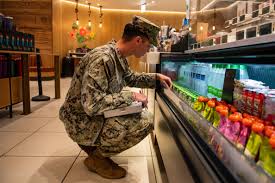
“If you come in, for example, at breakfast time and you have your breakfast and you know you’re not going to be able to come back and have lunch, you can then swipe your card before you go and take a sandwich, a salad and a protein drink with you,” Gray said. That kind of common-sense policy should have been standard practice years ago.
The Navy’s “shore food service transformation” began in May at two pilot sites: the Naval Construction Battalion Center in Gulfport, Mississippi, and Naval Base Kitsap-Bangor in Washington state. If those trials succeed—and the early signs look promising—the initiative will expand across more bases starting in 2027.
Officially, this initiative isn’t just about food convenience. It’s a full modernization effort tied to an improved meal entitlement program. Sailors will have access to a greater variety of stations including international cuisine, pizza, deli and salad bars, a Mongolian grill, and even vegan options.
While some may roll their eyes at that last item, the broader effort to provide diverse, high-quality options shows a push toward professional-grade culinary operations.
In fact, the Navy has called in reinforcements from the Culinary Institute of America to train galley staff at the pilot locations. That’s a sign that standards are climbing fast—and should.
Introducing real culinary professionalism to shore galleys has the potential to make service life more sustainable while reinforcing the Navy’s ability to recruit and retain talent.
It’s worth noting that this is not some civilian luxury project. On the contrary, having well-fed, energized sailors directly impacts readiness. Malnourished or fatigued personnel are not mission effective.
Secretary of War Pete Hegseth and others in the War Department have made quality of life initiatives a central plank of rebuilding America’s fighting strength—and this project fits neatly within that mission.
Critics might call this an unnecessary upgrade or question the expense, but let’s be honest: providing round-the-clock, healthy food options isn’t indulgence—it’s logistics. A fleet that never sleeps needs fuel that never stops.
The Navy can’t afford to have its sailors running on empty during watch duty or late-night operations.
MORE NEWS: $10 Billion Price Tag and Bureaucratic Battles Loom Over Plans for Separate U.S. Cyber Force
Meanwhile, other branches may look to this effort as a model for their own facilities. With morale and retention becoming increasingly vital, modernization projects like this could be a core part of sustaining an all-volunteer fighting force under President Trump’s returning administration.
Conservative leadership has been vocal about cutting waste and bureaucracy while investing directly in warfighters’ daily realities—this project represents that philosophy in action.
There’s still a way to go before every sailor can grab a sandwich any time of day, but the path is clear. By 2026, nearly every shore installation will have a grab-and-go option open from early morning until galley closure. By 2027, the second wave of expansion will broaden both menu variety and reach across nine additional sites.
All told, it’s a refreshingly practical move from a service that often buries good ideas under paperwork.
If it keeps momentum, the Navy’s all-day food stations could soon become one of the most tangible quality-of-life upgrades sailors have seen in decades.
Because at the end of the day, strength, readiness, and morale often start with something as simple as a good meal—available when you actually need it.
The opinions expressed by contributors and/or content partners are their own and do not necessarily reflect the views of RobManess.com. Contact us for guidelines on submitting your own commentary.
Join the Discussion
COMMENTS POLICY: We have no tolerance for messages of violence, racism, vulgarity, obscenity or other such discourteous behavior. Thank you for contributing to a respectful and useful online dialogue.