
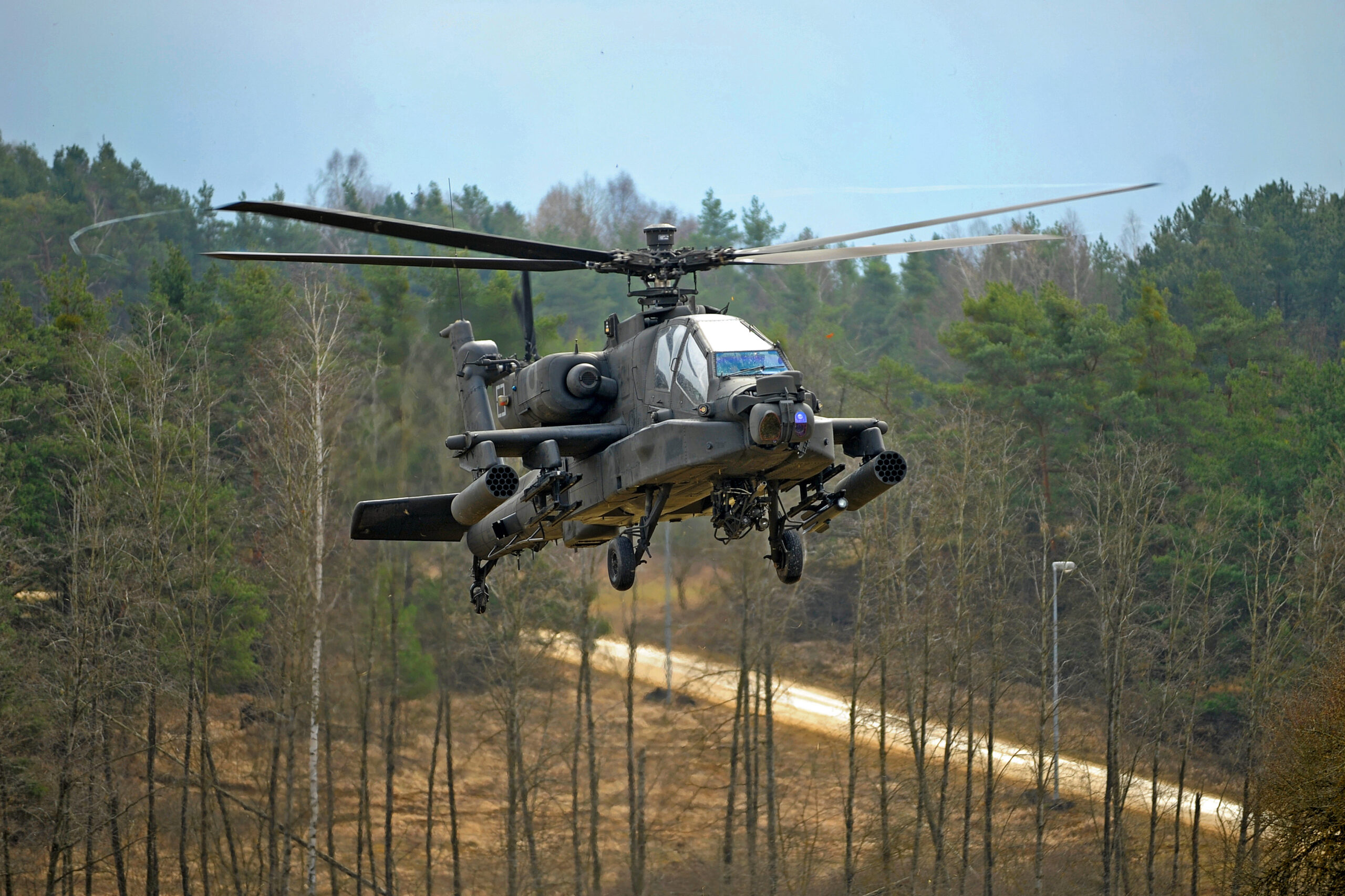
President Donald Trump didn’t mince words Wednesday when he described the near miss involving two U.S. Army aviators whose AH-64 Apache helicopter was knocked out of the sky by Iranian aggression over the Strait of Hormuz.
“They got very lucky,” he said from the Oval Office, adding that retaliation against Tehran is “not over.”
Trump made it clear America had already punched back hard and wasn’t about to stop. “We hit them hard yesterday and we’re going to hit them hard again today,” he told reporters, his tone a mix of confidence and warning.
The message to Iran was unmistakable: hit American forces and expect a swift, fierce response.
MORE NEWS: Pentagon Launches New ‘Joint Warfighting Evaluation’ To Tighten Standards For Flag Promotions
Initial reports suggested the Apache had been shot down outright. Trump clarified later that the aircraft was struck by an Iranian ordnance that failed to explode, narrowly sparing the lives of the two pilots.
“That bomb was lodged in the helicopter, it didn’t explode,” he explained. “It was on fire but it didn’t explode. Those two guys, they knew how to fly, but they got very lucky.”
The President, never short on candor, added a touch of levity about the dramatic rescue that followed, saying, “You won’t believe the rescue, how cool it was.” For good reason—the operation marked a notable first in U.S. military history.
The two downed aviators were pulled from the sea by a remotely piloted Navy surface drone, part of the War Department’s expanding array of unmanned technologies under U.S. 5th Fleet’s Task Force 59.
It was the first time one of these surface systems was used in a rescue operation. As military innovation continues to evolve, this event may signal a new era of unmanned battlefield support that saves lives and delivers results.
Capt. Tim Hawkins, spokesman for U.S. Central Command, told Military Times that the Corsair unmanned surface vessel retrieved the aviators and brought them to a rendezvous point offshore where they were airlifted to safety.
“The surface drone that assisted in [Monday’s] rescue of the Apache crew off the coast of Oman was a U.S. Navy Corsair unmanned surface vessel operated by U.S. 5th Fleet’s Task Force 59,” Hawkins said.
Built by Texas-based Saronic Technologies, the 24-foot Corsair can carry payloads of up to 1,000 pounds over 1,000 nautical miles and reach speeds of 35 knots. It’s fast, efficient, and exactly the kind of forward-thinking tool the War Department is leaning on to gain the upper hand. It’s also a strong reminder that American ingenuity remains light-years ahead of Iran’s clunky, copycat war machines.
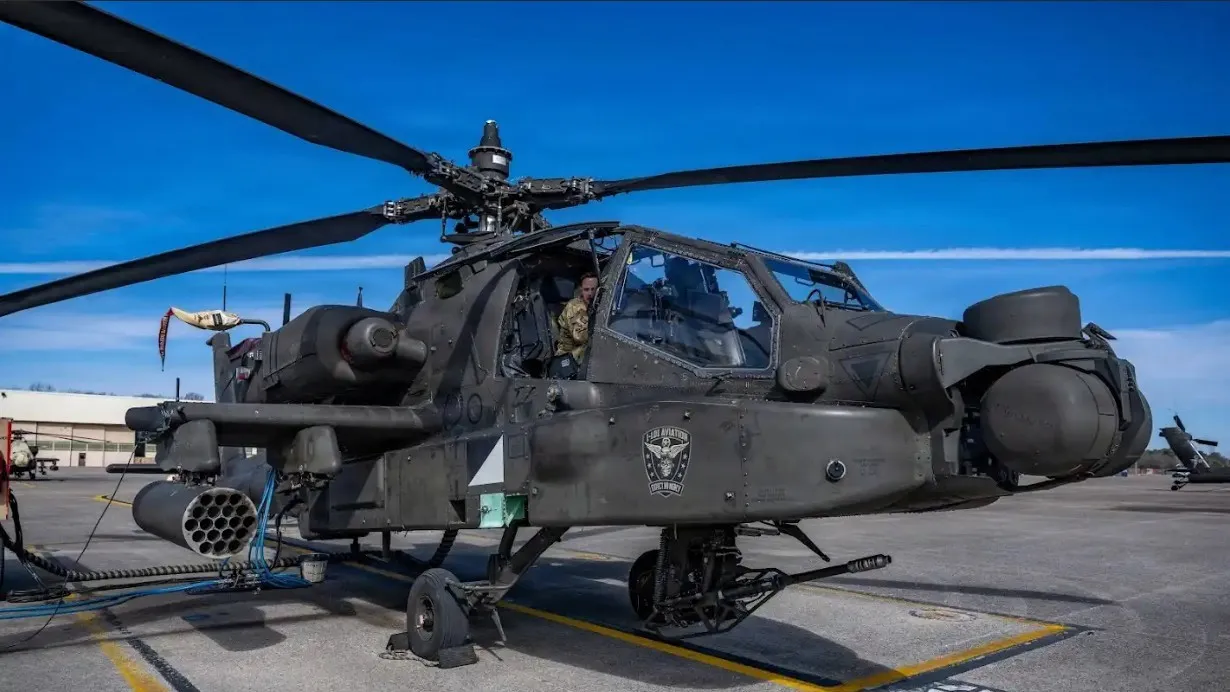
The encounter showed the asymmetrical nature of modern conflict. A low-cost Iranian Shahed-136 drone, estimated at just $20,000, managed to strike a U.S. Army Apache valued at around $35–40 million.
While the math might seem lopsided, it reveals how Tehran’s tactics favor cheap, expendable assets intended more for provocation than dominance. The fact the U.S. crew survived—and was swiftly rescued—sends the opposite message: technology and toughness still win the day.
Iranian officials, of course, wasted no time blustering in retaliation. After American forces launched precise counterstrikes Tuesday night, Iran’s foreign minister threatened that “our powerful armed forces will leave no attack or threat unanswered.”
The Revolutionary Guard then boasted of attacking 21 U.S. sites across the region, including bases in Bahrain, Kuwait, and Jordan. As usual, Iranian propaganda claimed “victories” without a shred of evidence to back them up.
Yet even as tensions simmer, Trump indicated room remains for diplomacy—but only if Iran stops playing games.

“We’ll see what happens with the deal,” Trump said. “We were really close to a deal but they keep tapping us along, they keep playing us for suckers. All they have to do is they have to start signing a paper, it’s fully negotiated.”
His remarks signaled that while he remains open to negotiation, he’s not interested in another endless cycle of empty promises from Tehran. The President’s blunt style—equal parts deterrence and directness—has kept adversaries guessing and allies alert.
For the War Department, the Apache incident illustrates both the peril and preparedness inherent in the region. Despite enemy escalation, U.S. forces are operating with cutting-edge technology, decisive leadership, and unwavering resolve from Washington.
America doesn’t back down when its people are attacked—it strikes back stronger.
The downing of the Apache may have been Iran’s latest provocation, but the rescue that followed sent a clearer signal: under President Trump’s leadership and with Secretary of War Pete Hegseth driving a renewed focus on strength, the U.S. warfighter remains unstoppable.
And for Iran, that’s the real warning shot.
The opinions expressed by contributors and/or content partners are their own and do not necessarily reflect the views of RobManess.com. Contact us for guidelines on submitting your own commentary.
Join the Discussion
COMMENTS POLICY: We have no tolerance for messages of violence, racism, vulgarity, obscenity or other such discourteous behavior. Thank you for contributing to a respectful and useful online dialogue.