
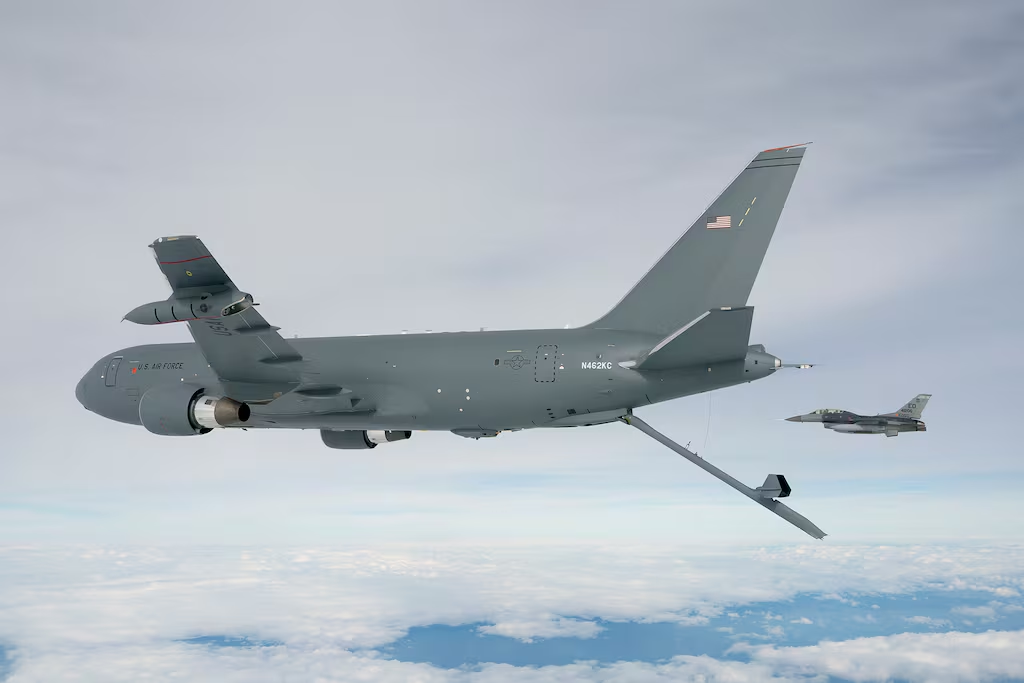
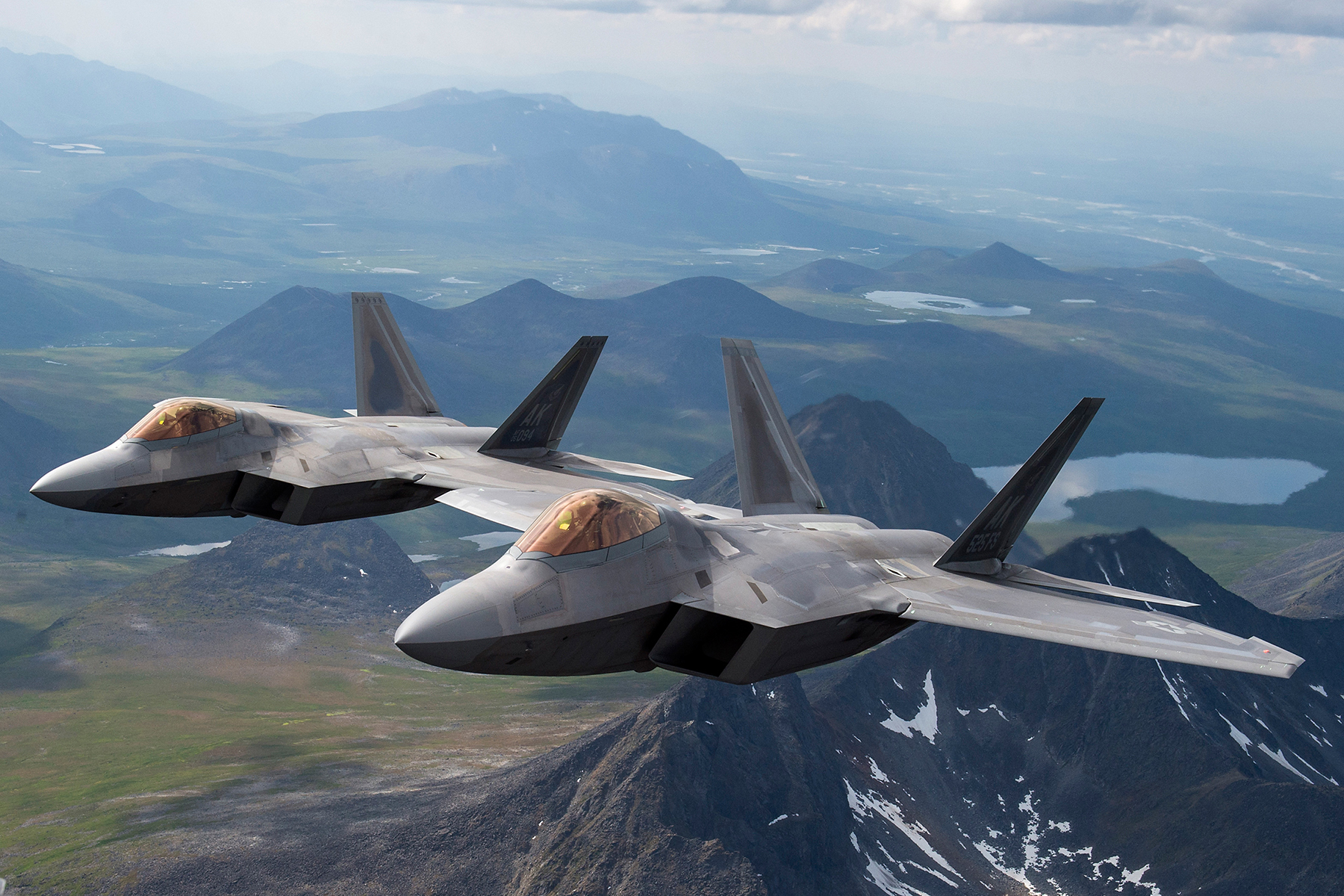
An Air Force investigation into last July’s midair mishap involving a KC-46A Pegasus and an F-22A Raptor found that human error on both ends of the refueling mission led to nearly $10 million in aircraft damage.
The incident, which took place over the Atlantic Ocean on July 8, 2025, forced the KC-46A to make an emergency landing after its refueling boom was literally ripped off the jet and dropped into the sea.
According to Air Mobility Command’s Accident Investigation Board (AIB) report, released June 12, the chaos began during a standard training mission with seven Raptors.
An experienced KC-46A boom operator’s manual input errors combined with a rookie F-22 pilot’s misjudged approach caused a disastrous chain reaction.
The report states that the boom operator accidentally placed the refueling boom “excessively out of trim,” creating a “radical force” on the boom nozzle. That misalignment locked the connection between the tanker and the fighter, creating enormous tension.
When the connection was released, the bound boom rocketed upward, striking the tail of the Pegasus and snapping off.
Investigators described it as an “unrecoverable boom fly-up rate,” meaning the energy released during the separation was simply too much to control.
The force cracked two of the boom’s structural tubes, causing the aft end, tail assembly, and telescoping tube to break away completely and fall into the Atlantic.
While the veteran boom operator had over 1,000 flight hours in KC-46A and KC-135 tankers, the F-22 pilot was still a student with just 13 hours in the Raptor.
That lack of experience mattered. The AIB found the student pilot “failed to account for the stiff boom characteristics,” contributing significantly to the mishap by approaching too aggressively.
Together, the errors resulted in catastrophic damage to the KC-46A’s refueling system and structural components, including the APU access doors, exhaust deflector, and tail section. Fortunately, no one was injured, and no other aircraft were affected.
The Pegasus involved belonged to the 22nd Air Refueling Wing, and the Raptor was assigned to the 1st Fighter Wing. Both aircraft were operating under standard training protocols.
But as the report revealed, the simplest breakdown in precision can have serious consequences when multimillion-dollar aircraft are operating just feet apart in midair.
The Air Force estimated total losses at nearly $10 million in structural damage and replacement costs.
While that figure doesn’t match the price tag of the aircraft themselves, it’s an expensive reminder of how vital rigorous training and procedural accuracy are in aerial refueling operations.
The KC-46A program itself has been surrounded by technical issues and controversy since its inception. The tanker, intended to replace the aging KC-135 fleet, has wrestled with multiple hardware defects and system errors since rollout.
Despite modernization efforts, signature reports of boom stiffness, software faults, and foreign object damage have repeatedly slowed its full acceptance by the War Department.
In this case, however, the Air Force’s own report makes clear that the mishap was not mechanical failure but human error. That’s an important distinction from many of the previous Pegasus headlines that pointed fingers at Boeing’s design flaws.
Instead, this incident highlights the complexity of the human-machine interface at high altitude—one wrong input, and the laws of physics take over.
The mishap’s most fortunate outcome is what didn’t happen: no lives were lost, no injuries were reported, and no civilian property was damaged. Considering the potential risk of midair collisions or uncontrolled descents, that’s no small victory.
Still, this event adds another bullet point to the long list of refueling incidents under review.
Commanders across multiple wings are now reemphasizing improved synchronization training between tanker crews and fighter pilots, especially with student aviators. Closing rates, nozzle pressure calibration, and communication timing are under renewed scrutiny.
Military insiders say the mishap underscores why continuous training refreshes and technology updates are critical for the fleet.
It also reinforces the importance of experience—especially when new-generation aircraft with unique aerodynamic properties like the F-22 are involved.
For War Secretary Pete Hegseth’s team, the takeaway is straightforward: maintain hard standards and never compromise on readiness.
MORE NEWS: Two Boeing Employees Were Among the Eight Killed in Fiery B-52 Crash at Edwards Air Force Base
The modern battlefield depends on midair refueling for extended operations, especially across the vast Indo-Pacific region. Errors like this one can’t become routine.
The Kansas-based 22nd Air Refueling Wing is reportedly implementing new simulator modules to account for peculiarities in the KC-46A’s boom responsiveness.
Meanwhile, the 1st Fighter Wing is revisiting its training pipeline for student Raptor pilots to ensure better anticipation of boom stiffness when connecting with different tankers.
Ultimately, this $10 million midair accident should serve as a cautionary tale—the margin for error in aerial refueling is razor-thin, and even seasoned operators can learn something from a day when the checklist goes sideways.
With renewed command emphasis and sharper supervision, the Air Force aims to make sure the next generation of tanker and fighter crews gets it right the first time, not the next time.
The opinions expressed by contributors and/or content partners are their own and do not necessarily reflect the views of RobManess.com. Contact us for guidelines on submitting your own commentary.
Join the Discussion
COMMENTS POLICY: We have no tolerance for messages of violence, racism, vulgarity, obscenity or other such discourteous behavior. Thank you for contributing to a respectful and useful online dialogue.