
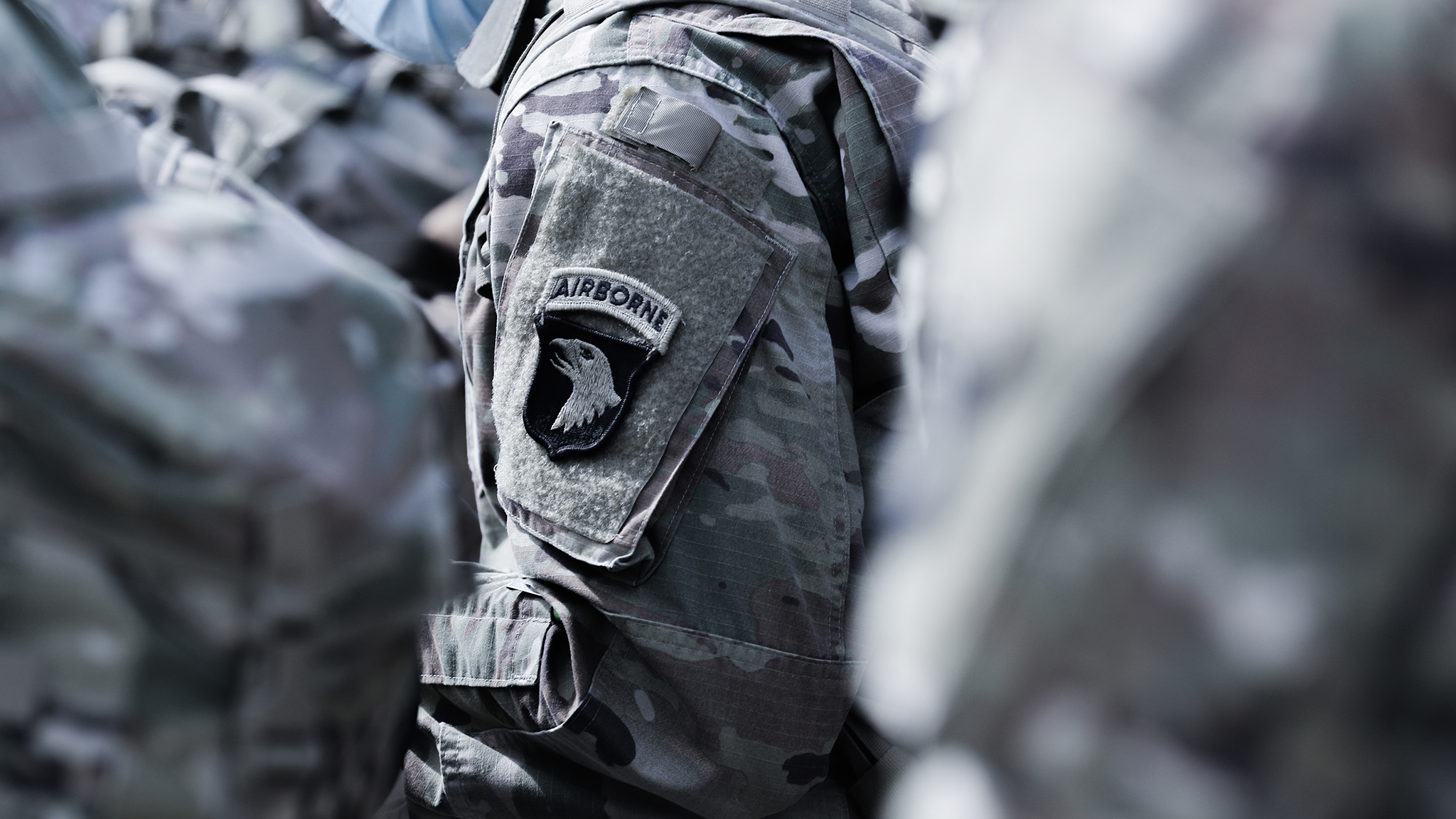
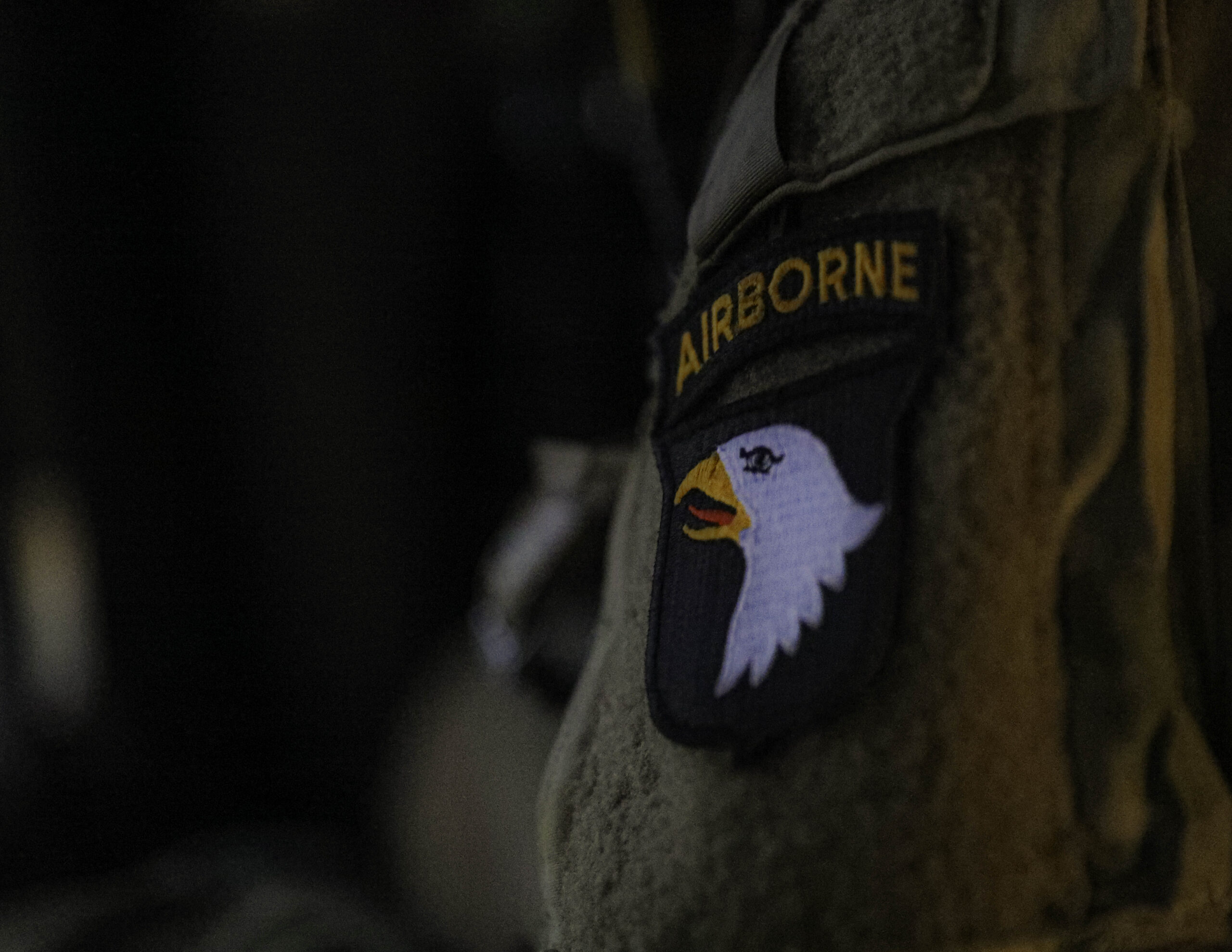
In one of the most forward-leaning combat experiments in years, soldiers from the 101st Airborne Division have turned drones into literal game changers on the modern battlefield.
During training at Fort Polk, Louisiana, the legendary “Screaming Eagles” demonstrated how small, soldier-built drones can breach enemy lines, punch through razor wire and clear trenches long before troops ever set foot on contested ground.
Colonel Ryan Bell, who leads the 3rd Mobile Combat Brigade, said his soldiers took 21st-century warfighting into their own hands by building more than 500 drones, including around 150 homemade attack models.
The unit treated these mini airframes as expendable tools rather than precious assets — and the results spoke for themselves.
MORE NEWS: U.S. Launches Retaliatory Strikes On Iranian Missile and Drone Sites After Strait of Hormuz Attack
“These drones are ammunition,” Bell said bluntly. “When you run the numbers, a brigade in sustained combat might need 1,000 to 1,500 drones every single week.”
His message to the War Department and industry partners was unmistakable: mass production, not boutique development, is the future of victory.
The innovative units crafted what they called “Attritable Battlefield Enabler” drones — or ABEs — built from 3D-printed parts supplied by the Robotics and Autonomous Integration Directorate (RAID) at Fort Campbell.
With cooperation from the engineers, Bell’s soldiers developed an add-on that allows the drones to drop grappling hooks — meaning no more sending soldiers into harm’s way to manually breach razor wire under fire.
The unit also designed munitions capable of blasting through multiple strands of concertina wire. These new drone-delivered payloads now enable remote breaching of fortified lines, without exposing a single rifleman.
“We had drones,” Bell said, “but we were still using old-school grappling hooks. Now, we can remove the risk completely.”
In addition to breaching wire and destroying sensors, the team integrated “mothership” drones — larger reconnaissance aircraft capable of deploying smaller ABEs across the battlespace.
This concept extends operational range and minimizes human exposure, perfectly aligning with the Army’s push for what leaders call a “machinic forward line.”
When the 101st ran the full-scale test, the results were startling. Bell ordered one of his commanders to conduct a robotic trench-line breach with zero soldiers up front.
Using a mix of reconnaissance and attack drones, the commander eliminated threats and destroyed enemy sensors long before infantry arrived.
The sequence was surgical. MRR drones neutralized electronic warfare threats, then sent in 25 ABEs to hit specific enemy positions. Another pair of ABEs dropped specialized charges that ripped through the razor wire.
Two experimental Hunter WOLF unmanned ground vehicles followed, detonating C4 to remove landmines and finish the job. By the time troops advanced, the breach was totally uncontested.
“It took 35 drones and just over 100 pounds of C4,” Bell explained, “but we accomplished the same effect as three 155mm artillery barrages at a fraction of the cost — and no soldiers had to expose themselves.”
This innovation did not come from the Beltway’s think-tank class or international defense contractors. It came from American soldiers in the field, guided by real-world necessity and battlefield instinct.
Exactly the kind of decentralized, gutsy problem-solving President Trump and War Secretary Pete Hegseth have long demanded: warfighters driving capability, not bureaucrats.
While the experiment’s success was clear, the implications go far beyond Fort Polk. Bell made it clear that for these tactics to become widespread, production must ramp up at an unprecedented scale.
“We simply don’t have the ability to produce this many in-house,” he said. “If our brigade needs 1,000 per week, imagine what the full force requires. The private sector will have to step up.”

That challenge could lead to significant collaboration between the War Department and America’s manufacturing backbone — precisely the kind of domestic defense mobilization Trump-era leaders have championed.
In wartime conditions, scaling drone output could become as essential as bullet or artillery production.
What the 101st Airborne has essentially done is blueprint a new model of attritable warfare: expendable machines clearing the deadliest obstacles before a single soldier risks his life.
Instead of slogging through barbed wire like it’s 1944, soldiers now command swarming robotic armies capable of neutralizing entire defensive lines.
As Bell and his team demonstrated, the future of combat is not just about high-tech toys — it’s about smart, scalable tactics that keep American troops alive.
And if one thing is certain, the 101st’s cutting-edge approach shows that the next major transformation in battlefield operations won’t come from a boardroom or a lab somewhere at the Pentagon. It’ll come from soldiers who refuse to settle for anything less than dominance.
The opinions expressed by contributors and/or content partners are their own and do not necessarily reflect the views of RobManess.com. Contact us for guidelines on submitting your own commentary.
Join the Discussion
COMMENTS POLICY: We have no tolerance for messages of violence, racism, vulgarity, obscenity or other such discourteous behavior. Thank you for contributing to a respectful and useful online dialogue.