
Former Army Brigadier General Anthony Tata has stepped into his new role overseeing the Defense POW/MIA Accounting Agency with a clear promise to families of missing Vietnam-era service members: he’s going to fight for the resources needed to bring their loved ones home.
Tata, now the undersecretary of defense for Personnel and Readiness, addressed frustrated families at the annual DPAA event, pledging to dig into budget cuts that halted recovery missions in Vietnam and Laos.
These operations were stopped earlier this year after $40 million was slashed from the agency’s budget — cuts Tata says he intends to challenge with the backing of President Trump and Secretary of War Pete Hegseth.
“I absolutely support increasing the budget for DPAA,” Tata told the audience. “The more money, the more questions we can answer for you.”
His plainspoken pledge was backed by decades of Army leadership, including command roles in the 82nd and 101st Airborne Divisions and combat service in Afghanistan.
Tata referred to a bill championed by Senator Deb Fischer (R-Neb.) to restore the $40 million, part of the larger National Defense Authorization Act — a must-pass bill that could breathe life back into dozens of suspended recovery missions.
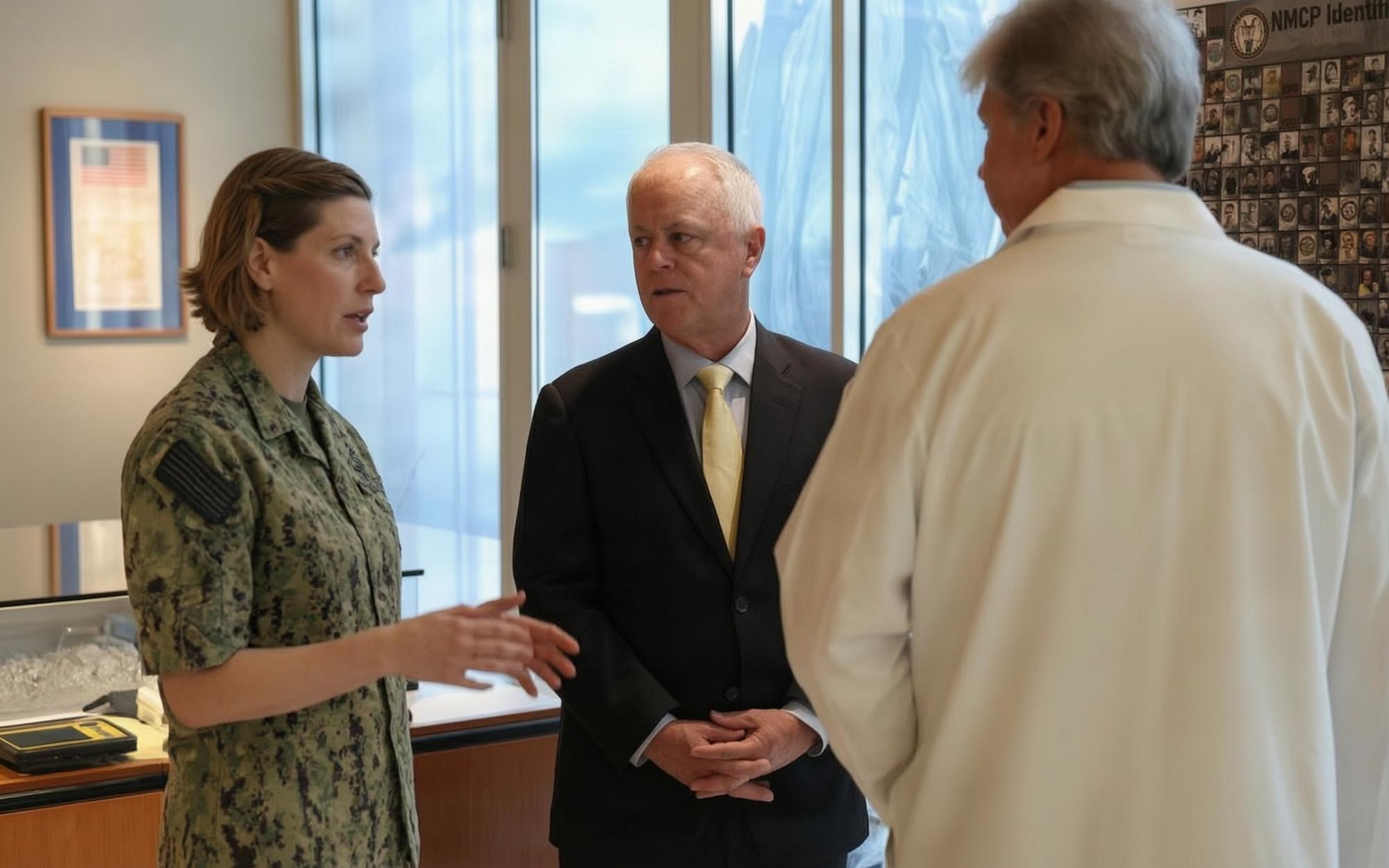
Fischer’s measure, if approved, would restore at least short-term stability for an agency that has been hamstrung by Washington’s habitual penny-pinching and bureaucratic red tape.
Due to the cuts and compounding international fuel shortages stemming from conflict in the Middle East, DPAA had already been forced to cancel four recovery teams scheduled in Laos.
According to a release from the agency, those missions were supposed to operate between late April and early June but were abruptly halted due to resource shortages.
The reduction in operational teams has been severe. DPAA now operates just seven teams in Vietnam, five in Laos, and one in Cambodia — numbers that severely limit the ability to locate, recover, and identify remains of missing personnel.
Director Kelly McKeague called the missing funding “chump change,” pointing out that $40 million is trivial when compared to the trillion-dollar national defense budget.
“It’s peanuts,” McKeague said bluntly, adding that restoring the funds would allow him to expand recovery efforts and bring greater closure to families who have waited for decades.
Tata seemed to share that frustration. He assured attendees that he now has the “full unmitigated support” of President Trump and Secretary Hegseth, both of whom have pressed for a stronger commitment to honoring MIA and POW service members.
“I will do anything possible to help Kelly and his team,” Tata declared. His words were well received by those who have spent years battling Washington’s inertia and excuses.
Tata’s critics have often invoked his past as a lightning rod for blunt commentary — especially his prior remarks calling Barack Obama a “terrorist leader” — but for many veterans and Gold Star families, his directness is refreshing.
At a time when military bureaucracy buries progress in endless reviews and politicized committees, Tata’s promise to shake the tree is exactly what families want to hear.
Beyond the funding battle, Tata also confronted another festering issue — declassification red tape that has withheld decades-old POW/MIA records from families.
He expressed strong support for releasing those files, telling families there was “very little reason” the military should be keeping those documents locked away. “I’m super committed” to getting answers, he said plainly.
Bipartisan legislation, the "Bring Home Our Heroes Act," now moving through both chambers of Congress, aims to cut through that bureaucratic fog.
The bill would create an independent records review board tasked specifically with identifying and declassifying MIA and POW records that have languished in government vaults.
It would also give families the right to appeal classification decisions by federal agencies — a move long overdue in the eyes of many veterans advocates.
Senator Jeanne Shaheen (D-N.H.) — one of the bill’s co-sponsors — applauded the measure, saying it would ensure families get the transparency they deserve.
While it’s unusual these days to see unity in Washington, this is one issue that appears to transcend party lines — though it remains to be seen if bureaucrats in the permanent class of government will get on board.
For families who have spent half a century waiting for answers, Tata’s leadership could represent a long-awaited shift.
Backed by the Trump administration’s emphasis on warrior honor and mission completion, his promise to restore funding and prioritize transparency could reignite a mission that should never have been allowed to fade.
If Congress follows through on the Fischer bill, the DPAA could finally resume the work that defines America’s promise to its service members: we do not leave our heroes behind.
The opinions expressed by contributors and/or content partners are their own and do not necessarily reflect the views of RobManess.com. Contact us for guidelines on submitting your own commentary.
Join the Discussion
COMMENTS POLICY: We have no tolerance for messages of violence, racism, vulgarity, obscenity or other such discourteous behavior. Thank you for contributing to a respectful and useful online dialogue.