
Highways aren’t just for cars anymore, at least not when U.S. Marines are in town.
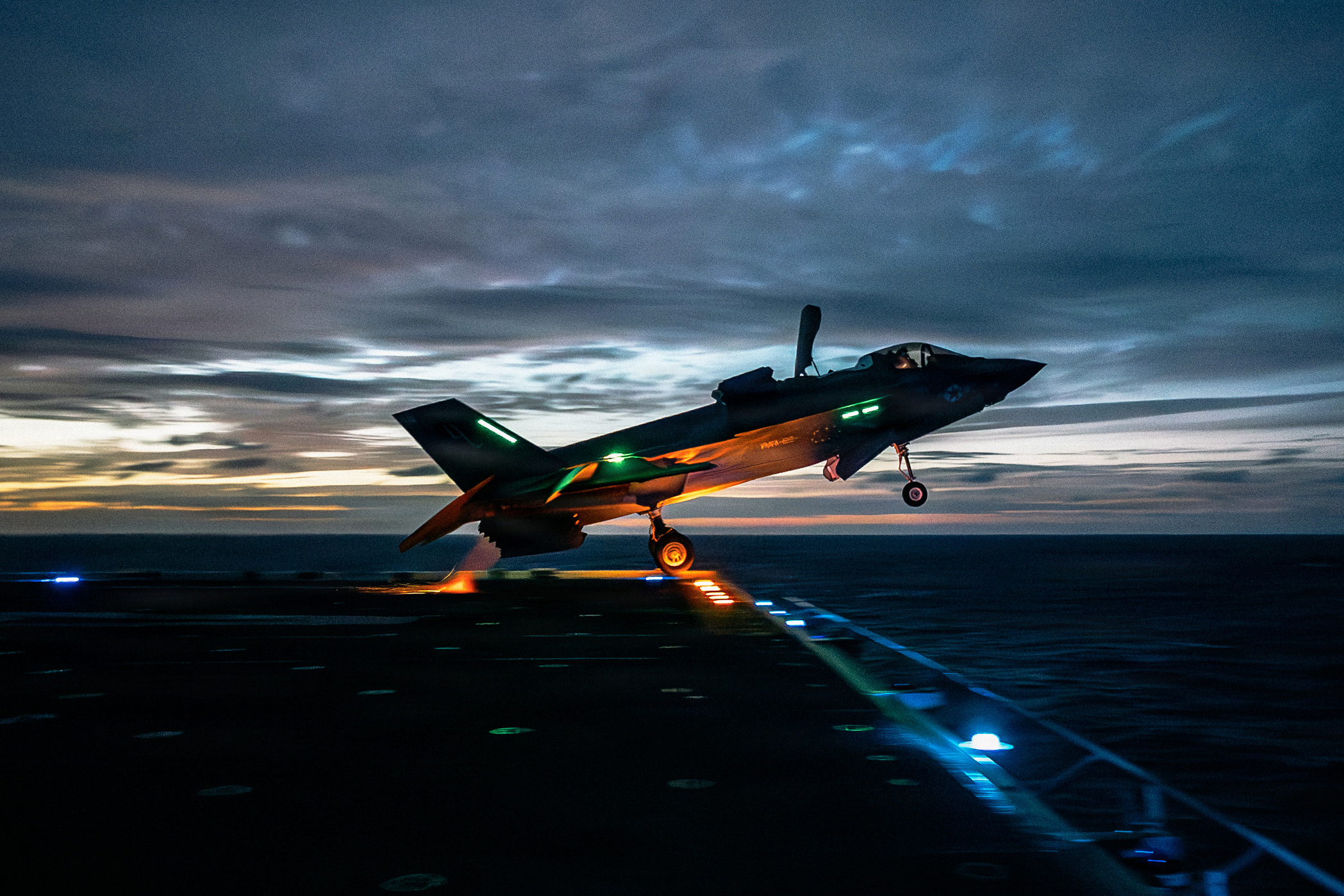
Earlier this month, a pair of Marine Corps F-35B Lightning IIs turned heads across Finland when they roared down a rural highway and took flight, marking a first-of-its-kind operation for the Corps in the Nordic nation.
The event was part of NATO’s sprawling Exercise Ramstein Flag 2026, a massive war-readiness drill that pulled in 19 nations and stretched across 15 locations from the Arctic Circle to southern Spain.
The goal: prove that the alliance can fight anywhere, anytime, on any surface — including asphalt designed for SUVs and semis.
The Marines’ stealth fighters, belonging to Marine Fighter Attack Squadron 224 out of the 2nd Marine Aircraft Wing, made history as the first U.S. Marine aircraft to deploy to Finland.
The move underscores NATO’s increasing focus on Arctic operations as threats from Russia and China continue to grow in the North.
“This mission is about ensuring the joint force can fight and win,” said Maj. Gen. Daniel Shipley, who commands U.S. Marine Corps Forces Europe and Africa.
“Our participation in Ramstein Flag enhances the lethality of the Marine Corps, enables NATO success and guarantees our ability to deter and defeat sophisticated aerial threats.”

Shipley’s statement came at a time when the Pentagon’s younger warriors — many hardened by two decades of counterinsurgency warfare — are shifting attention toward great-power competition.
For these pilots, touching down and taking off on a highway in Finland isn’t just a publicity stunt. It’s a message: the Marines can bring the fight anywhere, even from Europe’s frozen roads.
The operation in Tervo put American F-35Bs alongside Spanish EF-18s, Polish F-16s, and Finnish F/A-18 Hornets in a show of interoperability that left no doubt about NATO’s expanding reach.
With Finland officially joining the alliance in 2023, its forests and roadways have become valuable staging grounds for air operations close to Russia’s northwest border.
NATO’s Combined Air Operations Center in Bodo, Norway, coordinated the sprawling air missions.
According to U.S. Air Force Lt. Gen. Jason T. Hinds, commander of Allied Air Command, this year’s Ramstein Flag was designed to demonstrate a “360-degree approach to defend every inch of NATO territory.” That means every highway, airstrip, and stretch of tundra could soon double as a runway for Western aircraft.
“The scale of this exercise is a testament to NATO’s determination to counter modern and emerging threats,” Hinds said. “We’re executing distributed operations that ensure our forces remain lethal, survivable, and unpredictable.”
The choice of Finland wasn’t accidental. The country’s well-built highway network was originally designed during the Cold War with hidden landing strips to ensure aircraft could disperse in wartime.
Now, those forgotten roads are proving their value as NATO adjusts to a world where fixed bases are prime targets for long-range strikes.
For the Marines, this experiment dovetailed with their push for what they call “expeditionary advanced base operations” — or EABO — a strategy that relies on mobility, flexibility, and the ability to operate from austere locations under threat.
In simple terms, the warfighters are training to turn any stretch of open ground into a launch point for America’s most advanced aircraft.
Earlier this year, elements of the same Marine Air Wing had been slated to take part in Norway’s Arctic warfare exercise Cold Response 2026.
That deployment was delayed due to increased tensions with Iran, but the lessons from northern Europe remain valuable as the Corps continues preparing for a future defined by unpredictable flashpoints.
The Finnish highway operation, therefore, wasn’t just a training stunt — it was a signal.
Washington’s allies are learning to share risk, distribute their forces, and maintain combat readiness across new kinds of terrain. For the Marines, that’s simply back to basics: adapting, overcoming, and staying one move ahead of America’s adversaries.
While the left-wing press often portrays NATO coordination as symbolic theater, this exercise looked anything but.
In reality, Ramstein Flag 2026 revealed hard-edge cooperation among warriors who understand that deterrence only works when it’s visible, credible, and backed by firepower.
As global tensions rise, one thing is clear: the Marines aren’t waiting for bureaucrats in Brussels to grant permission to innovate. They’re already converting Europe’s highways into runways and reminding the world that America still leads the world’s most capable fighting alliance.
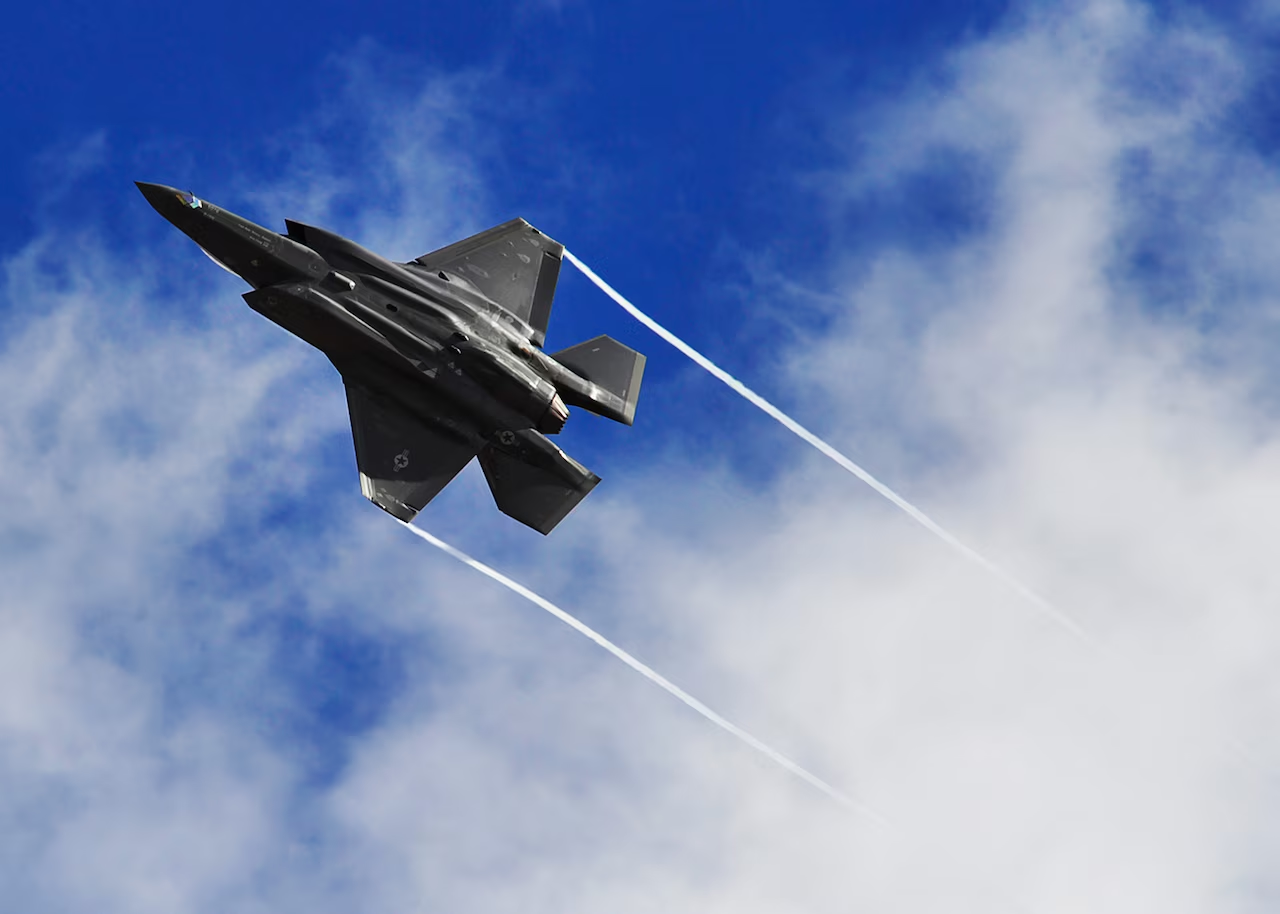
The F-35B, engineered to launch vertically and fight from anywhere, is proving that U.S. airpower will remain dominant in every environment — whether over the desert, the Pacific, or, now, the Finnish outback.
The opinions expressed by contributors and/or content partners are their own and do not necessarily reflect the views of RobManess.com. Contact us for guidelines on submitting your own commentary.
Join the Discussion
COMMENTS POLICY: We have no tolerance for messages of violence, racism, vulgarity, obscenity or other such discourteous behavior. Thank you for contributing to a respectful and useful online dialogue.