
It’s peak bug season again, and as Americans brace for one of the worst summers for ticks in recent memory, a breakthrough Navy-developed repellent is gathering dust instead of saving troops and citizens from disease-carrying pests.
Deep inside the Naval Research Laboratory, scientists have produced an advanced polymer material that could change how we defend against every biting critter in the field.
The material, which researchers describe as having a “gummy bear” consistency, can embed proven insect deterrents like DEET directly into fabric or onto patches, creating months of durable protection without the hassle of reapplication.
This innovation could be a serious game-changer for anyone operating in the field — Marines trudging through jungle humidity, soldiers on patrol, or families camping at home. It’s the kind of low-maintenance warfare technology that actually helps people.
Yet astonishingly, despite the growing tick and mosquito threat nationwide, the product sits undeveloped — trapped in bureaucratic purgatory with no funding and no timeline.
At the Sea-Air-Space symposium near Washington, D.C., earlier this year, Capt. Randy Cruz, the Naval Research Lab’s commanding officer, practically pleaded for investors to help move dozens of dormant inventions like this one off the lab shelves. “We have way too many things on the shelf that need to be moved,” he said.
Pointing to the repellent’s potential, Cruz added, “When I think about all my Marine friends and all my Army folks in the jungle, this is gonna be fantastic.”
The science speaks for itself. The “gummy bear” gel was showcased in a 2024 study in The Journal of Materials Chemistry B, proving the protective barrier stayed effective for at least 30 weeks — that’s over half a year of resistance to mosquitoes, fleas, ticks, and more. Not bad for something you never need to reapply.
Research chemist Javier Jimenez, who led the work, explained that the design allows DEET and other repellents to be infused into garments and gear, providing non-greasy coverage without spraying or slathering chemicals directly on the skin.
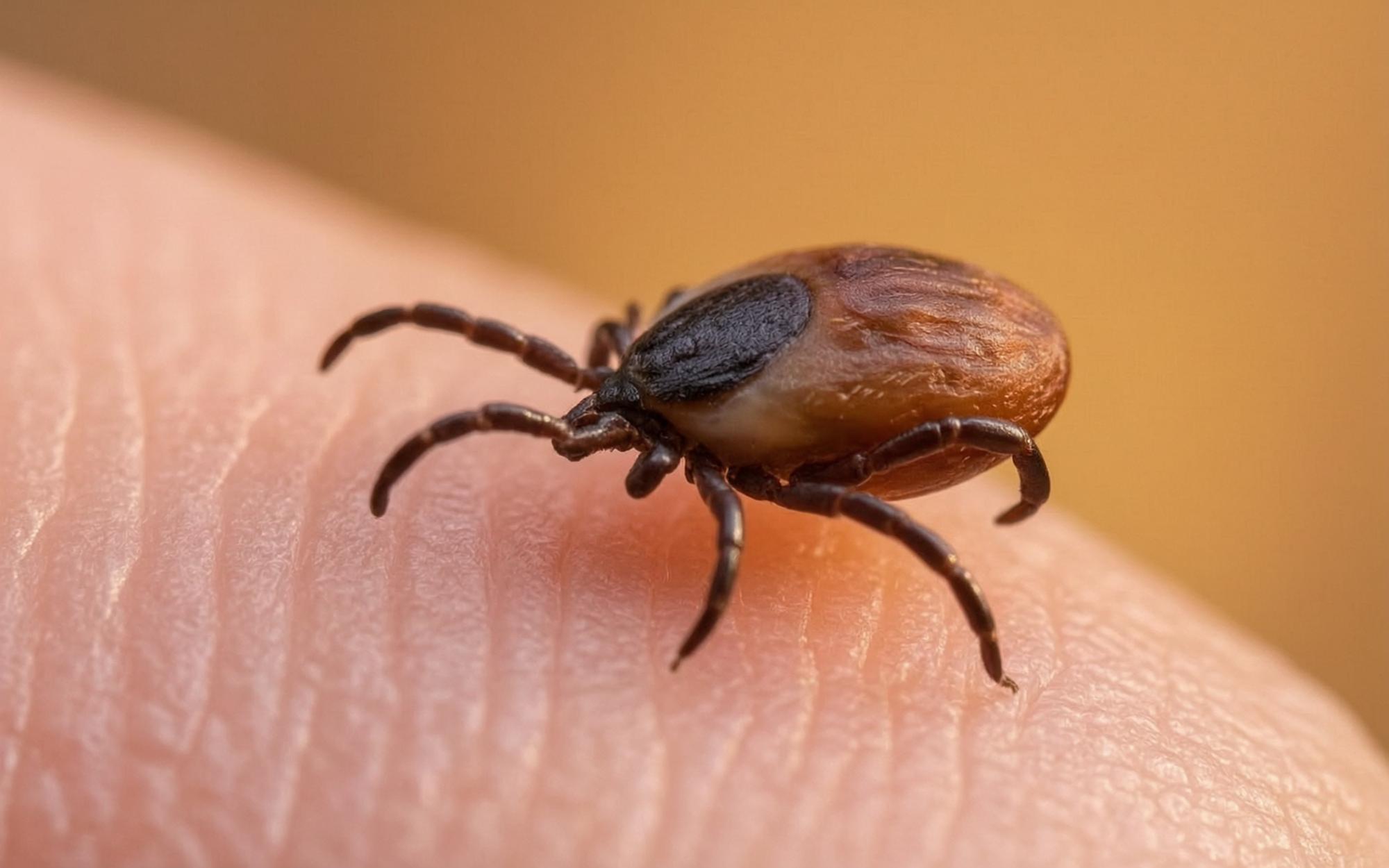
The material can even be deployed in shelters or equipment surfaces, keeping troops protected without the oily residue or health risks of constant aerosol exposure.
This has obvious military implications. According to the Pentagon’s Military Health System, nearly 6,000 cases of vector-borne diseases were logged among troops over a 12-year span.
Most of those came from tick-borne illnesses such as Lyme disease and Rocky Mountain Spotted Fever — conditions that can disable soldiers and cost millions in medical treatment and lost readiness.
Yet the innovation remains on ice, awaiting funding. “It’s in hibernation, waiting for funding at the moment,” Jimenez confirmed. He said the lab is contacting companies to seek private collaboration and investment. In other words, it’s just another example of an idea that could save lives but is being sidelined by bureaucratic stalling and lack of focus inside the federal research system.
Jimenez underscored that the repellent’s ease of use makes it different from anything currently out there. “You won’t have that stickiness of insect repellent,” he explained. “A lot of the oily feeling is just really agitating, which seriously leads a lot of people to noncompliance.”
In military terms, “noncompliance” means troops skipping repellents entirely in the field — a surefire way to get sick during operations.
Even more promising, the research found that mixing other known insect deterrents, like permethrin, only strengthened the overall protection barrier. “What we saw is that this incorporation of these auxiliary pesticides actually formed this sort of synergistic response in the repulsion of mosquitoes,” Jimenez noted.
That kind of synergy could allow the Navy’s “gummy bear” tech to fend off multiple pest species at once — not just mosquitoes, but flies, chiggers, lice, and ticks.
The potential scope of this technology should have it flying through trials and deployment pathways by now. Instead, Jimenez says his team hasn’t even been able to elevate the readiness level of the tech for field testing. “We haven’t been really able to dive into raising the readiness level of this technology,” he admitted.
It’s essentially sitting in a drawer, waiting for someone to greenlight the next step.
This idle state reflects a larger problem plaguing military innovation: incredible inventions routinely stall inside the War Department’s research pipelines while smaller, less critical projects get funded for PR reasons. The leadership vacuum allows bureaucratic caution to override practical urgency.
As the nation faces a growing wave of vector-borne diseases, with every summer seemingly worse than the last, putting this kind of effective, long-term repellent into the hands of troops and Americans alike shouldn’t be optional. It’s common sense.
But until real funding meets real initiative, the Navy’s “gummy bear” bug barrier remains a symbol of America’s slow-footed defense innovation — smart ideas that could serve our men and women in uniform, stuck in limbo while the pests keep biting.
The opinions expressed by contributors and/or content partners are their own and do not necessarily reflect the views of RobManess.com. Contact us for guidelines on submitting your own commentary.
Join the Discussion
COMMENTS POLICY: We have no tolerance for messages of violence, racism, vulgarity, obscenity or other such discourteous behavior. Thank you for contributing to a respectful and useful online dialogue.